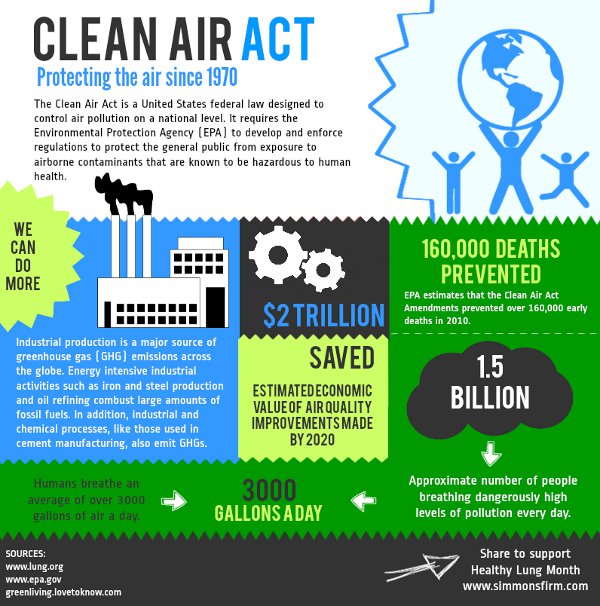
From a federal regulatory standpoint, one piece of legislation—the Clean Air Act (CAA) —stands paramount to resolving the Climate Change crisis, at least here in the US. So let’s take a look at this critical legislation in terms of its history of use and effectiveness. I think you’ll be pleasantly surprised to read that the CAA has really done its job in terms of protecting the health and environmental quality of the American public.
When Congress originally passed the CAA in 1970, it gave the US EPA the responsibility of protecting the American people whenever scientific studies show that new air pollutants threaten our health or environment. In 1990, the CAA was revised and signed into law by President George H. W. Bush. The strong bipartisan support this action received clearly demonstrated that clean air and less pollution were goals shared by Republicans and Democrats alike.
In summary, during its more than forty-five year history, the CAA has:
Cut ground ozone—a dangerous component of smog—by more than 25 percent since 1980.
Reduced mercury emissions by 45 percent since 1990.
Reduced the main pollutants that contribute to acid rain—sulfur dioxide and nitrogen dioxide—by 71 percent and 46 percent, respectively, since 1980.
Phased out the production and use of chemicals that contribute to the hole in the ozone layer.
Reduced the lead content in gasoline, which has cut lead air pollution by 92 percent since 1980.
Pretty impressive stuff—right? Now here’s the essential part of the CAA as it applies to our current Climate Change situation: In the final analysis, the US EPA is required to regulate the emission of pollutants that “endanger public health and welfare”. In 2007, the US Supreme Court in a landmark decision (Massachusetts v. EPA) ruled that Global Warming emissions—caused by GHG—are air pollutants and should be subject to EPA regulation under the CAA.
Then in 2009, the EPA released its scientific findings, which concluded that Global Warming emissions present a danger to public health—now known as the endangerment finding. Citing extensive scientific research, the EPA found that Global Warming pollution is connected with:
Hotter, longer heat waves that threaten the health of the sick, poor, and elderly.
Increases in ground-level ozone pollution, linked to asthma and other respiratory ailments.
Extreme weather events that can lead to deaths, injuries, and stress-related illnesses.
Based on this information, it seems quite clear that the US EPA—operating under the CAA—has all the regulatory authority it needs to immediately and forcefully control the emission of various sources of GHG. Here’s how the National Wildlife Federation (NWF) summarized this situation: “It is time for our nation’s polluters to finally be held accountable for their harmful emissions that contribute to Climate Change. … In passing the CAA, Congress clearly intended it to serve as a living document, in order to ensure that EPA has the tools it needs to respond to new air pollution threats. The science is now clear: Global Warming pollution poses significant threats to public health and welfare, and EPA is obligated under the law to limit sources of this pollution and address the impacts of Climate Change.”
So—if all the necessary regulatory authority is in place and has been sufficiently vetted why isn’t this happening? As with anything that is mucked up with strong bureaucratic machinations and purported economic impacts, the answer has been severely complicated by political infighting.
The science is now clear: Global Warming pollution poses significant threats to public health and welfare, and EPA is obligated under the law to limit sources of this pollution and address the impacts of Climate Change.
Polluters and their allies in Congress are using every opportunity to prevent the EPA from protecting our health by reducing Global Warming emissions. Numerous members of Congress in both the Senate and the House of Representatives have announced their intention to introduce legislation that would block or delay the agency from reducing Global Warming emissions under the Clean Air Act. Some members of Congress even tried to attach bills attacking the EPA to other “must pass” legislation, such as federal spending and budget bills.
These attacks on the Clean Air Act pose a grave threat to EPA’s responsibility to protect our health and environment from the impacts of Climate Change. Some proposed legislation would delay the EPA from setting standards to limit Global Warming emissions for several years, while other bills would indefinitely block the EPA from taking any action on this issue whatsoever. Some proposals would even prohibit the EPA from doing any research or analysis on climate science in its efforts to implement the endangerment finding.
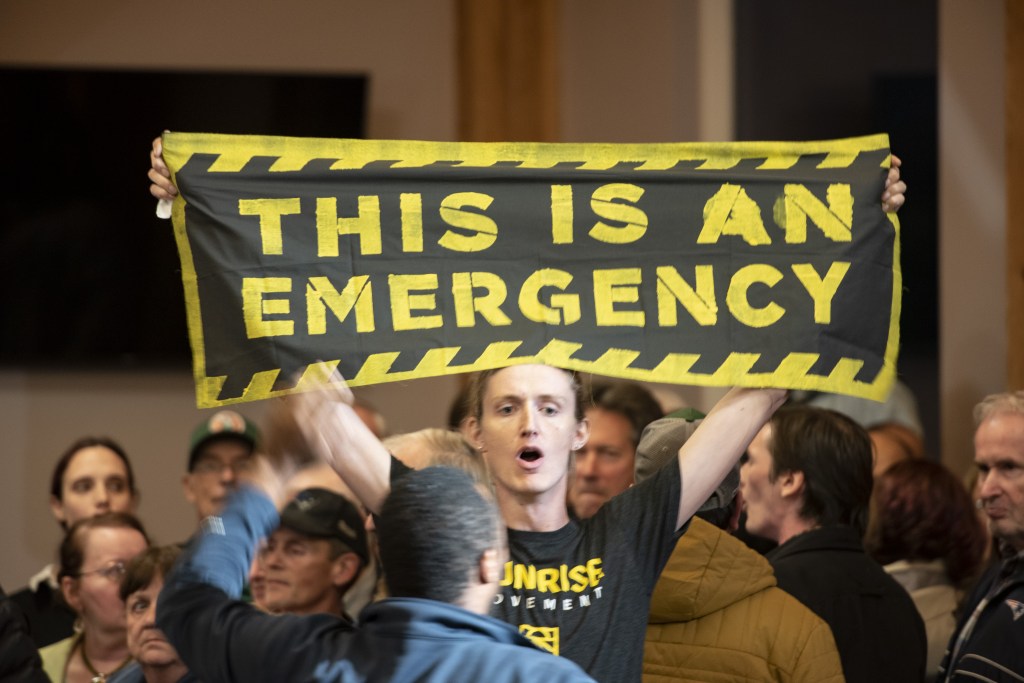
A climate change protester holds a banner reading “This Is An Emergency,” during a town hall event with former Vice President Joe Biden, 2020 Democratic presidential candidate, not pictured, in Manchester, New Hampshire, U.S., on Wednesday, Oct. 9, 2019. Biden said for the first time Wednesday that President Donald Trump should be impeached. Photographer: Kate Flock/Bloomberg
In a nutshell, here’s how the NWF explains the conservative backlash to federal regulation of Climate Change:“Polluter lobbyists continue to cry foul at any mention of EPA fulfilling its obligation under the CAA with respect to Global Warming pollution. This is simply the latest in a string of red herrings that industry has raised time and again to avoid complying with laws that are essential for protecting public health. From seatbelts to catalytic converters to unleaded gasoline, industry falsely claimed that new standards would have devastating economic impacts. History has shown that these requirements have not adversely affected our economy—to the contrary, they have had substantial benefits in saving lives, improving public health, and advancing cleaner technology. It is long past time for the EPA to move forward and require the emission reductions necessary to protect America from the most severe environmental threat we have ever faced: Climate Change! ”
Author’s bio:For the past 50 years, professional ecologist and conservationist Budd Titlow has used his pen and camera to capture the awe and wonders of our natural world. His goal has always been to inspire others to both appreciate and enjoy what he sees. Now he has one main question: Can we save humankind’s place — within nature’s beauty — before it’s too late? Budd’s two latest books are dedicated to answering this perplexing dilemma. PROTECTING THE PLANET: Environmental Champions from Conservation to Climate Change, a non-fiction book, examines whether we still have the environmental heroes among us — harking back to such past heroes as Audubon, Hemenway, Muir, Douglas, Leopold, Brower, Carson, and Meadows — needed to accomplish this goal. Next, using fact-filled and entertaining story-telling, his latest book — COMING FULL CIRCLE: A Sweeping Saga of Conservation Stewardship Across America — provides the answers we all seek and need.Having published five books, more than 500 photo-essays, and 5,000 photographs, Budd Titlow lives with his music educator wife, Debby, in San Diego, California.
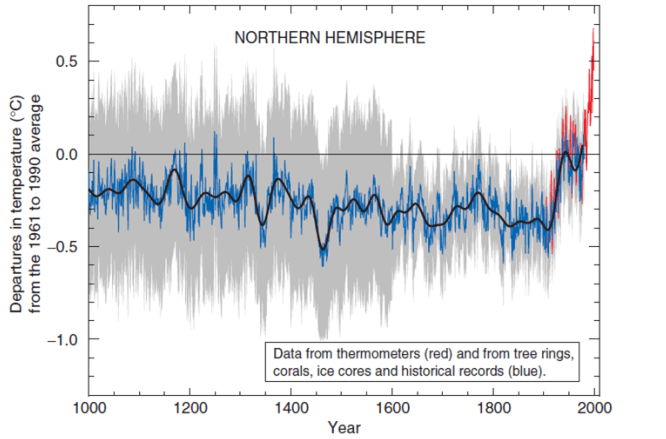
Beginning in the 1980’s, the global annual mean temperature curve started to rise and climate scientists began correlating this increase with a worldwide warming trend. The media and the general public took notice and began questioning the previous prognoses of a “New Ice Age” that had been bandied about for the past few decades.
Near the end of the decade, the global temperature curve began to increase so steeply that the Global Warming Theory began to gain ground fast. Various environmental NGO’s started to advocate global environmental protection to prevent further Global Warming. The media also gained an interest in this idea of a warming atmosphere and it soon became a hot news topic that was repeated around the world. Pictures of smoke stacks were juxtaposed next to pictures of melting ice caps and severe flooding events. Soon, a complete media circus had evolved that convinced many people that we were on the verge of a significant Climate Change event that would have many long-term negative impacts on the Earth.
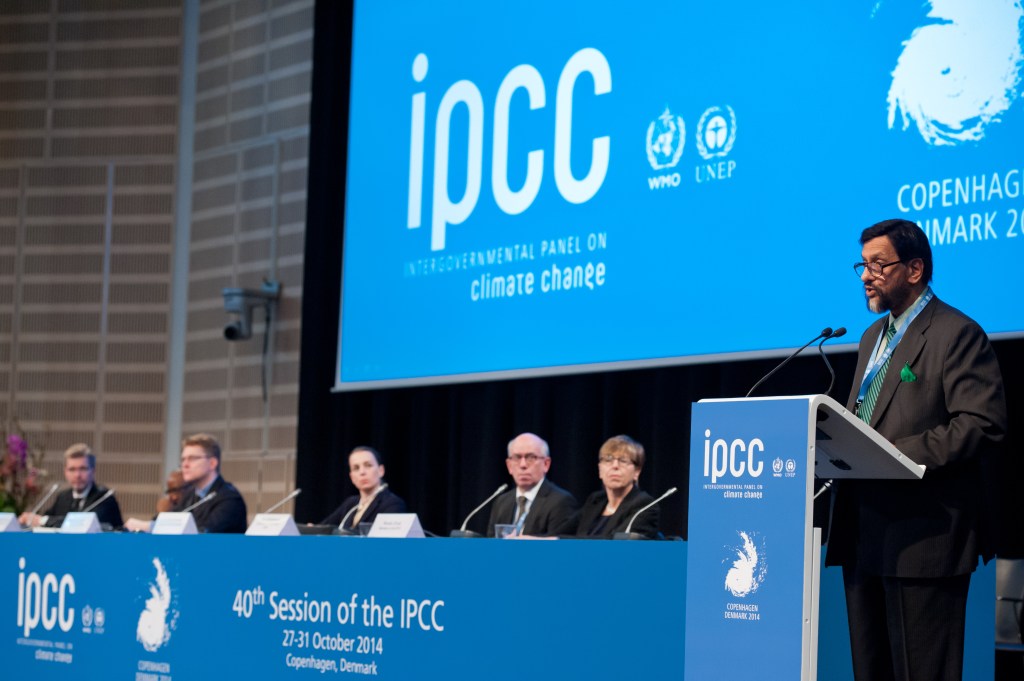
As an offshoot of this concern, the Intergovernmental Panel on Climate Change (IPCC) formed in 1988 with a primary goal of collecting and processing Climate Change information. Consisting of more than 2,500 scientific and technical experts, the IPCC was charged with predicting the future impacts of the Greenhouse Effect according to existing climate models and literature information.
Established under the auspices of the United Nations and set up at the request of member governments, the IPCC is open to all members of the World Meteorological Organization (WMO) and the United Nations Environment Programme (UNEP). IPCC scientists are from widely divergent research fields including climatology, ecology, economics, medicine, and oceanography.
The IPCC routinely produces Assessment Reports that support the 1992 United Nations Framework Convention on Climate Change (UNFCCC) which is the main international treaty on the subject.The UNFCCC’s precisely-stated objective is “stabilizing greenhouse gas concentrations in the atmosphere at a level that would prevent dangerous anthropogenic [i.e., human-induced] interference with the climate system”.
As the internationally accepted authority on Climate Change, the IPCC produces Assessment Reports that have the agreement of leading climate scientists and the consensus of participating governments. The IPCC bases each of its Assessment Reports on the published literature—including both peer-reviewed and non peer-reviewed sources. It does not conduct any of its own original research and also does not carry out any in-house monitoring of climate events or phenomena.
Thousands of scientists and other experts—working strictly on a voluntary basis, without pay—contribute to writing and reviewing the IPCC Assessment Reports. For expediency, each reports contains a “Summary for Policymakers” which is subjected to line-by-line approval by delegates from all participating governments—typically representing more than 120 countries. The IPCC’s First Assessment Report—issued in 1990—concluded that the Earth’s temperature had risen during the past century and that human emissions of fossil fuels were likely adding to this rise.
At this juncture with the introduction of the IPCC, we should now discuss the Heartland Institute’s Nongovernmental International Panel on Climate Change (NIPCC). As is obvious from its similar name and acronym, the NIPCC was created in 2003 solely to cast aspersions and doubts on the findings and reports of the legitimate climate scientists whose work is covered by the IPCC.
To be as candid as possible here, the Heartland Institute that founded the NIPCC is a non-scientific, doubt-mongering entity supported by the fossil fuel industry and the Koch Brothers—their cohorts in the not so fine art of lying. Any documents produced by the Heartland Institute and/or the NIPCC have no credibility—scientific or otherwise—beyond casting doubt.
Stephen Schneider—Climate Change Guru
One of the primary scientists on the IPCC when it first formed in 1988 was a man who made the first steadfast predictions about Global Warming back in 1976. Dr. Stephen Schneider was a recipient of a MacArthur Genius Grantand shared the 2007 Nobel Peace Prize with his colleagues on the IPCC and former vice president Al Gore for their international research on Global Warming. Dr. Schneider was an expert adviser to every presidential administration from Nixon to Obama. He was the Melvin and Joan Lane professor for interdisciplinary environmental studies, a professor in the Department of Biology, and a senior fellow at the Woods Institute for the Environment at Stanford University. He was also a National Center for Atmospheric Research (NCAR) scientist from 1973-1996, where he co-founded the Climate Project.
Dr. Stephen Schneider was an expert adviser to every presidential administration from Nixon to Obama.
Founder and editor of Climatic Change Magazine, Professor Schneider authored or co-authored over 500 books, scientific papers, proceedings, and legislative testimonies, and edited hundreds of other books chapters, reviews, and editorials. He especially emphasized climate-driven Global Warming and its wide-ranging effects, such as a recorded rise in ocean temperatures and the increasing potency and frequency of hurricanes. He also conducted research on the near-irreversible damage of GHG on the ozone layer and theorized how a nuclear war might affect the climate.
“No one, and I mean no one, had a broader and deeper understanding of the climate issue than Stephen,” said Michael Oppenheimer, a professor of geosciences and international affairs at Princeton University. “More than anyone else, he helped shape the way the public and experts thought about this problem—from the basic physics of the problem, to the impact of human beings on nature’s ecosystems, to developing policy.”
Unfortunately, this Climate Change visionary died far too early— at the age of 65—from an apparent heart attack while on a flight landing in London in 2010. The Climate Change community could certainly use his bold and unflinchingly forthright leadership right now.
NASA’s James Hansen—Yes, Climate Change Is For Real! And The Deniers Respond
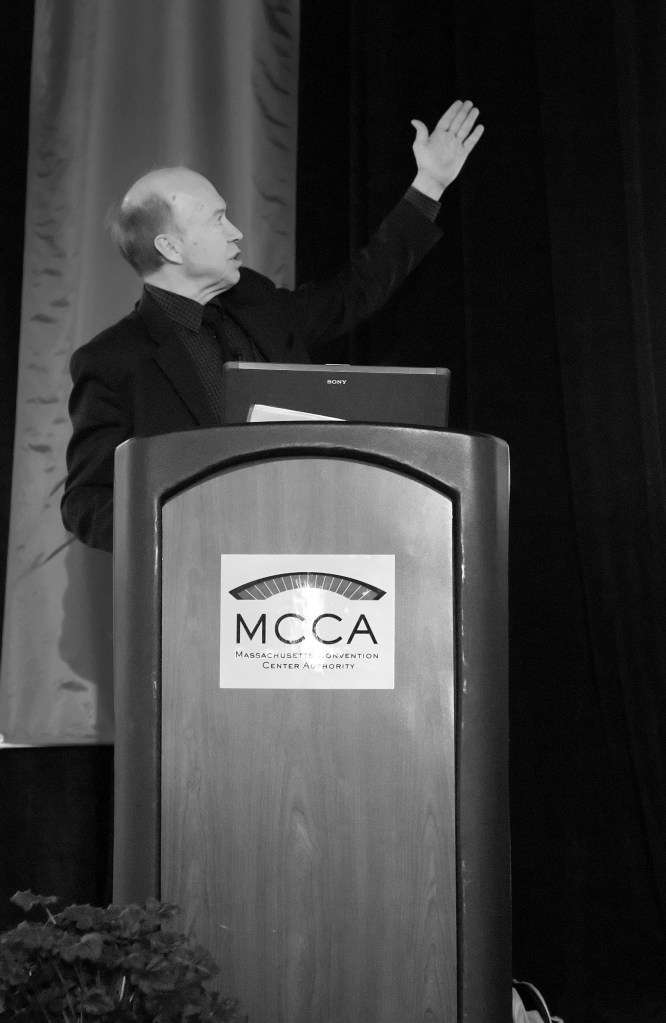
On the more fortunate side of the ledger, another esteemed climatologist stepped up in 1988 and made the world aware of the pending perils of Global Warming associated with Climate Change. Dr. James Hansen, National Atmospheric and Space Administration (NASA) scientist reported to Congress that Global Warming was simultaneously melting the polar ice caps and causing extreme droughts throughout the world. As a climate scientist who made a lasting impression about the potential dangerous effects that Climate Change posed for the world, Dr. Hansen is featured as one of our Climate Change Heroes.
In 1988, Dr. James Hansen—National Atmospheric and Space Administration (NASA)—scientist made the world aware of the pending perils of Global Warming associated with Climate Change.
Perfectly dove-tailing with Dr. Hansen’s testimony before Congress, 1988 featured both the highest global temperature in 130 years and the worst US droughts since the Dust Bowl Era of the 1930’s. Taken collectively, these findings did manage to give the ongoing Climate Change crisis some cache with the media and the general public. Unfortunately, the information also alerted the denier network that immediate action needed to be taken to avert the truth.
Accordingly in 1989, the fossil fuel companies and other US industries formed the Global Climate Coalition (GCC) with a mission of convincing politicians and the general public that Climate Change science was too uncertain to justify action. The GCC dissolved in 2002 due to membership loss when an IPCC Assessment Report provided massive technical information showing that Global Warming was indeed occurring.
However today—working primarily through the Heartland Institute and the pseudo-scientific NIPCC—the fossil fuel industry is still lobbying Congress that IPCC and other scientific reports showing that severe Global Warming caused by ongoing Climate Change are inconclusive and that the situation requires further study.
Author’s bio:For the past 50 years, professional ecologist and conservationist Budd Titlow has used his pen and camera to capture the awe and wonders of our natural world. His goal has always been to inspire others to both appreciate and enjoy what he sees. Now he has one main question: Can we save humankind’s place — within nature’s beauty — before it’s too late? Budd’s two latest books are dedicated to answering this perplexing dilemma. PROTECTING THE PLANET: Environmental Champions from Conservation to Climate Change, a non-fiction book, examines whether we still have the environmental heroes among us — harking back to such past heroes as Audubon, Hemenway, Muir, Douglas, Leopold, Brower, Carson, and Meadows — needed to accomplish this goal. Next, using fact-filled and entertaining story-telling, his latest book — COMING FULL CIRCLE: A Sweeping Saga of Conservation Stewardship Across America — provides the answers we all seek and need.Having published five books, more than 500 photo-essays, and 5,000 photographs, Budd Titlow lives with his music educator wife, Debby, in San Diego, California.
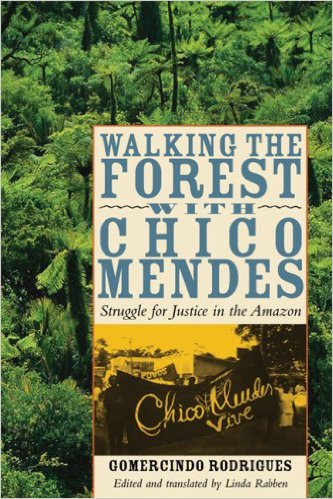
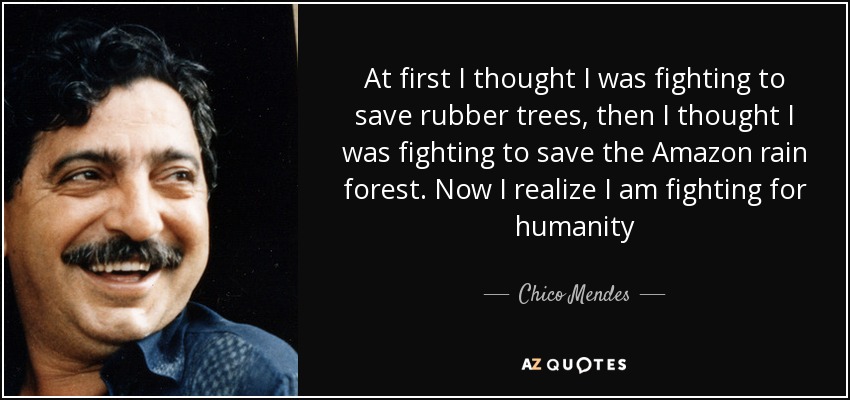
On December 22, 1988, a tragic event occurred deep in the Brazilian countryside that had a stark effect on worldwide natural resource conservation in general and today’s Climate Change situation in particular. On that day, Chico Mendes—a Brazilian rubber tapper, known as a seringueiro, and land rights leader—became world famous when he was gunned down outside his own home by the son of a local rancher. During the shooting, two Brazilian policemen—who were assigned to protect Mendes from death threats—sat playing cards at the kitchen table inside his home. Ironically, just the week before on his 44th birthday, Mendes had ominously predicted that he would not live to see Christmas Day.
The problem was that the local ranchers and others who benefited from wholesale clear-cutting of Brazilian rainforests viewed Mendes as the enemy. His life inside the Brazilian rainforest had been fairly typical. He first went to work as a seringueiro when he was only nine years old and did not attend school. The rubber plantation owners did not want their workers to be able to read and write because this knowledge might expose them as the exploitative employers they were.
Even without the benefit of an education, Mendes had a strong sense of what was right coursing through his blood. Although Mendes and his colleagues were a tiny, marginalized minority, their efforts brought them to power in parts of Brazil’s Amazon during the 1980’s. He helped organize the local rubber tappers into a union and developed a technique called an empate—which amounted to blockading rubber tree tracts from ranchers and farmers who wanted to clear the land.
Mendes also pioneered the world’s first tropical forest conservation initiative that was advanced by the forest natives themselves. In the process, he established the world’s first extractive preserves that protected forested areas that were inhabited and managed by local communities. In 1987, the Environmental Defense Fund (EDF) and the National Wildlife Federation (NWF) flew Mendes to Washington, DC in an attempt to convince the World Bank and the US Congress to support creation of more extractive reserves.
Prophetically, Mendes’ death proved to be a turning point in the war to save the Amazon rainforest. Now 40 percent—a total 58 million acres—is set aside for protection. Today, the Chico Mendes Institute for Conservation of Biodiversity (Instituto Chico Mendes de Conservação da Biodiversidade), a body under the jurisdiction of the Brazilian Ministry of the Environment, is named in his honor. Mendes won several other awards for his work including the United Nations Program Global 500 Roll of Honor Award in 1987 and the NWF’s National Conservation Achievement Award in1988.
Also the Chico Mendes Extractive Reserve (CMER) was created in the area where he lived. The Chico Mendes Reserve has electricity and schools and many students have graduated from university. Some seringueiros now have motorbikes and cars and are employed as forest guides. Trees are sustainably harvested in the CMER, and there is an eco-lodge. Building on this model, 68 other extractive reserves have been established in the Brazilian Amazon, covering more than 33,000,000 acres.
Author’s bio:For the past 50 years, professional ecologist and conservationist Budd Titlow has used his pen and camera to capture the awe and wonders of our natural world. His goal has always been to inspire others to both appreciate and enjoy what he sees. Now he has one main question: Can we save humankind’s place — within nature’s beauty — before it’s too late? Budd’s two latest books are dedicated to answering this perplexing dilemma. PROTECTING THE PLANET: Environmental Champions from Conservation to Climate Change, a non-fiction book, examines whether we still have the environmental heroes among us — harking back to such past heroes as Audubon, Hemenway, Muir, Douglas, Leopold, Brower, Carson, and Meadows — needed to accomplish this goal. Next, using fact-filled and entertaining story-telling, his latest book — COMING FULL CIRCLE: A Sweeping Saga of Conservation Stewardship Across America — provides the answers we all seek and need.Having published five books, more than 500 photo-essays, and 5,000 photographs, Budd Titlow lives with his music educator wife, Debby, in San Diego, California.
Despite the slowdown in environmental actions precipitated by the oil crisis, discovery and management of hazardous waste sites made great strides in the last part of the 1970’s under the jurisdiction of the US EPA. First in 1976 came the Resource Conservation and Recovery Act (RCRA) that empowered the EPA to regulate hazardous waste sites“from the cradle to the grave”. Infamously described as “ticking time bombs”, hazardous waste sites were thrust into the general public’s consciousness when multiple locations were discovered throughout the Nation.
Most notably, in the spring of 1978, a 27-year-old housewife with no scientific training or activist experience stood up and took on the brutishly bullish world of conglomerated chemical companies. When Lois Marie Gibbs discovered that her child was attending an elementary school built next to a 22,000-ton toxic waste dump that included dioxin—the most dangerous chemical compound on the face of the Earth—she went ballistic. She immediately set about alerting her neighbors and organizing the Love Canal Homeowners Association (LCHA) in Niagara Falls, New York.
When Lois Marie Gibbs discovered that her child was attending an elementary school built next to a 22,000-ton toxic waste dump that included dioxin—the most dangerous chemical compound on the face of the Earth—she went ballistic.
For a while, Gibbs listened to the bold-faced bluster of the culprit Hooker Chemical Company (now the international powerhouse Occidental Petroleum Company—OPC) until her face turned blue with repeated rage and anger. OPC’s team of head muckety-mucks and hired gun consultants—plus their government cohorts—repeatedly lied to cover up the facts that their leaking chemicals were causing abominably abnormal miscarriage, birth defect, and cancer rates throughout the local families.
Gibbs stood by her guns and in the end result scored a significant victory against the madding oppressive corporate forces. She succeeded in convincing then President Jimmy Carter to relent and relocate 833 Love Canal families to safer homes outside of the toxic waste dump’s 36-square block cone of influence.
RCRA was followed in 1980 by the Comprehensive Environmental Response, Compensation and Liability Act (CERCLA). CERCLA was better known as the Superfund Act because of the $1.6 dollar trust fund it set up. And because of her unwavering efforts in finally securing victory at Love Canal, Lois Gibbs was appropriately dubbed as the, “The Mother of the Superfund Act”.
CERCLA enabled the EPA to aggressively pursue the cleanup of abandoned hazardous waste sites. In the process, the federal agency was able to sue the entities that were responsible and collect, then fund, reimbursements for cleaning up their toxic messes.
CERCLA also opened the door to a new influx of private consulting firms that specialized in analyzing the contents of the toxic waste sites—including everything from leaking gas storage tanks to entire despoiled mountainsides and contaminated rivers.
Hiring phalanxes of specially trained geologists, petroleum engineers, and hydrologists, these new businesses literally raked in money by developing and then employing a host of new toxic waste remediation techniques. It was quite a business model. For at least 25 years, these hazmat consulting firms could barely keep pace with the number of toxic waste sites that started popping up all over the country like kernels of corn in a pot of hot grease.
Now let’s get back to Ms. Gibbs and her super-heroic activities. Once all of her neighbor families had been moved and were safety settled into their new homes, Gibbs’ life changed forever. While she was fighting her two-year battle for honesty and integrity, she was also contacted by other families across the country who were mired in similar toxic waste “no-man’s-lands”. Determined to help these other distressed people also set up grassroots organizations, Gibbs moved to Washington, DC and created the Center for Heath, Environment, and Justice (CHEJ). Today, the CHEJ has helped establish 11,000 grassroots groups and—as Executive Director—Gibbs regularly speaks to communities about toxic chemicals and children’s unique vulnerability to environmental exposures.
For her diligent efforts on behalf of the environmentally oppressed, Gibbs has been featured in hundreds of newspaper and magazine articles plus featured on many television and radio shows—including 60 Minutes, 20/20, Oprah, Good Morning America, and Today. CBS also produced a 2-hour prime time movie, entitled Lois Gibbs: The Love Canal Story. She has also received many awards for environmental accomplishments and was nominated for a Nobel Peace prize in 2003.
Driven by a strong sense of what is just and right in securing a safe environment for both her own family and those of her neighbors, Lois Gibbs provides one of the strongest prototypes for what a single individual can accomplish in the arena of environmental regulation. She stuck to her cause and didn’t back down even in the face of severe intimidation and death threats from corporate and political power players. The Climate Change movement needs hundreds of people with the moxie and pure guts of Lois Gibbs to bring our goals to fruition.
Author’s bio:For the past 50 years, professional ecologist and conservationist Budd Titlow has used his pen and camera to capture the awe and wonders of our natural world. His goal has always been to inspire others to both appreciate and enjoy what he sees. Now he has one main question: Can we save humankind’s place — within nature’s beauty — before it’s too late? Budd’s two latest books are dedicated to answering this perplexing dilemma. PROTECTING THE PLANET: Environmental Champions from Conservation to Climate Change, a non-fiction book, examines whether we still have the environmental heroes among us — harking back to such past heroes as Audubon, Hemenway, Muir, Douglas, Leopold, Brower, Carson, and Meadows — needed to accomplish this goal. Next, using fact-filled and entertaining story-telling, his latest book — COMING FULL CIRCLE: A Sweeping Saga of Conservation Stewardship Across America — provides the answers we all seek and need.Having published five books, more than 500 photo-essays, and 5,000 photographs, Budd Titlow lives with his music educator wife, Debby, in San Diego, California.
Author’s bio:For the past 50 years, professional ecologist and conservationist Budd Titlow has used his pen and camera to capture the awe and wonders of our natural world. His goal has always been to inspire others to both appreciate and enjoy what he sees. Now he has one main question: Can we save humankind’s place — within nature’s beauty — before it’s too late? Budd’s two latest books are dedicated to answering this perplexing dilemma. PROTECTING THE PLANET: Environmental Champions from Conservation to Climate Change, a non-fiction book, examines whether we still have the environmental heroes among us — harking back to such past heroes as Audubon, Hemenway, Muir, Douglas, Leopold, Brower, Carson, and Meadows — needed to accomplish this goal. Next, using fact-filled and entertaining story-telling, his latest book — COMING FULL CIRCLE: A Sweeping Saga of Conservation Stewardship Across America — provides the answers we all seek and need.Having published five books, more than 500 photo-essays, and 5,000 photographs, Budd Titlow lives with his music educator wife, Debby, in San Diego, California.
For the most part, environmental radicalism never quite achieved the level of mayhem and destruction wrought by Abbey’s Monkey Wrench Gang. Most of the new NGO’s of the Seventies relied on getting the public’s attention through protest rallies—fueled by media involvement—and peaceful civil disobedience such as bulldozer blockades, treetop sit-ins, and Congressional conservation voting record-tracking.
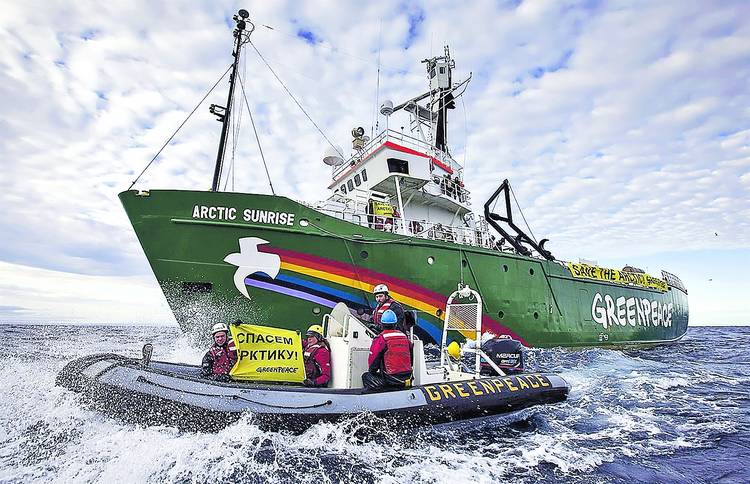
The primary exception to low-key environmental activism was the organization known as Greenpeace. Although professed to be nonviolent by its leaders, Greenpeace often employed in-your-face, smash-mouth techniques—commonly referred to as the direct action approach—that would have made Edward Abbey himself blush.
More than any other NGO—before or since—Greenpeace emphasized using the media to gain attention to their causes. Often described as the most visible environmental organization that ever existed, Greenpeace has always been controversial, even acquiring sea-going vessels for the sole purpose of using them to directly confront and interfere with Russian and Japanese whaling factory ships. They also became directly immersed in a battle to stop the slaughter of harp seal pups in Newfoundland. Who can ever forget the public information spot showing an adorable doe-eyed and white-furred harp seal pup one minute and word that they were being bloodily bludgeoned to death for their pelts the next?
Among their thousands of dramatic protests, Greenpeace activists also infiltrated nuclear test sites, shielded whales from harpoons, and blocked ocean-going barges from dumping radioactive waste. On the downside of the organization’s tactics, the Rainbow Warrior— flagship of the Greenpeace fleet—was sunk in the port of Auckland, New Zealand in 1985 by the French Foreign Intelligence Services. En route to protect a planned nuclear test in Mururoa in French Polynesia, the ship —when it sank—also claimed the life of Fernando Pereira, a freelance Dutch photographer.
Depending on who or what you believe, Greenpeace purportedly first came to the light of day in 1971 with an assemblage of hail and hearty souls in the backroom of a storefront in Vancouver, Canada. Their first mission of note involved chartering an old halibut seiner—The Phyllis Cormack—and plowing through unfriendly seas in the Gulf of Alaska to protest nuclear testing on the tectonically unstable island of Amchitka in Alaska. This led to a face-off in 1971 with a US Coast Guard Cutter, and eventually generated enough public support to force the US to end nuclear testing on Amchitka.
No matter what you may think about Greenpeace or their methods for confronting and stopping highly-damaging environmental activities, the fact remains that they are today one of the world’s largest and most successful NGO’s. Greenpeace now has an international organization with five ships, 2.8 million supporters, 27 national and regional offices, and a presence in 55 countries. Greenpeace’s stated goal is to “ensure the ability of the Earth to nurture life in all its diversity”.
Today, the international chapters of Greenpeace focus their campaigning on such worldwide issues as deforestation, overfishing, commercial whaling, genetic engineering, anti-nuclear issues, and Climate Change. To keep their noses as clean as possible, the global organization does not accept funding from governments, corporations, or political parties.
Paul Watson and His Sea Shepherd Society
The exact founding structure of Greenpeace has never been quite clear. To this day, it’s said that you can go into any bar in Vancouver, Canada and sit down next to someone who will tell you they are one of the founders of Greenpeace.
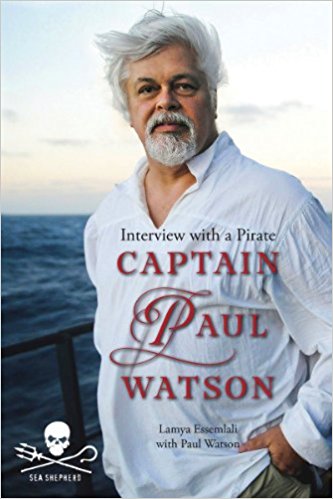
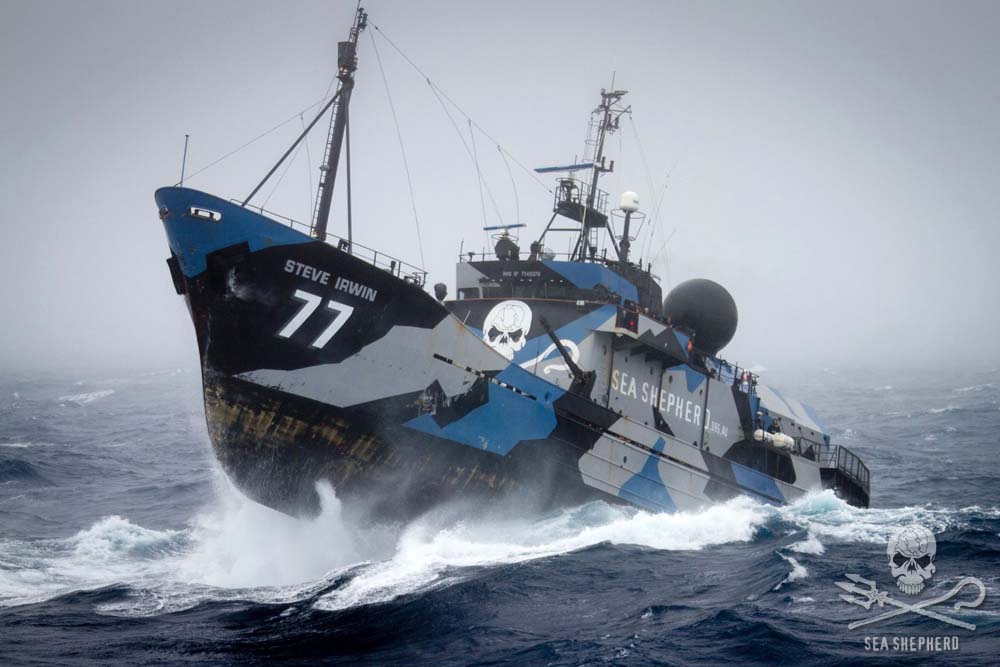
Certainly one of the most noteworthy—and outlandish—characters to ever make this claim is Canadian, Paul Watson. Whether or not he was a Greenpeace founder, Watson was an active participant to the point that he got himself banned from the organization and then went out and formed his own rabble-rousing outfit, the Sea Shepherd Conservation Society. Watson proceeded to command his ship, The Sea Shepherd, sailing around the world and personally attacking the whaling fleets of Norway, Japan, and—most notably—Iceland, where he actually scuttled and sank two boats while they were at anchor in harbor. Somehow, Watson managed to escape serving any actual prison time.
After watching his involvement in the documentary A Fierce Green Fire, it is difficult not to consider Watson a true hero—especially if you love marine mammals. He certainly did not pull any punches when it came to fighting for exactly what he believed—the life of every sperm whale and harp seal. In fact, he repeatedly put his own health and safety in harm’s way to protect these majestic and lovely animals. In the end result—largely due to the disruptive efforts of Greenpeace and the Sea Shepherd Society—the International Whaling Commission (IWC) enacted a global moratorium on whaling with only Japan refusing to sign the pact. Despite this success, the suitability of Watson’s ways are certainly a matter for conjecture and debate within the Climate Change community.
Author’s bio:For the past 50 years, professional ecologist and conservationist Budd Titlow has used his pen and camera to capture the awe and wonders of our natural world. His goal has always been to inspire others to both appreciate and enjoy what he sees. Now he has one main question: Can we save humankind’s place — within nature’s beauty — before it’s too late? Budd’s two latest books are dedicated to answering this perplexing dilemma. PROTECTING THE PLANET: Environmental Champions from Conservation to Climate Change, a non-fiction book, examines whether we still have the environmental heroes among us — harking back to such past heroes as Audubon, Hemenway, Muir, Douglas, Leopold, Brower, Carson, and Meadows — needed to accomplish this goal. Next, using fact-filled and entertaining story-telling, his latest book — COMING FULL CIRCLE: A Sweeping Saga of Conservation Stewardship Across America — provides the answers we all seek and need.Having published five books, more than 500 photo-essays, and 5,000 photographs, Budd Titlow lives with his music educator wife, Debby, in San Diego, California.
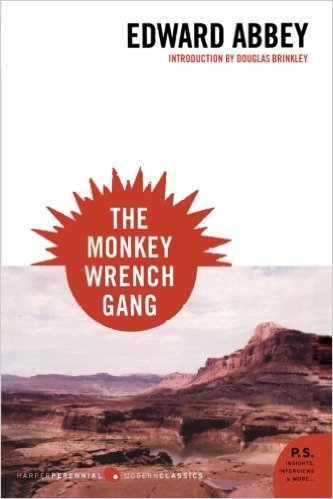
In the minds of many radical environmentalists, Edward Abbey’s outlandish 1975 novel, The Monkey Wrench Gang, set the tone and attitude for how to best get things accomplished. With an emphasis on protesting environmentally damaging activities through the use of sabotage, the term monkey wrenching soon defined any sabotage, activism, law-making, or law-breaking used to preserve wilderness, wild spaces, and ecosystems. Abbey’s main protagonist, George Washington Hayduke, codified the wants, longings, and desires of the average male environmentalist awash in the frustrations of corporate greed and corruption. Espousing the usually unheard voices of the “little people”, Abbey’s Hayduke justified his unorthodox, costly, and highly illegal actions of environmental mayhem by saying, “… because somebody has to do it.”
Known for his anarchistic rhetoric and sanctimonious wit, Abbey was often at the center of the hip environmental movement.
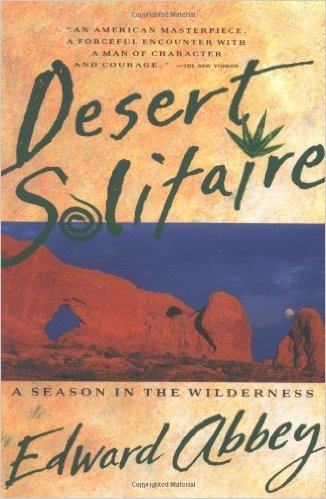
Known for his anarchistic rhetoric and sanctimonious wit, Abbey was often at the center of the hip environmental movement. His writings ranged from blatantly outrageous to sublimely poignant and powerful. While The Monkey Wrench Gang, fomented such radical environmental groups as Earth First!, his non-fiction Desert Solitaire has been favorably compared to Henry David Thoreau’s Walden and Aldo Leopold’s A Sand County Almanac.
Desert Solitaire is a beautifully told non-fiction piece about Abbey’s year as a solitary ranger in the secluded backcountry of Arches National Park. Now often considered a classic piece of natural history writing, this book takes a variety of tones, ranging from a polemic against development and excessive tourism in our national parks to tales about the exhilarating excitement of river running. As would be expected from those who know Abbey’s writing, Desert Solitaire is also interspersed with extended musings and observations about the dynamics between humans and the desert environment. Also, in many of his chapters, Abbey strongly expresses his deep-seated beliefs about the foibles of modern Western civilization, the unethical gyrations of United States politics, and the rapid disintegration of America’s environment.
After his death in 1989, Abbey’s family and writing cohorts unceremoniously buried him at night in the Arizona desert wrapped only in a blue sleeping bag near a granite rock famously inscribed with the words, “No Comment”. The gesture was fittingly apropos for a man who deeply believed that a man’s life should blend as lightly and inconspicuously into the natural environment as possible.
Author’s bio:For the past 50 years, professional ecologist and conservationist Budd Titlow has used his pen and camera to capture the awe and wonders of our natural world. His goal has always been to inspire others to both appreciate and enjoy what he sees. Now he has one main question: Can we save humankind’s place — within nature’s beauty — before it’s too late? Budd’s two latest books are dedicated to answering this perplexing dilemma. PROTECTING THE PLANET: Environmental Champions from Conservation to Climate Change, a non-fiction book, examines whether we still have the environmental heroes among us — harking back to such past heroes as Audubon, Hemenway, Muir, Douglas, Leopold, Brower, Carson, and Meadows — needed to accomplish this goal. Next, using fact-filled and entertaining story-telling, his latest book — COMING FULL CIRCLE: A Sweeping Saga of Conservation Stewardship Across America — provides the answers we all seek and need.Having published five books, more than 500 photo-essays, and 5,000 photographs, Budd Titlow lives with his music educator wife, Debby, in San Diego, California.
Several landmark literary works—most dealing with the fact that the earth may be about to start spiraling out of control with no hope of recovery—also came to fruition early in the Seventies. In particular, two books by our Past Environmental Heroes—Barry Commoner and Donella “Dana” Meadows—provided early hints that we were on a doomsday track that could culminate in a radically changed Earth.
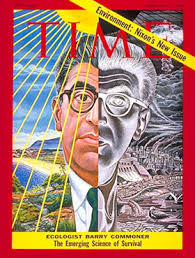
In a cover page feature in 1970, Time Magazine called Commoner “The Paul Revere of Ecology”.
Although widely criticized in many circles as a doomsayer, Barry Commoner was way ahead of his time in describing the dramatic consequences of zealous overconsumption, capitalistic greed, and abuse of natural resources. In fact, throughout his writing and speeches, he predicted the onset of the Climate Change crisis we are facing today. In a cover page feature in 1970, Time Magazine called Commoner “The Paul Revere of Ecology”and said that:“He has probably done more than any other US scientist to speak out and awaken a sense of urgency about the [world’s] declining quality of life.”
With his thick thatch of hair, warm smile, and intense but purposeful gaze, Barry Commoner would be a good choice for one of any environmentalist’s three dream guests at a dinner party. Born in Brooklyn, New York in 1917 to Russian immigrants, Commoner first studied zoology at Columbia University and then at Harvard where he received his doctorate in biology/ecology in 1941. Commoner was one of the new science of ecology’s most provocative thinkers and recognized that America’s technology boom following World War II was not all good.
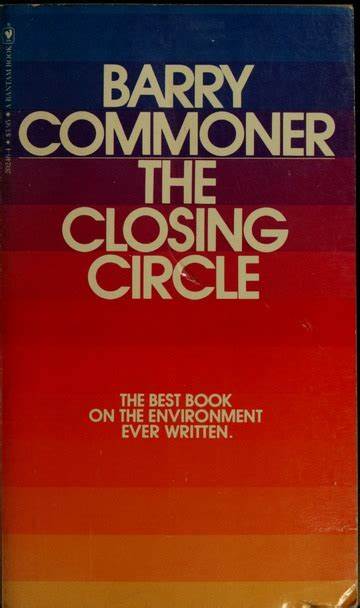
As a leading opponent of nuclear testing, he was credited with creating the momentum that led to the passage of the 1963 Nuclear Test Ban Treaty between the United States and the Soviet Union. Commoner also knew we were running the risk of poisoning both the land and ourselves with the preponderance of toxic substances we were spewing across the earth and into our skies. With the publication of his 1971 best-selling book, The Closing Circle, Commoner helped launch the Environmental Movement of the 1970’s—being often mentioned with such other notable activists and Environmental Heroes as Rachel Carson, David Brower, and Aldo Leopold.
The parallels of Commoner’s work and beliefs with those of the modern day Climate Change experts are intriguing. In the 1950’s, Commoner first became well known for his emphatic warnings about the hazards of fallout caused by the atmospheric testing of nuclear weapons. Capitalizing on this newfound public forum, he next alerted the American public about the dangers created by the petrochemical industry and toxic substances such as dioxins.
Laying the groundwork for the environmental justice movement—a catch phrase in the current Climate Change debate—Commoner continually emphasized that environmental hazards disproportionately impacted the poor and racial minorities, since dangerous chemicals and associated hazardous conditions were typically located in rural and/or blue collar neighborhoods. Today, Climate Change analysts focus on these same points, while also emphasizing that poor people in most developing countries throughout the world are the primary sacrificial lambs of the fossil fuel, political-industrial conglomerate of deniers.
Just as do the leading members of today’s 350.org—which we’ll discuss later in this section—Commoner viewed the environmental crisis of the 1960’s as a symptom of a fundamentally flawed economic and social system. In his opinion, three primary culprits—corporate greed, illogical government priorities, and the misuse of technology—were driving the world’s infatuation with excessive profits and overindulgent lifestyles that were threatening to make the Earth an unfit place to live.
Commoner continually emphasized the parallels among the environmental, civil rights, labor, and peace movements in the US while also connecting the ongoing environmental crisis to world problems of poverty, injustice, racism, public health, national security, and war.These are the same arguments and concerns that are now being analyzed as the primary hurdles to discovering practicable solutions for dealing with Climate Change.
In the 1970s, Commoner disagreed with Paul Ehrlich’s view—as expressed in Ehrlich’s book, The Population Bomb—that overpopulation, particularly in developing countries, was responsible for depleting the world’s natural resources and deepening the earth’s environmental problems. In The Closing Circle, Commoner introduced the idea of sustainability, now a widely considered concept but then very controversial—often linked to socialism—during the 1970s. He emphasized that there is only one ecosphere for all living things.
In line with ecological thought, Commoner believed that “what affects one, affects all”. Encouraging the now widespread practice of recycling, he also noted that in nature there is no waste and—because of this—we can’t just throw things away. He advocated designing and manufacturing products that can be reused, thus maintaining the delicate balance between humans and nature.Commoner was one of the first scientists to bring the concept of sustainable living to a mass audience. He challenged the petroleum industry and—long before it became politically fashionable—touted solar power as the long-term solution to the world’s energy needs.
Barry Commoner ‘s Four Laws of Ecology from his book, The Closing Circle:
“Everything is connected to everything else.
Everything must go somewhere.
Nature knows best.
There is no such thing as a free lunch.”
A man whose ideas were well ahead of their time, Barry Commoner would have been a prime candidate for the leader of today’s Climate Change movement. His courage to take stands and express philosophies that were contrary to—and in some cases, considered un-American—popular thought are exactly what is needed to get the message across and start implanting the major and significant changes that are required in the social, industrial, and political infrastructures of today’s world.
Donella Meadows and Her Limits to Growth
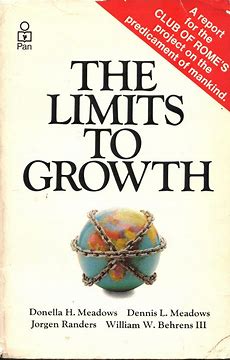
From the standpoint of standing behind your beliefs, Donella “Dana” Meadows is certainly the equal of—if not superior to—Barry Commoner. Meadows had solutions for dealing with Climate Change years before it became a prominent national and worldwide concern, plus she practiced exactly what she preached. In fact, the groundbreaking book she co-authored in 1972—The Limits to Growth—sold nine million copies in twenty-six languages and launched Meadows onto the global stage as a leading environmental thinker and writer. Limits made headlines around the world and began a debate about the limits of Earth’s capacity to support human economic expansion —a debate that continues to this day, especially in the face of the pending Climate Change crisis.
Born in Elgin, Illinois in 1941, Meadows received her Ph.D. in biophysics from Harvard University in 1968. She then became a Research Fellow at MIT working in the department of Professor Jay Forester studying the application of the relatively new field of systems dynamics to global problems. Inspiration from this landmark research led Meadows and her cohorts to write and publish Limits.
While it was just a small book, Limits packed a huge wallop! Its writing analyzed “the predicament of mankind”—with its interrelated social, economic, and political problems—including poverty amidst prosperity, environmental degradation, unchecked urban sprawl, loss of faith in institutions, alienation of youth, inflation, insecurity of employment, and rejection of traditional values.
One of her primary conclusions was: “If the present growth trends in world population, industrialization, pollution, food production, and resource depletion continue unchanged, the limits to growth on this planet will be reached sometime within the next one hundred years. The most probable result will be a rather sudden and uncontrollable decline in both population and industrial capacity.”As Meadows commented to an interviewer, “From my point of view as a scientist, there was nothing more stupidly obvious than to say that the Earth is finite and growth can’t go on forever.”
Of course, in 1972, this was considered to be an extremely radical point of view and—accordingly—Limitsprovoked a firestorm of criticism, ridicule, and vitriol from the business, economic, political, and even academic establishments. On balance, the book also garnered reasonable acclaim and applause from a cadre of skeptics who were gradually becoming more and more concerned about the ever-increasing human population’s negative influences on Planet Earth.
But many considered Limits to be heretical—especially the legions of people who steadfastly believed in the secular religion of perpetual growth and endless technological potential. However, anyone who took the time to actually read Limits was given a basis for serious insight and reflection about the human condition. The authors of this book were acclaimed scientists and scholars from one of the nation’s most prestigious universities—not sign-carrying, doom-predicting kooks in sandals and robes.
Lost amidst the hubbub, the optimistic solutions to this pending global crisis put forth in Limits, included this: “It is possible to alter these growth trends and to establish a condition of ecological and economic stability that is sustainable far into the future. The state of global equilibrium could be designed so that the basic material needs of each person on earth are satisfied and each person has an equal opportunity to realize his individual human potential. If the world’s people decide to strive for this second outcome rather than the first, the sooner they begin working to attain it, the greater will be their chances of success.”
After the publication of Limits, Meadows spent 16 years writing a weekly syndicated column—which appeared in 20 newspapers—called The Global Citizen in which she commented on world events from a systems point of view. Through the years, her writing won many awards, including the 1985 Champion–Tuck National Competition for outstanding journalism in the fields of business and economics and the Walter C. Paine Science Education Award in 1990. Meadows was also honored as a Pew Scholar in Conservation and Environment (1991), and a MacArthur Fellow (1994), plus she was nominated for a Pulitzer Prize in 1991. Posthumously, she received the John H. Chafee Excellence in Environmental Affairs Award for 2001, presented by the Conservation Law Foundation.
In 1996, Meadows founded the Sustainability Institute with the mission of fostering transitions to sustainable systems at all levels of society, from local to global. After her death in 2001 in Hanover, New Hampshire, the Sustainability Institute was renamed the Donella Meadows Institute (DMI) and moved its offices to Norwich, Vermont. DMI’s overriding message was really quite simple: “We humans are smart enough to have created complex systems and amazing productivity; surely we are also smart enough to make sure that everyone shares our bounty, and surely we are smart enough to sustainably steward the natural world upon which we all depend.”Since its founding, the DMI has been at the forefront of worldwide sustainability thinking and training.
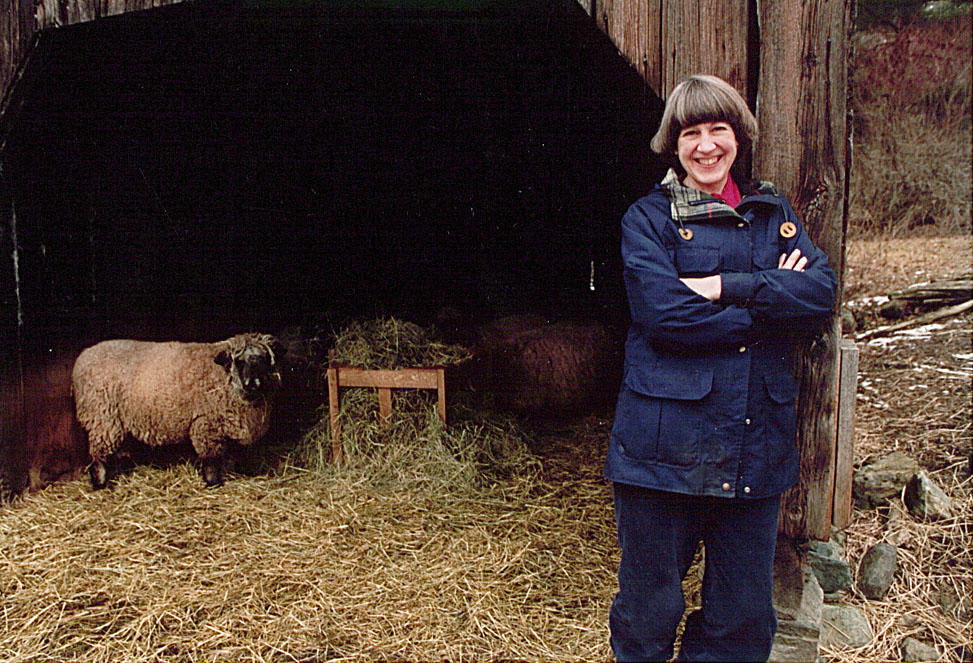
Meadows lived for many years on an organic farm, existing simply, and saving energy.
In the latter years of her life, Meadows truly practiced what she preached—adhering to her personal mantra that was couched in microbiologist and author Rene Dubos’ famous quotation, “Think Globally, Act Locally.” Because of her worries about Climate Change, she restricted her own travel to only those events at which she felt her physical presence would do the most good. She also lived for many years on an organic farm, existing simply, and saving energy. She bought a hybrid gas/electric car as soon as they became available.
It’s truly a shame that Donella Meadows passed away at such an early age. Her philosophy and lifestyle would provide the perfect components of a Climate Change leader. On the one hand she understood all too well what the future bodes if we hold onto our “progress is good at all costs” mentality. While on the other, she firmly believed that humans had the potential and power to do what was right for the long-term future of the world and humanity. Plus she spent the last years of her life personally demonstrating exactly how the world’s population could live sustainably—both as individuals and as collective communities!
We think this last paragraph from one of her Global Citizen columns perfectly summarizes who Donella “Dana” Meadows was: “Personally I don’t believe that stuff [about just giving up] at all. I don’t see myself or the people around me as fatally flawed. Everyone I know wants [both] polar bears and three-year-olds in our world. We are not helpless and there is nothing wrong with us except the strange belief that we are helpless and there’s something wrong with us. All we need to do, for the [polar] bear and for ourselves, is to stop letting that belief paralyze our minds, hearts, and souls.”
“We have no choice but to conform [to a more sustainable future]. If we don’t choose to, the planet will make us. And [in fact] our lives will be better if we do. It isn’t sacrifice we’re selling, it’s a more meaningful, time-filled, love-filled, nature-filled existence.”
Author’s bio:For the past 50 years, professional ecologist and conservationist Budd Titlow has used his pen and camera to capture the awe and wonders of our natural world. His goal has always been to inspire others to both appreciate and enjoy what he sees. Now he has one main question: Can we save humankind’s place — within nature’s beauty — before it’s too late? Budd’s two latest books are dedicated to answering this perplexing dilemma. PROTECTING THE PLANET: Environmental Champions from Conservation to Climate Change, a non-fiction book, examines whether we still have the environmental heroes among us — harking back to such past heroes as Audubon, Hemenway, Muir, Douglas, Leopold, Brower, Carson, and Meadows — needed to accomplish this goal. Next, using fact-filled and entertaining story-telling, his latest book — COMING FULL CIRCLE: A Sweeping Saga of Conservation Stewardship Across America — provides the answers we all seek and need.Having published five books, more than 500 photo-essays, and 5,000 photographs, Budd Titlow lives with his music educator wife, Debby, in San Diego, California.
Fittingly, the very first federal action to arrive on the scene during the Seventies was the National Environmental Policy Act (NEPA)—and along with it the President’s Council on Environmental Quality (CEQ). While officially intended to be representative of the “US national policy promoting enhancement of the environment”, NEPA—in actuality—turned out to be something quite different. In fact, it quickly became a controversial vehicle for debating the pros and cons of “proposed federal actions that may or may not have significant negative or positive impacts on the quality of the natural or human environments.” Got it?
Well don’t feel bad, neither did most of the people who were hired by the federal government to conduct NEPA analyses and then write corresponding Environmental Impact Statements (EIS’s) summarizing the findings of these analyses. I (Budd) should know—I was one of those people!
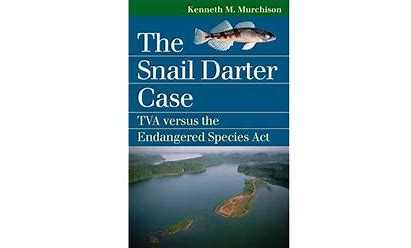
I spent my first three years as a “Professional Environmental Scientist” trying to convince Congress to clarify exactly how an EIS was supposed to be written and how the findings should be determined and presented. By the way, NEPA is the law that brought us all the titanic—and often multi-year—EIS battles over such relatively obscure creatures as the snail darter, the furbish lousewort, zebra mussels, and oh so many more tantalizing federal foibles and fiascos.
Anyway, we digress … at least NEPA represented a legitimate effort on the part of Congress to embed some sort of environmental ethic and consciousness into the land development business in the United States. And this was—in fact—a big improvement over what previously had been required from an environmental analysis and evaluation standpoint—which was, pretty much—nothing at all!
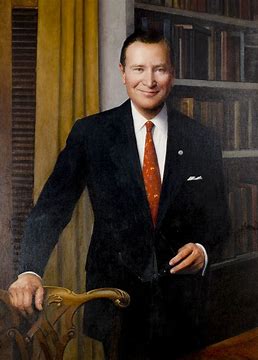
Russell Train – The First Guru of CEQ
All of this Washington, DC level hoopla about environmental awareness and protection also brought another leading man to the forefront of the conservation movement. From the day that he first set foot on a Washington sidewalk, Russell Train was destined to be a bright star in the mixed metaphor affairs of politics, high finance, and natural resource conservation. Meticulous, dapper, and exquisitely mannered—even as a young boy—Train had the combined legal and business acumen to know how to get things done in DC and—wow—did he ever put those skills to work in for national environmental regulation and worldwide wildlife protection.
Born in Jamestown, Rhode Island in 1920, Train was raised in Washington where his father, a Rear Admiral in the US Navy, served as President Herbert Hoover’s Naval Aide. Educated at both Princeton and Columbia Universities, he started his career as a DC lawyer working in the US Tax Court but quickly realized he could create a niche for himself as an advocate for African wildlife—his first real love. So—in 1965—he resigned in mid-term and became president and chief attorney of the Conservation Foundation.
Train’s success as a conservation attorney was so great that he caught the eye of President-elect Richard Nixon who decided that his deft combination of innovative ideas and personal passions were exactly what was needed to capture the public’s burgeoning concerns—and votes—about environmental protection. Nixon plugged Train into all the right places and it was actually through Train’s advice that Nixon created both the CEQ—to review regulatory activities under NEPA—and the US Environmental Protection Agency (EPA). Once he became the first Chairman of CEQ, Train was off and running as a force to be reckoned with on the red carpets of Washington.
His work as head of the CEQ was so effective that Train soon had the moniker, The Father of NEPA, attached to his name. His policy of “look-before-you-leap” became the catch phrase for analyzing the potential impacts of major federal actions before building them. As CEQ Chairman, Train also earned the reputation for being the “founding father” of the United Nations Educational, Scientific, and Cultural Organization’s (UNESCO) World Heritage Program.
After being appointed Administrator of the EPA in 1973, Train soon also became well known for creating ground-breaking laws and implementing effective enforcement of a host of ersatz rules and regulations. With the delegated power of the presidency firmly clinched in his fists, Train shaped the world’s first comprehensive programs for scrubbing the skies and waters of pollution while safeguarding US citizens from exposure to toxic chemicals.
After leaving government service in 1978, Train moved on to the next position where he soon earned another starring role as the first Chairman of the World Wildlife Fund (WWF). During Trains’ time in leading the organization, the WWF grew from a small, relatively-unknown conservation group to a global force for conservation, consisting of $100-million-a-year global network of researchers and technical specialists, famed for its panda trademark.
Panda-adorned logo of the World Wildlife Fund (WWF).
For the remainder of his life, Train continued to receive numerous plaudits—from Chairman Emeritus of the WWF to the Presidential Medal of Freedom awarded by President H.W. Bush in 1991. In 2003, Train published his memoir, Politics, Pollution, and Pandas, which is an excellent compendium on the birth and growth of US’s national interest in environmental issues.
“I felt strongly that environmental issues needed a sharp, cutting edge in government, one that had high visibility to the public … and this view finally prevailed.”
– Russell Train, Politics, Pollution, and Pandas
Russell Train’s primary organization building skills—in both the public and the private sectors—should be studied in depth by Climate Change leaders and activists. Successfully fostering a conservation cause first depends on having a cohesive, well-staffed, and financially solvent organization in place.
Author’s bio:For the past 50 years, professional ecologist and conservationist Budd Titlow has used his pen and camera to capture the awe and wonders of our natural world. His goal has always been to inspire others to both appreciate and enjoy what he sees. Now he has one main question: Can we save humankind’s place — within nature’s beauty — before it’s too late? Budd’s two latest books are dedicated to answering this perplexing dilemma. PROTECTING THE PLANET: Environmental Champions from Conservation to Climate Change, a non-fiction book, examines whether we still have the environmental heroes among us — harking back to such past heroes as Audubon, Hemenway, Muir, Douglas, Leopold, Brower, Carson, and Meadows — needed to accomplish this goal. Next, using fact-filled and entertaining story-telling, his latest book — COMING FULL CIRCLE: A Sweeping Saga of Conservation Stewardship Across America — provides the answers we all seek and need.Having published five books, more than 500 photo-essays, and 5,000 photographs, Budd Titlow lives with his music educator wife, Debby, in San Diego, California.
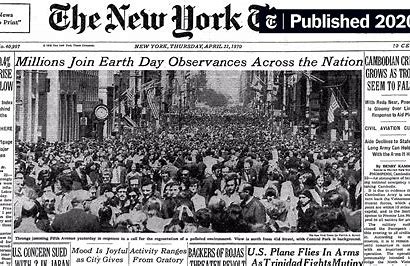
Among the many events heralding the newfound and hardcore lust for environmental protection was the first Earth Day which took place on April 22, 1970. The brainchild of Wisconsin Senator Gaylord Nelson, Earth Day spotlighted such problems as thermal pollution of the atmosphere, dying lakes, the profusion of solid waste, ruinous strip mining, catastrophic oil spills, and dwindling natural resources. As a pivotal event in the environmental movement, the First Earth Day emphasized that the obsession with industrial growth and consumerism was straining the environment to the breaking point and introduced the idea of living lightly on the Earth.
After the first Earth Day was over, Nelson mulled over what had just occurred as the greatest groundswell demonstration of public support for a cause in US history, “No one could organize 20 million people, 10,000 grade schools and high schools, 2,500 colleges and 1,000 communities in three and a half months even if he had $20 million. [Nelson had just $190,000.] The key to the whole thing was the grass roots response.”
All concerned Climate Change activists would do well to study the unequivocal success of the first Earth Day. The unexpected magnitude of the response to this landmark event clearly shows what can be done when the political and social moods of the country collide together with a message that says, “Let’s get something done”. Furthermore, the resultant outpouring of federal environmental legislation proves that Congress was listening to what the people were asking for. Such a groundswell of public opinion—all speaking with the same voice—will certainly go a long way toward passing similar laws and regulations to initiate real Climate Change solutions both in the US and around the world.
Tricky Dick Comes to the Rescue
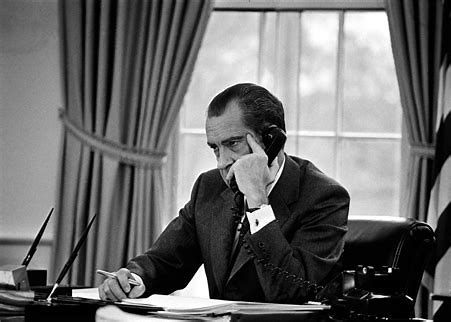
The public outcry for fixing the environment became so pervasive across the land, that when President Richard Millhouse Nixon—arguably the most reviled leader in US history—took office he was forced to acknowledge that something had to be done about the environment. Nixon made his feelings quite evident during his first State of the Union Address by saying: “The 1970’s absolutely must be the decade when America pays its debt to the past by reclaiming the purity of its air and its waters. … It is literally now or never.” The furious flurry of federal environmental legislation that emanated from Capitol Hill during the first few years of the Seventies offered solid proof that Nixon and the Congress were fully committed to putting federal funds where their mouths were.
President Richard Nixon at work in the Oval Office.
What made this all seem so incongruous was that the demand for more national environmental protection was so great that no administration, including one staffed primarily by conservative and—as proven by the sordid and shameful Watergate Affair in 1972—criminally unscrupulous politicians, could ignore the nationwide clarion calls.
As an aside, I (Budd) vividly remember —as a graduate student at Virginia Tech—having dinner at my dad’s house in Blacksburg, Virginia when the Watergate Break-In was first reported on the CBS Evening News. Walter Cronkite just sort of mentioned it in passing late in the broadcast, essentially as a non-story—“some minor criminal activity at the Washington, DC hotel where the Democratic National Convention was being held”. His dad immediately looked up from cutting his broiled chicken and—displaying his right-on instincts as a lifelong newspaperman—said, “Boy that sure sounds like that just might be a real story!”
Author’s bio:For the past 50 years, professional ecologist and conservationist Budd Titlow has used his pen and camera to capture the awe and wonders of our natural world. His goal has always been to inspire others to both appreciate and enjoy what he sees. Now he has one main question: Can we save humankind’s place — within nature’s beauty — before it’s too late? Budd’s two latest books are dedicated to answering this perplexing dilemma. PROTECTING THE PLANET: Environmental Champions from Conservation to Climate Change, a non-fiction book, examines whether we still have the environmental heroes among us — harking back to such past heroes as Audubon, Hemenway, Muir, Douglas, Leopold, Brower, Carson, and Meadows — needed to accomplish this goal. Next, using fact-filled and entertaining story-telling, his latest book — COMING FULL CIRCLE: A Sweeping Saga of Conservation Stewardship Across America — provides the answers we all seek and need.Having published five books, more than 500 photo-essays, and 5,000 photographs, Budd Titlow lives with his music educator wife, Debby, in San Diego, California.
In the overall history of human life here on Earth, we have never faced
more broad-based and existential environmental threats than those posed
by the climate crisis and biodiversity loss. On a geologic timescale, we
are accelerating toward our own oblivion at laser-focused warp speed.
Right now — every day — the world is adding more layers of
atmospheric pollution and species disintegration to the enveloping
shroud that may eventually doom our own species (Homo sapiens) to
extinction.
These twin towers of environmental degradation are not something
that might become a problem in the future — maybe by 2100, or 2050,
or 2030. They are problems right now, and they’re getting worse every
day that we sit by and pretend that nothing is really happening.
But here is the good news. The climate crisis and biodiversity loss
do not have to remain problems. In fact — if we focus and work together
— both of these conundrums can be well on their way to full resolution
in less than ten years.
If we play our cards right, we can use the perpetual, inextinguishable
energy of Earth — the sun’s glorious rays, the wind’s constant breezes,
and the water’s endless waves — to work for us all. And, in the process,
we’ll leave the polluting fossil fuels right where they belong — buried in
the ground, never to see the light of day.
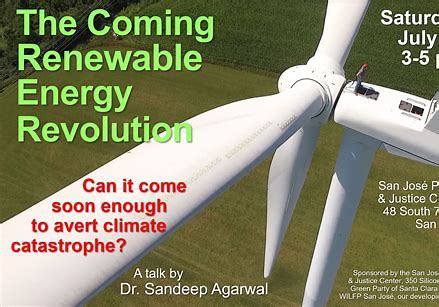
Renewable energy here on Earth is abundant and omnipresent.
Think about it: Renewable energy here on Earth is abundant and
omnipresent. Each time you go outside, you see and feel it everywhere.
It’s like an endless symphony written by a master composer and played
by a world-class orchestra. The golden rays of streaming sunlight are the
strings — always there, maintaining the basic rhythm of the interwoven
movements. The wind provides the percussion — rising from gentle
whispering breezes of the snare drum to the bold resounding gusts of the
tympani. Then moving water blends in with the woodwinds and the brass
— transitioning from gently lapping melodic notes of the flute to lazy
ripples of an oboe’s dulcet tones and concluding with rolling waves of
trumpet blasts.
We are now right on the cusp of what will be the Renewables Revolution.
We are now right on the cusp of what will be the Renewables
Revolution — providing a mighty parallel to the Industrial Revolution.
The Industrial Revolution resulted in the transformation of our nation
from a rural agrarian society to an urban, manufacturing society. Now we
are about to transform ourselves again — from a hard-edged, fossil-fuel
driven economy, to a softer-sided renewable energy world.
This transformation from fossil fuels to renewable energy is already
possible. The Solutions Project (www.thesolutionsproject.org) lays out
immediate plans for converting each of our states — plus many countries
— from fossil fuels to renewable resources. And we can accomplish this
at the same time as we create numerous new industries in the wind, solar,
and water power sector.
The Solutions Project (www.thesolutionsproject.org) lays out immediate plans for converting each of our states — plus many countries — from fossil fuels to renewable resources.
In fact — right now — ‘Big Oil’ has the wherewithal to lead the
transformation from fossil fuels to renewable energy. They know it’s
coming — they’ve known this for more than thirty years! They’re
already planning for the transition. They just want to delay things as long
as possible because — in the short term — they will take a financial hit.
But — in the long run — they will actually make more money from
renewables than they are currently making from fossil fuel production
and processing. The sooner we can make the fossil fuel giants make the
switch, the better off we’ll all be. Over the short term, the mighty impetus
created by nationwide conversion to renewable energy will bolster every
sector of our economy. As the old adage goes: “A rising tide lifts all
boats.”
This renewable energy boom will create millions of new jobs —
leading to increased financial security for everyone. Now that’s a win-win
scenario we can all live with. Plus, our children, grandchildren, and
all future generations will look back and be forever grateful to us for
being proactive in tackling and resolving the current climate crisis and
biodiversity dilemmas.
So, now the decision is in our hands. The issue is about preserving
the existing quality and character of the human species here on Earth.
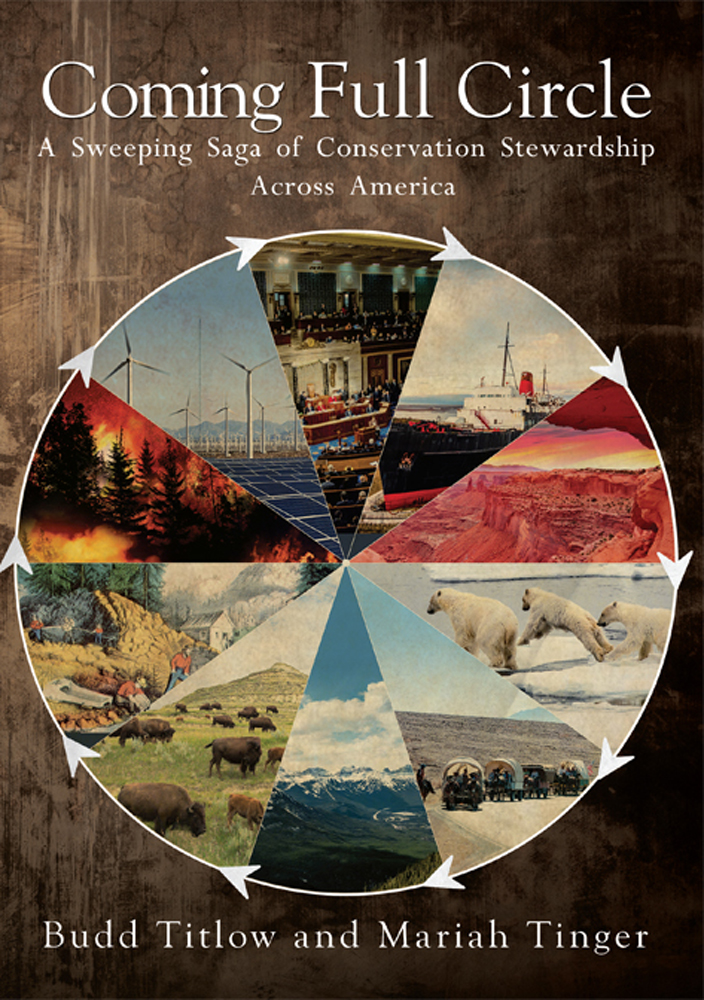
Will we ‘come full circle’ and decide to make the changes that will save
Or will we just watch while our world slides into oblivion — at least for
Homo sapiens?
Author’s bio:For the past 50 years, professional ecologist and conservationist Budd Titlow has used his pen and camera to capture the awe and wonders of our natural world. His goal has always been to inspire others to both appreciate and enjoy what he sees. Now he has one main question: Can we save humankind’s place — within nature’s beauty — before it’s too late? Budd’s two latest books are dedicated to answering this perplexing dilemma. PROTECTING THE PLANET: Environmental Champions from Conservation to Climate Change, a non-fiction book, examines whether we still have the environmental heroes among us — harking back to such past heroes as Audubon, Hemenway, Muir, Douglas, Leopold, Brower, Carson, and Meadows — needed to accomplish this goal. Next, using fact-filled and entertaining story-telling, his latest book — COMING FULL CIRCLE: A Sweeping Saga of Conservation Stewardship Across America — provides the answers we all seek and need.Having published five books, more than 500 photo-essays, and 5,000 photographs, Budd Titlow lives with his music educator wife, Debby, in San Diego, California.













 CONSERVING NATURE WITH WORDS & PHOTOS