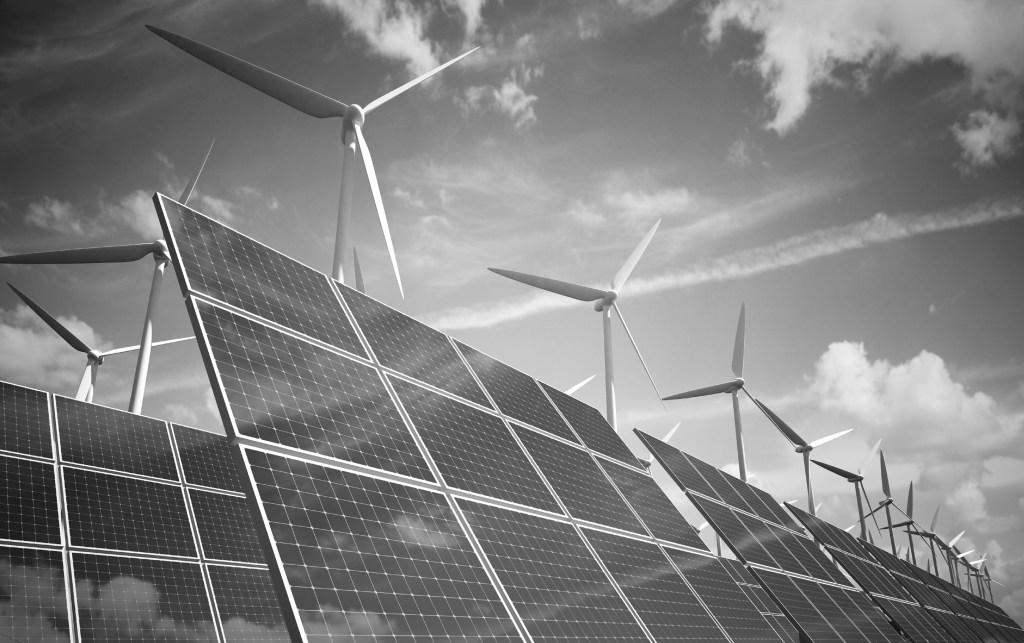
Bill McKibben’s Step It Up Campaign and the Birth of 350.org

Text excerpted from the book: PROTECTING THE PLANET-Environmental Champions from Conservation to Climate Change (ISBN 978-1-63388-225-6)

by

Budd Titlow & Mariah Tinger

https://www.amazon.com/dp/B0BG98CCWF / http://www.buddtitlow.com

In 2007, renowned Climate Change activist, Bill McKibben, started a nationwide environmental campaign that he called “Step It Up”.  Step It Up’s primary goal was demanding that the US Congress take action on Climate Change.  On April 14, 2007, McKibben organized hundreds of rallies in cities and towns all across America.  The “battle cry” of Step It Up was “Curb Carbon Emissions By 80% By the Year 2050”.  The Step It Up Campaign spread like wildfire and quickly earned the unified support of a wide variety of environmental, student, and religious groups.
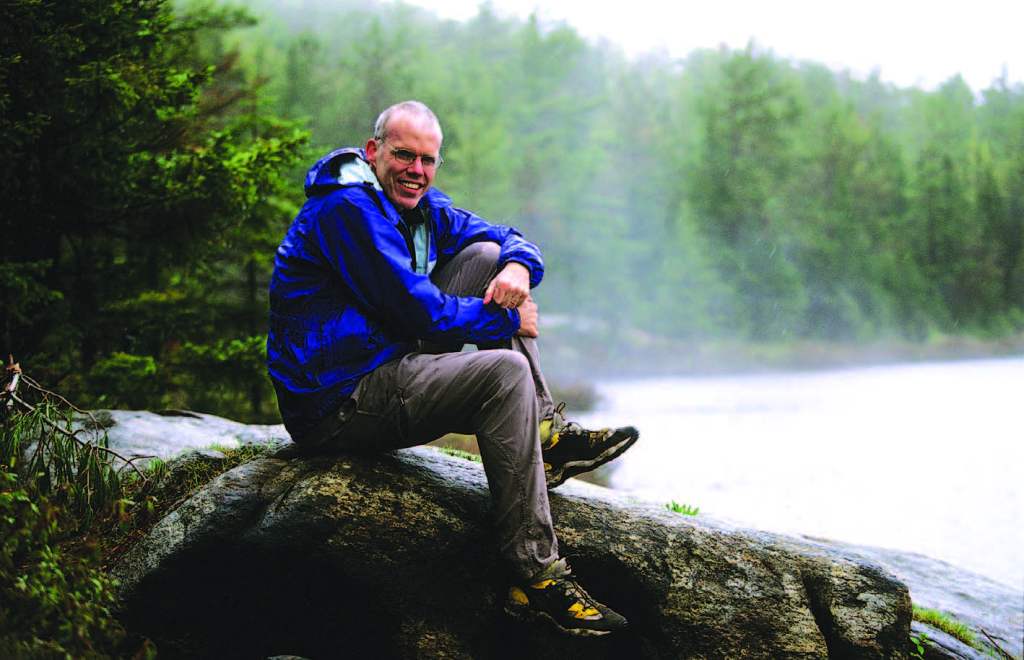
On November 3, 2007—again under McKibben’s leadership—Step It Up 2 took place.  In addition to the “80% by 2050” slogan from the first campaign, the second added a 10% reduction of emissions in three years (“Hit the Ground Running”), a moratorium on new coal-fired power plants, and a “Green Jobs Corps” to help fix homes and businesses so those targets could be met.
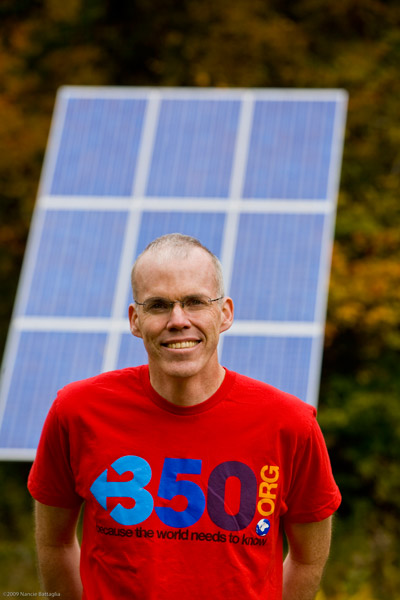
In the wake of Step It Up’s achievements, the same team announced a new campaign in March 2008 called 350.org. The organizing effort—aimed at the entire globe—drew its name from the now famous contention from climate scientist James E. Hansen that any atmospheric concentration of carbon dioxide (CO2) above 350 parts per million was unsafe. “If humanity wishes to preserve a planet similar to that on which civilization developed and to which life on Earth is adapted, paleoclimate evidence and ongoing climate change suggest that CO2 will need to be reduced from its current 385 ppm to at most 350 ppm, but likely less than that.” With offices and organizers in North America, Europe, Asia, Africa and South America, 350.org attempted to spread the 350 warning number in advance of international climate meetings in December 2009 in Copenhagen, Denmark.

On Oct. 24, 2009, 350.org coordinated over 5,000 demonstrations in more than  180 countries. It gained wide acclaim for its creative use of Internet tools, with Critical Mass’s website declaring it to be “one of the strongest examples of social media optimization the world has ever seen.” Additionally, Foreign Policy Magazine lauded it “the largest ever globally coordinated rally of any kind.”

Because of all he has done in devoting a significant portion of his life to Climate Change awareness and response, Bill McKibben is featured as one of our premiere Climate Change Heroes.


Bill McKibben—Climate Change Hero #1

We tracked down Bill McKibben in a windowless makeshift basement conference room in Paris, France. This ad hoc office space was the hub for 350.org’s massively successful civil disobedience actions at the COP-21 Climate Changeconference. At well over six feet tall, signature Red Sox ball cap included, McKibben’s presence is commanding, yet gentle. We could sense his exhaustion—he and his team had been working around the clock, doing everything (tweeting, texting, emailing, posting on Facebook) they could to raise awareness for strong civil disobedience actions at COP-21 to stop Climate Change.
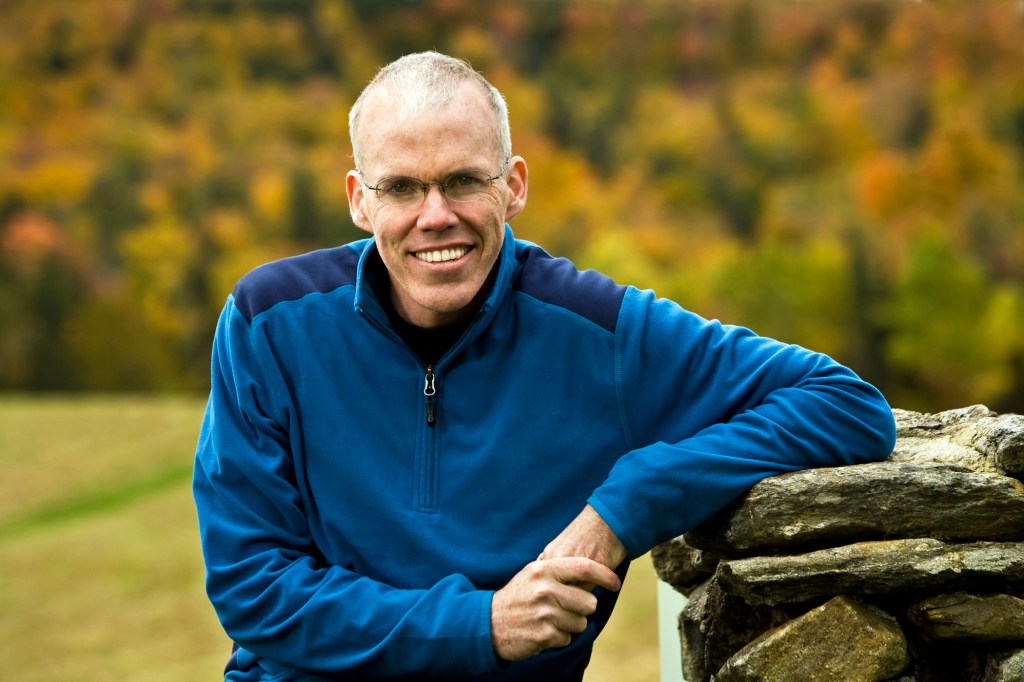
Portrait of Bill McKibben, author and activist. photo ©Nancie Battaglia

When we asked him what brought him to the cause he said, “I was a journalist and this seemed such a huge story to me—the most interesting possible story. But partway through writing the first book on it, I realized that I was not objective in the strictest sense. I did not want the world to heat up, dry up, and blow away. At some other level, perhaps I was even more objective than in the past. You know, I sort of understood what the basic reality was so… (he grows quiet) I mean, there are times when I wished that I hadn’t stumbled across all this, because there are other things that I may have wanted to do with my life. But you know, this has been a good place to be engaged in a good fight.”
Some of our heroes strategically avoid the words fightconflictbattle as too incendiary for the politics around Climate Change. But for McKibben, this is a fight and indeed, it is personal. It is becoming apparent that many of the fossil fuel companies have known about the science for over twenty-five years. In his opinion, they have robbed him of a life that could have been devoted to something different (vs. “rhetorical battle with retrograde congressmen” as he puts it in Oil and Honey). 
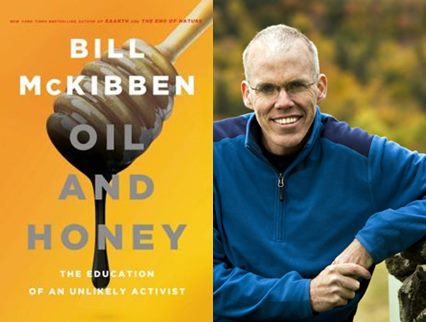
More than that, climate change may rob him of the beauty that satiates and fills his soul. McKibben says, “I think the next big front in the climate fight…may be trying to peel back all that we can learn about Exxon and what it and other oil companies knew twenty-five years ago. And I think I take that one fairly personally in a sense because I have been working on this a very long time. I wrote the first book about climate change, so I am getting uncomfortably close to thirty years of steady work on this, and knowing that twenty-five years ago, Exxon could have ended the whole faux/phony debate about it, simply by saying what they knew, makes me aggravated. Because then we could have spent the last quarter century working on solutions. We would not have solved the problem by now, but we would be well on the way. We would have turned the corner. And instead, we wasted what may turn out to be the crucial quarter century of geological history on this.  In summary, McKibben believes we have already lost lives, species and landscapes that could have been saved twenty-five years ago.

McKibben is adamant that it is far too late to stop Global Warming. That is not one of the possibilities at this point. The temperature of the planet is already 1°C warmer, and there is momentum that will raise it further than that. For him, the pertinent question now is “Can we still stop it short of damage so severe that it threatens our ability to have civilizations like the ones we are used to?”

There are only so many large physical features on Earth that can absorb carbon. Once you have run through the Arctic, the Antarctic and the world’s oceans it becomes a runaway train. The question now is not are we going to make the changes and transitions needed to head toward a renewable future. We clearly are. The question is—are we going to do it quickly enough to even begin to catch up to the physics of climate change. “That I am less convinced of, and that is why we have to keep pushing hard!”.

And McKibben has been pushing hard—really hard. We gave you the background about 350.org and its inception in Part Three. 350.org has now “organized more rallies than Lenin, Gandi, and Martin Luther King combined”. What McKibben has done with 350.org has been “the most satisfying work of my life, endlessly difficult and endlessly interesting”. He has won countless victories, the biggest of which was Obama’s rejection of the Keystone XL pipeline on November 6th, 2015.

McKibben takes great hope in the fact that the movement keeps growing and it is working. If one builds big movements, then change starts inexorably to happen. He wants it to continue to grow until it is big enough that everybody’s part in it makes sense. His optimism is cautious, however. He explains, “It is anybody’s guess whether we can build it in time or not. As I say, we will find out, and we will find out in our lifetimes. It is going to take many generations to win this fight, but we can easily lose it in the next five or ten years if we keep pouring carbon into the atmosphere”.

The next phase in the climate fight for McKibben is to get companies to pay for their injustices – which we can all hope will fund the transition towards renewable energy sources. He says, “The most important thing is the mobilization of a big movement. Once that happens it opens up all kinds of space. Now there are lots of politicians who are suddenly moving in the right direction”.  Bill stated his great optimism for the world’s ability to solve the Climate Change crisis. Ever the realist, however, he couched it by saying we have about a five year window to take swift actions before the warming trend is irreversible.


Author’s bio: For the past 50 years, professional ecologist and conservationist Budd Titlow has used his pen and camera to capture the awe and wonders of our natural world. His goal has always been to inspire others to both appreciate and enjoy what he sees. Now he has one main question: Can we save humankind’s place — within nature’s beauty — before it’s too late? Budd’s two latest books are dedicated to answering this perplexing dilemma. PROTECTING THE PLANET: Environmental Champions from Conservation to Climate Change, a non-fiction book, examines whether we still have the environmental heroes among us — harking back to such past heroes as Audubon, Hemenway, Muir, Douglas, Leopold, Brower, Carson, and Meadows — needed to accomplish this goal. Next, using fact-filled and entertaining story-telling, his latest book — COMING FULL CIRCLE: A Sweeping Saga of Conservation Stewardship Across America — provides the answers we all seek and need.Having published five books, more than 500 photo-essays, and 5,000 photographs, Budd Titlow lives with his music educator wife, Debby, in San Diego, California.

Al Gore’s Inconvenient Truth

Text excerpted from the book: PROTECTING THE PLANET-Environmental Champions from Conservation to Climate Change (ISBN 978-1-63388-225-6)

by

Budd Titlow & Mariah Tinger

https://www.amazon.com/dp/B0BG98CCWF / http://www.buddtitlow.com

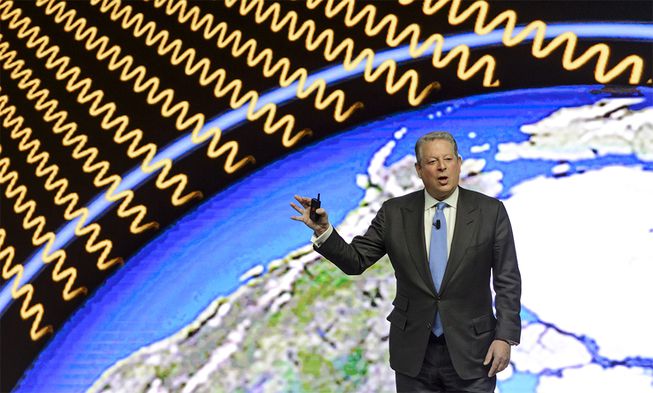
An Inconvenient Truth is a 2006 documentary film directed by Davis Guggenheim about former US Vice President Al Gore’s campaign to educate citizens about Climate Change and Global Warming.  To accomplish this educational endeavor, Gore presents a comprehensive slide show that he estimates he has given more than a thousand times. 

Premiering at the 2006 Sundance Film Festival and opening in New York City and Los Angeles on May 24, 2006, the documentary was a critical and box-office success, winning two Academy Awards for “Best Documentary Feature” and “Best Original Song”. The film grossed $24 million in the U.S. and $26 million in the foreign box office, becoming the eleventh highest grossing documentary film to date in US history.

The idea to document Gore’s efforts at educating the public about the hazards of Global Warming came from producer Laurie David who saw his presentation at a town-hall meeting which happened to coincide with the opening of the feature film, The Day After Tomorrow. Laurie David was so inspired by Gore’s slide show that she, along with producer Lawrence Bender, met with Guggenheim to adapt the presentation into a film.

Since the film’s release, An Inconvenient Truth has been credited for raising international public awareness of Climate Change and reenergizing the US Environmental Movement. The documentary has also been included in science curricula in schools around the world, which—as you might expect—has also spurred significant controversy.

In fact, since its release, “An Inconvenient Truth” has had a pronounced dual effect—sharpening the understanding and sense of foreboding in believers while further polarizing and alienating deniers.  

Al Gore—Communicator / Leader

If we were asked to select a “poster boy” for the Climate Change movement in the US, that person would be former Senator and Vice President Al Gore, Jr. In a highly unusual move among typically image-conscious politicians, Mr. Gore stood up and—with his PowerPoint presentation turned into a 2006 Oscar-winning documentary film entitled An Inconvenient Truth— told the world that Climate Change was real, that humans were responsible, and that we needed to take action immediately to preserve our quality of life on the planet.  In the process, he endured a barrage of slings, arrows, hate mongering, and insults unlike few other US politicians have ever had to contend.

Al Gore making one of his more than 1,000 presentations of “An Inconvenient Truth”.

As a creature of the Washington, DC establishment, Al Gore, Jr. has been involved in politics his whole life.  He was born on March 31, 1948 and raised in Washington, DC where his father, Al Gore, Sr., served on Capitol Hill from 1939 to 1971—first as a US Representative and then as a Senator from the State of Tennessee.  As a result, the junior Gore spent his boyhood attending prestigious private schools in the District of Columbia with summers working on the family farm in Carthage, Tennessee.

Then as a student at Harvard University during the 1960’s, Gore roomed with future actor Tommy Lee Jones and actually stumbled into the issue of Climate Change and associated Global Warming. In his senior year at Harvard, he took a class with oceanographer Roger Revelle, who sparked his interest in Global Warming and other environmental issues. Gore grasped the Climate Change science quickly and—as his political star rose—never relented in his determination to alert people that we’re baking our planet and ourselves with our lust for fossil fuels.

Beginning his career in public service in 1977, Gore was elected to represent the State of Tennessee in both the House and then in the Senate, serving from 1977 to 1993. Early on, he became one of the first politicians on Capitol Hill to grasp the seriousness of Climate Change. In fact, he held the first congressional hearings on the subject in the late 1970s. 

During his tenure in Congress, Gore also co-sponsored hearings on toxic waste in 1978–79, and then organized more hearings on Climate Change/Global Warming in the 1980s. In 1989, while still a Senator, he published an editorial in the Washington Post, in which he lamented, “Humankind has suddenly entered into a brand new relationship with the planet Earth. The world’s forests are being destroyed; an enormous hole is opening in the ozone layer. Living species are dying at an unprecedented rate.

In 1990, Senator Gore presided over a three-day conference with legislators representing over 42 countries seeking to create a “Global Marshall Plan”—”under which industrial nations would help less developed countries grow economically while still protecting the environment.” In 1992, he wrote his first book, Earth in the Balance. It became the first book written by a sitting Senator to make The New York Times “bestseller list” since John F. Kennedy’s Profiles in Courage.

While serving as Vice-President in the Clinton Administration, Gore launched the GLOBE program on Earth Day 1994.  This was an education and science activity that— according to Forbes Magazine—”made extensive use of the Internet to increase student awareness of their environment”. Then in the late 1990s, he strongly pushed for the passage of the Kyoto Protocol, which called for reduction in Greenhouse Gas emissions. As we have previously described in Part Three, despite Gore’s staunch efforts, the US totally botched the Kyoto Protocol.

In 2000, Gore famously lost one of the closest Presidential elections in U.S. History to George W. Bush.  Having an election as the world’s most powerful leader in the palm of his hand only to see it mistakenly and churlishly—in his mind and the mind of many Americans—ripped from his grasp, initially devastated Gore. 

While fate may have kept Al Gore from the US Presidency, his tenacity created something few politicians ever achieve: a genuine cause that they feel passionate about. In Gore’s case, of course, this passion was Climate Change. In 2005, he founded the “Climate Reality Project” (originally the “Alliance for Climate Protection”) which is a non-profit organization devoted to solving the Climate Change crisis. Through grassroots leadership trainingsglobal media events, digital communications, and issue campaigns, “Climate Reality” works to spread the truth and raise awareness about Climate Change. Today, Gore serves as the group’s chairman and works with the organization to promote awareness of the ongoing dangers posed by Global Warming pollution and to develop solutions for Climate Change.

Gore also created a global media brand around his An Inconvenient Truth, which became the fourth highest-grossing documentary film in US History.  A 2006 book with the same title became a bestseller. 

In October of 2007, Gore was named as joint winner of the Nobel Peace Prize—together with the UN’s Intergovernmental Panel on Climate Change (IPCC).  As part of the award, he was recognized for being “probably the single individual who has done most to create greater worldwide understanding of the measures that need to be adopted to combat Global Warming.”

In recent years, Gore has remained busy traveling the world speaking and participating in events mainly aimed towards Global Warming awareness and prevention. His keynote presentation on Climate Change consistently receives standing ovations, and—according to his writing in, An Inconvenient Truth—he has presented it at least 1,000 times.


Author’s bio: For the past 50 years, professional ecologist and conservationist Budd Titlow has used his pen and camera to capture the awe and wonders of our natural world. His goal has always been to inspire others to both appreciate and enjoy what he sees. Now he has one main question: Can we save humankind’s place — within nature’s beauty — before it’s too late? Budd’s two latest books are dedicated to answering this perplexing dilemma. PROTECTING THE PLANET: Environmental Champions from Conservation to Climate Change, a non-fiction book, examines whether we still have the environmental heroes among us — harking back to such past heroes as Audubon, Hemenway, Muir, Douglas, Leopold, Brower, Carson, and Meadows — needed to accomplish this goal. Next, using fact-filled and entertaining story-telling, his latest book — COMING FULL CIRCLE: A Sweeping Saga of Conservation Stewardship Across America — provides the answers we all seek and need. Having published five books, more than 500 photo-essays, and 5,000 photographs, Budd Titlow lives with his music educator wife, Debby, in San Diego, California.

The Hockey Stick Controversy 

Text excerpted from the book: PROTECTING THE PLANET-Environmental Champions from Conservation to Climate Change (ISBN 978-1-63388-225-6)

by

Budd Titlow & Mariah Tinger

http://www.buddtitlow.com

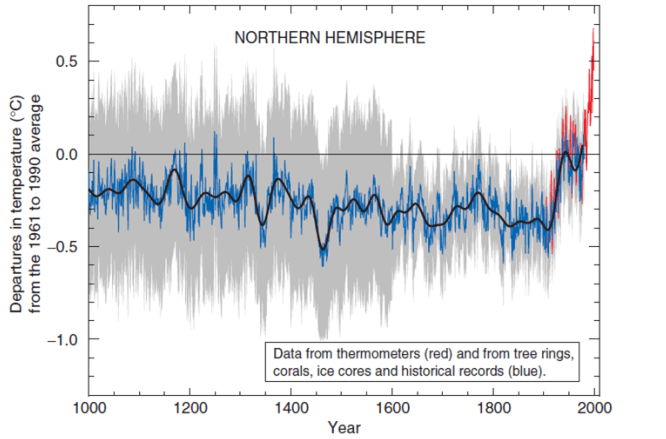
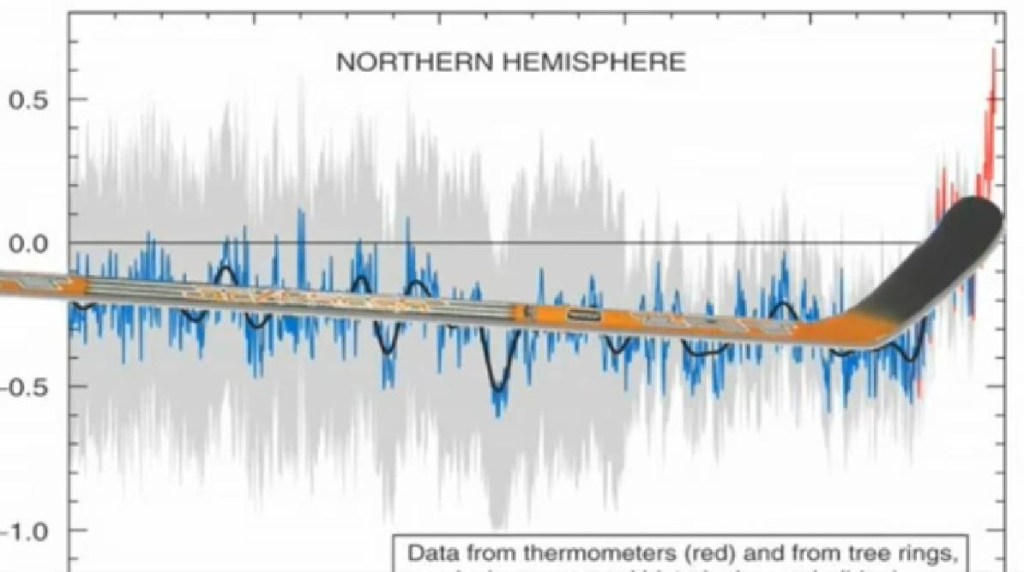
The “Hockey Stick Controversy” was an offshoot of a graph developed in 1998 that clearly showed almost a millennium’s worth (Year 1000 to Year 1900) of steady, but slowly declining global temperatures followed by radical increases in temperatures beginning in 1900’s and extending into the early 2000’s.  The shape of this graph looked like a hockey stick with a long and relatively straight handle ending in a sharply angled, short blade. The source of the data used to construct this graph led to a bitter debate between Climate Change scientists who were primarily involved with the IPCC and deniers mainly associated with the oil and gas lobby.

In 1998 and 1999, Michael E. Mann (University of Virginia), Raymond S. Bradley (University of Massachusetts – Amherst), and Malcolm K. Hughes (University of Arizona) produced MBH98 (based on the last initials of the three authors combined with the year), and then a modified MBH99—as the first eigenvector-based Climate Field Reconstructions (CFRs).  MBH98 was created using temperature data from the recent past coupled with paleoclimatic datasets—such as those from tree rings, ice cores, and coral sections—that date back to the Year 1400.  MBH99 then modified the research trio’s original graph by going back even further to the Year 1000 and thus incorporating an entire millennium’s worth of climate information.

Climatologist Jerry Mahlman then coined the term hockey stick to succinctly describe the pattern that the graph showed. Soon afterward, the “Hockey Stick Graph” was elevated to iconic status for climate believers and a bulls-eye for climate deniers.

Since MBH99 was first produced, more than two dozen additional Climate Field Reconstructions (CFR’s)—using various statistical methods and combinations of proxy records—have supported the broad consensus of Global Warming shown in the original “Hockey Stick Graph” with some variations in how flat the pre-20th Century shaft appears.  The 2007 IPCC Fourth Assessment Report cited 14 reconstructions, 10 of which covered 1,000 years or longer, to support its strengthened conclusion it was likely that Northern Hemisphere temperatures during the 20th Century were the highest in at least the past 1,300 years. Arguments over the reconstructions have been taken up by the fossil fuel industry lobbying groups that are attempting to cast doubt on Climate Change

Climate Change skeptics often cite the “Little Ice Age” and “Medieval Warming Period” as pieces of evidence not reflected in the “Hockey Stick Graph”, yet these extremes are examples of regional, not global, phenomena.  “From an intellectual point of view, these contrarians are pathetic, because there’s no scientific validity to their arguments whatsoever,” says Michael Mann. “But they’re very skilled at deducing what sorts of disingenuous arguments and untruths are likely to be believable to the public that doesn’t know better.”

Michael Mann—Theorist / Communicator

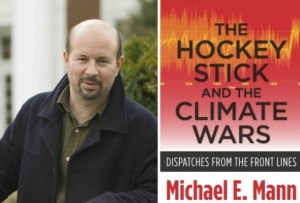
In the “olden days” (i.e., the Sixties), if you really wanted to put someone down, one of the ways you could do it was by calling him a “hockey puck”.  But how about living with a situation where every time someone says your name, many people conjure up visions of a “hockey stick”?  Well, since 1998, that’s what Professor Michael Mann has been living with.  Although he probably doesn’t think of it in a negative context.  You see, Dr. Mann was the scientist primarily responsible for what is known as the “Hockey Stick Graph” which dramatically and conclusively shows that today’s Climate Change is not a long-term cyclical event. 

Michael E. Mann was born in 1965 in Amherst, Massachusetts where his father was a Professor of Mathematics at the University of Massachusetts.  He received his undergraduate degrees in Physics and Applied Math from the University of California at Berkeley, an MS degree in Physics from Yale University, and a PhD in Geology & Geophysics from Yale University. He is currently a Distinguished Professor of Atmospheric Science at Penn State University where he also serves as director of the Earth System Science Center (ESSC). His present research focus involves the use of theoretical models and observational data to better understand Earth’s climate system. 

Mann was a Lead Author on the Observed Climate Variability and Change chapter of the Intergovernmental Panel on Climate Change (IPCC) Third Scientific Assessment Report in 2001 and was organizing committee chair for the National Academy of Sciences Frontiers of Science in 2003. He has received a number of honors and awards including NOAA’s outstanding publication award in 2002 and selection by Scientific American as one of the fifty leading visionaries in science and technology in 2002. He contributed, with other IPCC authors, to the award of the 2007 Nobel Peace Prize.

The author of more than 190 peer-reviewed and edited publications, Mann has published two books including Dire Predictions: Understanding Climate Change and The Hockey Stick and the Climate Wars: Dispatches from the Front Lines. He is also a co-founder of the award-winning science website RealClimate.org.

Okay, so let’s get back to this hockey stick controversy—specifically Mann’s involvement with it. To begin with, his innovative research helped recreate the Earth’s historical temperature record and separate the noise of natural weather fluctuations from the steady signal of real climate change.  This led Mann and his co-researchers to produce the “hockey stick graph” in 1998 which has since played a significant role in the development of the overwhelming scientific consensus that the planet is warming and human activities are responsible.

Since then, Mann—an affable scientist—has been dragged into the fray by diehard Climate Change deniers. He was a central figure in the trumped-up “Climategate” scandal—that we discussed in Part Three “—accused with other scientists of fraud by conservative bloggers and pundits before being vindicated by eight separate independent investigations. He was later the subject of an “academic witch-hunt” by former Virginia Attorney General Ken Cuccinelli until a circuit court judge ruled that Cuccinelli had provided no “objective basis” for his crusade.

But if Mann began as an unwilling combatant in the public debate, he has since become a fierce defender of scientific discourse. He’s currently suing for defamation the National Review, right-wing columnist Mark Steyn, and the Competitive Enterprise Institute (CEI)—a libertarian think tank.  The Washington Post has dubbed CEI “a factory for global warming skepticism” that has received funding from ExxonMobil, the American Petroleum Institute, and Arch Coal—among others.

Mann laments the fact that climate naysayers are still running around all over the place.  He staunchly believes that if the public had a better grasp of how science works, there would be no climate “skepticism”.  They would understand that climatology is based on the same “scientific method” as many other fields of endeavor.  But he also understands that much of the negative flashback is being stoked by the fossil fuel industry and their ham-fisted cohorts.   

In a March 28, 2016 posting on the HuffPost Green’s web site, Mann wrote this about fossil fuel companies misleading the public and policymakers about the risks of their products for decades: “As early as the late 1970s, executives at fossil fuel companies were well aware that burning oil, gas and coal could cause irreversible and dangerous climate change. Indeed, as early as 1981, Exxon-Mobil was weighing whether or not to develop carbon-intense gas reserves off the coast of Indonesia because of the climate risks associated with the project.”

Mann then continued with his indictment by writing that Exxon-Mobil and other fossil fuel companies chose to suppress what its own scientists knew. “From 1979 to 1983, the American Petroleum Institute operated a scientific task force to study climate change. According to a researcher who worked on the project, it was taken out of scientists’ hands and quickly buried—and forgotten—until reporters rediscovered it just last year.”

In concluding his piece, Mann once again defended the veracity of his “hockey stick graph” this way: “Our key finding, that the recent warming trend is unprecedented over at least the past 1000 years, has not only been overwhelmingly affirmed by more than a dozen subsequent studies, but has been vastly strengthened. There is now widespread consensus in the scientific community that recent warmth is unprecedented over an even longer time frame—for the full story behind fossil fuel industry-funded attacks on me and the hockey stick, read my books.”


Author’s bio: For the past 50 years, professional ecologist and conservationist Budd Titlow has used his pen and camera to capture the awe and wonders of our natural world. His goal has always been to inspire others to both appreciate and enjoy what he sees. Now he has one main question: Can we save humankind’s place — within nature’s beauty — before it’s too late? Budd’s two latest books are dedicated to answering this perplexing dilemma. PROTECTING THE PLANET: Environmental Champions from Conservation to Climate Change, a non-fiction book, examines whether we still have the environmental heroes among us — harking back to such past heroes as Audubon, Hemenway, Muir, Douglas, Leopold, Brower, Carson, and Meadows — needed to accomplish this goal. Next, using fact-filled and entertaining story-telling, his latest book — COMING FULL CIRCLE: A Sweeping Saga of Conservation Stewardship Across America — provides the answers we all seek and need. Having published five books, more than 500 photo-essays, and 5,000 photographs, Budd Titlow lives with his music educator wife, Debby, in San Diego, California.

James Balog and Chasing Ice

Text excerpted from the book: PROTECTING THE PLANET-Environmental Champions from Conservation to Climate Change (ISBN 978-1-63388-225-6)

by

Budd Titlow & Mariah Tinger

http://www.buddtitlow.com

In the spring of 2005, acclaimed environmental photographer James Balog headed to the Arctic on a tricky assignment for National Geographic: to capture images to help tell the story of the Earth’s changing climate. Even with a scientific upbringing, Balog had been a skeptic about Climate Change. But that first trip north opened his eyes to one of the biggest stories in human history and sparked a challenge within him that would put his career and his very well-being at risk.

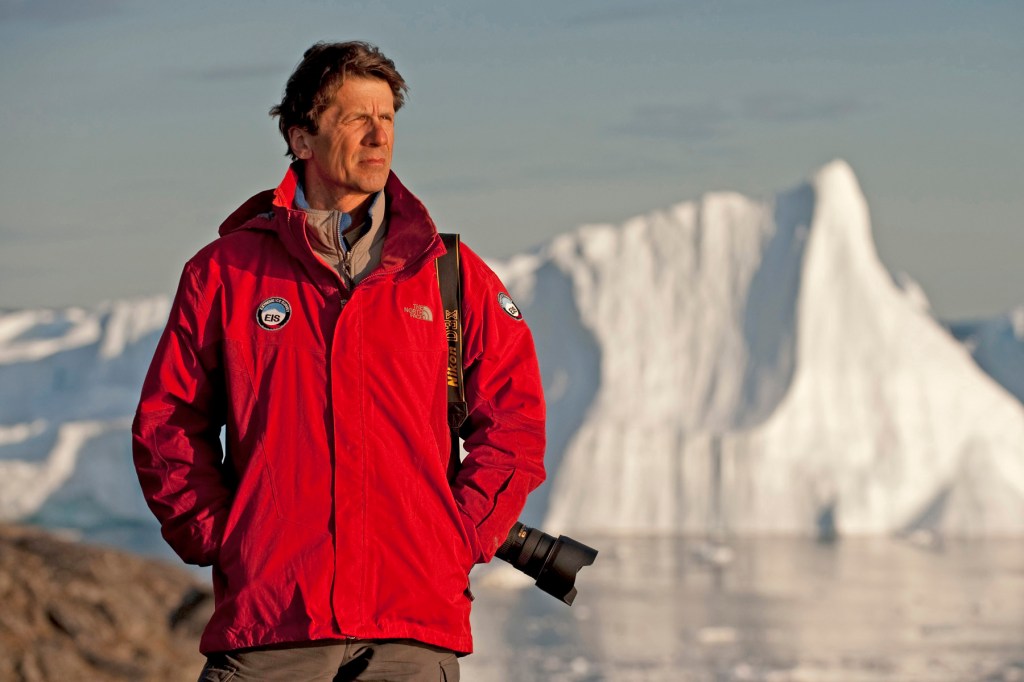
James Balog with icebergs at Ilulissat Isfjord, UNESCO World Heritage site.

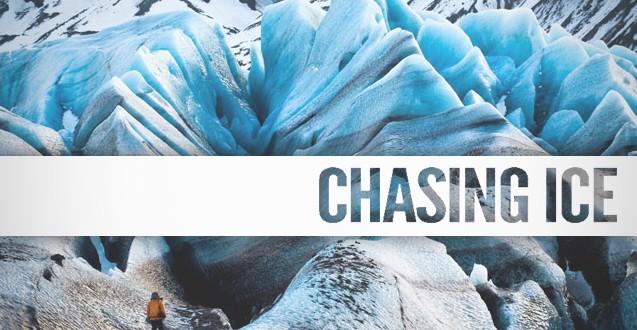
Chasing Ice is the story of Balog’s mission to change the tide of history by gathering undeniable evidence of our changing planet. Within months of that first trip to Iceland, the photographer conceived the boldest expedition of his life: “The Extreme Ice Survey”. With a band of young adventurers in tow, Mr. Balog began deploying revolutionary time-lapse cameras across the brutal Arctic to capture a multi-year record of the world’s changing glaciers.

As the Climate Change debate polarized America and the intensity of natural disasters ramped up globally, Balog found himself at the end of his tether. Battling untested technology in subzero conditions, he came face to face with his own mortality. In the end result, Balog’s hauntingly beautiful videos compress years into seconds and capture ancient mountains of ice in motion as they disappear at a breathtaking rate. Chasing Ice depicts a photographer trying to deliver evidence and hope to our carbon-powered planet.

On a personal note, our first viewing of Chasing Ice left us mesmerized, exhausted, and enraged.  At the conclusion of Mr. Balog’s questions and answers, the entire audience of 500 people instinctively rose as one in a show of support for the film’s dramatic message and the man who had risked so much to put it together.  We believe that it’s impossible to watch Chasing Ice and come away still doubting that Climate Change is really happening.


James Balog—Explorer / Communicator

James Balog has given a visual, both beautiful and devastating, to Climate Change. He squeezed in an interview before his trip to touch the glaciers of Mount Kilimanjaro—a trip he had been anticipating and planning for fifteen years. He was in a race against time to visit this glacier, a recurring theme for him: the frozen subject matter of his “Extreme Ice Survey” (EIS) keeps disappearing. He has devoted his recent work to capturing these glaciers before they melt away permanently.

Balog is the Founder and Director of Earth Vision Institute, National Geographic Photographer and Geomorphologist, and also Founder of the EIS which is the most wide-ranging, ground-based, photographic study of glaciers ever conducted.  He has been photographing the Anthropocene “since 20 years before it was given a name.” 

The immediate catalyst that squelched Balog’s skepticism about Climate Change was the realization that there were concrete measurements of ancient climates trapped in the ice cores of Greenland and Anarctica. These cores held an actual empirical record of how the atmosphere had changed. “The climate change story was not about computer models. When I understood it to be an empirical science, an actual tangible collection of evidence, that is what really got me fired up.” The final catalyst for him was an article he read fifteen years ago about the vanishing snows of Kilimanjaro. This sparked his enthusiasm and built his anticipation of finally seeing the glaciers that have receded significantly since he read that article. 

The EIS captured shots of 23 glaciers in Antarctica, Greenland, Iceland, Canada, Austria, Alaska and the Rocky Mountains of the US.  Through the time-lapse photography, Balog captured images of ninety-five percent of the glaciers in the world retreating or shrinking, since the project began in 2007.  The documentary Chasing Ice features this phenomenon, and won the 2012 award for Excellence in Cinematography at the Sundance Film Festival. It was also shortlisted for the 2013 Academy Awards and featured on ABC, NBC, CBS, and PBS television networks.

Balog’s cameras make the invisible visible, and if seeing is believing, the images Balog has collected prove that we are losing glaciers permanently and rapidly. The loss of this frozen ice is turning into sea level rise, directly attributing to precipitation and changing temperature patterns. Balog says there is no significant scientific dispute about this, “it’s been observed, it’s measured, it’s bomb-proof information”. He refers to these glacial retreats as “the canaries in the coalmine”, indicating that their rapid melting should be setting off warning bells for the world.

In Chasing Ice, Balog’s resiliency and determination for the importance of capturing glacial retreat is highlighted by his persistence in the research despite a serious knee injury and several surgeries.  When asked why he said, “We are fundamentally a species that works in favor of its survival—we self-propagate. The more emotional and intellectual understanding we have of how rapidly the world is shifting around us, the more likely we are to take the actions necessary to alter course.”

We need a paradigm shift—a demand for the technological and political will to help us incrementally peel away from fossil fuel use where we can. According to Balog, for change to begin happening, we need to take all of the different things that people know how to do and apply them to climate change. “If everybody does a piece of that activity -whether it is to engineer wind turbines, put photovoltaics on the roof of your house, caulk your windows, put a smart thermometer in your house, change to a different car, or go to Washington and try to influence that crazy policy machine- it all keeps rippling out. Eventually it makes a new story that society absorbs and understands,” he says. This story eventually becomes the new paradigm and creates a new future.

Author’s bioFor the past 50 years, professional ecologist and conservationist Budd Titlow has used his pen and camera to capture the awe and wonders of our natural world. His goal has always been to inspire others to both appreciate and enjoy what he sees. Now he has one main question: Can we save humankind’s place — within nature’s beauty — before it’s too late? Budd’s two latest books are dedicated to answering this perplexing dilemma. PROTECTING THE PLANET: Environmental Champions from Conservation to Climate Change, a non-fiction book, examines whether we still have the environmental heroes among us — harking back to such past heroes as Audubon, Hemenway, Muir, Douglas, Leopold, Brower, Carson, and Meadows — needed to accomplish this goal. Next, using fact-filled and entertaining story-telling, his latest book — COMING FULL CIRCLE: A Sweeping Saga of Conservation Stewardship Across America — provides the answers we all seek and need. Having published five books, more than 500 photo-essays, and 5,000 photographs, Budd Titlow lives with his music educator wife, Debby, in San Diego, California.

Solar and Wind Take Flight

Text excerpted from the book: PROTECTING THE PLANET-Environmental Champions from Conservation to Climate Change (ISBN 978-1-63388-225-6)

by

Budd Titlow & Mariah Tinger

http://www.buddtitlow.com

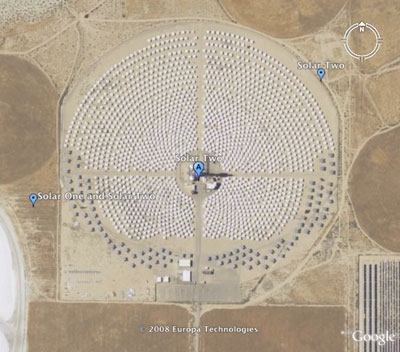
Despite the onset of the Reagan backlash, the early 1980’s saw several significant renewable energy and conservation related events.  These included the completion of the Solar One Project in the Mojave Desert just east of Barstow, CA. Designed by a team of scientists from the Sandia National Laboratories in Livermore, California; Southern California Edison; the Los Angeles Department of Water and Power; and the California Energy Commission; Solar One was a pilot solar-thermal project that provided the first test of a large-scale solar tower plant

Prototype of a large-scale solar farm

The plant’s method of collecting energy was based on concentrating the sun’s energy onto a common focal point to produce the heat needed to run a steam turbine generator. It had hundreds of large mirror assemblies, or heliostats, that tracked the sun and reflected the solar energy onto a tower where a black receiver absorbed the heat. High-temperature heat transfer fluid was then used to carry the energy to a boiler on the ground where the steam was used to spin a series of turbines—much like a traditional power plant.

The first half of the Reagan “Decade of Decadence” hit another positive note when the US wind energy industry spun into existence with 17,000 turbines centered primarily in California.  Danish companies—including Kuriant, Vestas, Nordtank, and Bonus—crafted most of the world’s first aeolian units including those installed in the US.  Unfortunately, the wind industry in the US soon fell prey to a combination of bad technology and lackadaisical policy.

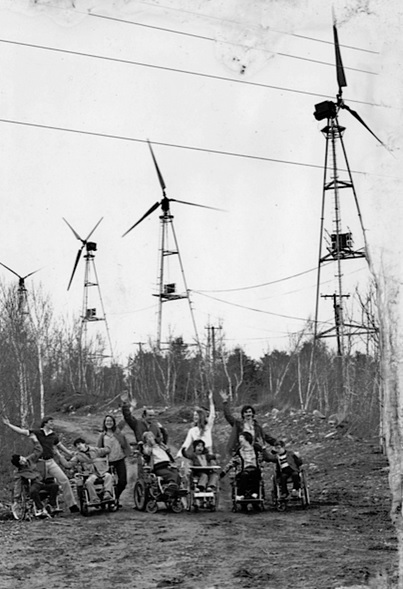
The first wind farm in US history—consisting of twenty 30 kilowatt (kW) turbines—was constructed on Crotched Mountain in New Hampshire in 1981.  The project was deemed a failure due to turbine breakdowns and overestimation of wind power as a reliable energy source. Then in 1985, a wind farm in California—that was powering 250,000 homes—was determined to be inadequate because of the limited maximum capacity of its turbines.  Meanwhile throughout the decade, US DOE funding for wind power research and development was experiencing a decline—reaching a low point in 1989.

Crotched Mountain Wind Farm in New Hampshire

Author’s bio:For the past 50 years, professional ecologist and conservationist Budd Titlow has used his pen and camera to capture the awe and wonders of our natural world. His goal has always been to inspire others to both appreciate and enjoy what he sees. Now he has one main question: Can we save humankind’s place — within nature’s beauty — before it’s too late? Budd’s two latest books are dedicated to answering this perplexing dilemma. PROTECTING THE PLANET: Environmental Champions from Conservation to Climate Change, a non-fiction book, examines whether we still have the environmental heroes among us — harking back to such past heroes as Audubon, Hemenway, Muir, Douglas, Leopold, Brower, Carson, and Meadows — needed to accomplish this goal. Next, using fact-filled and entertaining story-telling, his latest book — COMING FULL CIRCLE: A Sweeping Saga of Conservation Stewardship Across America — provides the answers we all seek and need.Having published five books, more than 500 photo-essays, and 5,000 photographs, Budd Titlow lives with his music educator wife, Debby, in San Diego, California.


Dawn of the Internet and The Global Communication Age

Text excerpted from the book: PROTECTING THE PLANET-Environmental Champions from Conservation to Climate Change (ISBN 978-1-63388-225-6)

by

Budd Titlow & Mariah Tinger

http://www.buddtitlow.com

The late 1990’s saw the blossoming of a new weapon in the arsenal of environmental activists.  The full-on advent of the Internet opened the world of cyberspace to information dissemination and recruitment of new members. Suddenly almost every corner of the world—no matter how remote—was accessible to open communication with the rest of the world.  Plus every piece of information ever produced on the planet could now be transferred to other locations in less than a blink of eye.  Yes, the onset of the information age had started in full tilt and our world would never be the same again!

While he didn’t really invent the Internet—as many have jokingly claimed—Clinton’s Vice President Al Gore has consistently been one of the world’s most resourceful politicians in using the Internet for dissemination of information about Climate Change and other significant environmental issues.  In a 1997 letter to the US State Department under the heading Environmental Diplomacy: The Environment and US Foreign Policy, Gore provided this poignantly insightful assessment of global environmental conditions:

“Environmental problems such as global Climate Change, ozone depletion, ocean and air pollution, and resource degradation—compounded by an expanding world population —respect no borders and threaten the health, prosperity, and jobs of all Americans.  All the missiles and artillery in our arsenal will not be able to protect our people from rising sea levels, poisoned air, or foods laced with pesticides.  Our efforts to promote democracy, free trade, and stability in the world will fall short unless people have a livable environment.  We have an enormous stake in the management of the world’s resources.  Demand for timber in Japan means trees fall in the US.  Greenhouse gas emissions anywhere in the world threaten coastal communities in Florida.  A nuclear accident in the Ukraine kills for generations. Our children’s future is inextricably linked to our ability to manage earth’s air, water, and wildlife today.”


Author’s bio: For the past 50 years, professional ecologist and conservationist Budd Titlow has used his pen and camera to capture the awe and wonders of our natural world. His goal has always been to inspire others to both appreciate and enjoy what he sees. Now he has one main question: Can we save humankind’s place — within nature’s beauty — before it’s too late? Budd’s two latest books are dedicated to answering this perplexing dilemma. PROTECTING THE PLANET: Environmental Champions from Conservation to Climate Change, a non-fiction book, examines whether we still have the environmental heroes among us — harking back to such past heroes as Audubon, Hemenway, Muir, Douglas, Leopold, Brower, Carson, and Meadows — needed to accomplish this goal. Next, using fact-filled and entertaining story-telling, his latest book — COMING FULL CIRCLE: A Sweeping Saga of Conservation Stewardship Across America — provides the answers we all seek and need.Having published five books, more than 500 photo-essays, and 5,000 photographs, Budd Titlow lives with his music educator wife, Debby, in San Diego, California.
The Climate Change Debate Takes Off (1988 – 2000)

Global Warming and the Founding of the IPCC

Text excerpted from the book: PROTECTING THE PLANET-Environmental Champions from Conservation to Climate Change (ISBN 978-1-63388-225-6)

by

Budd Titlow & Mariah Tinger

http://www.buddtitlow.com

Beginning in the 1980’s, the global annual mean temperature curve started to rise and climate scientists began correlating this increase with a worldwide warming trend.  The media and the general public took notice and began questioning the previous prognoses of a “New Ice Age” that had been bandied about for the past few decades.   

Near the end of the decade, the global temperature curve began to increase so steeply that the Global Warming Theory began to gain ground fast. Various environmental NGO’s started to advocate global environmental protection to prevent further Global Warming. The media also gained an interest in this idea of a warming atmosphere and it soon became a hot news topic that was repeated around the world. Pictures of smoke stacks were juxtaposed next to pictures of melting ice caps and severe flooding events. Soon, a complete media circus had evolved that convinced many people that we were on the verge of a significant Climate Change event that would have many long-term negative impacts on the Earth.

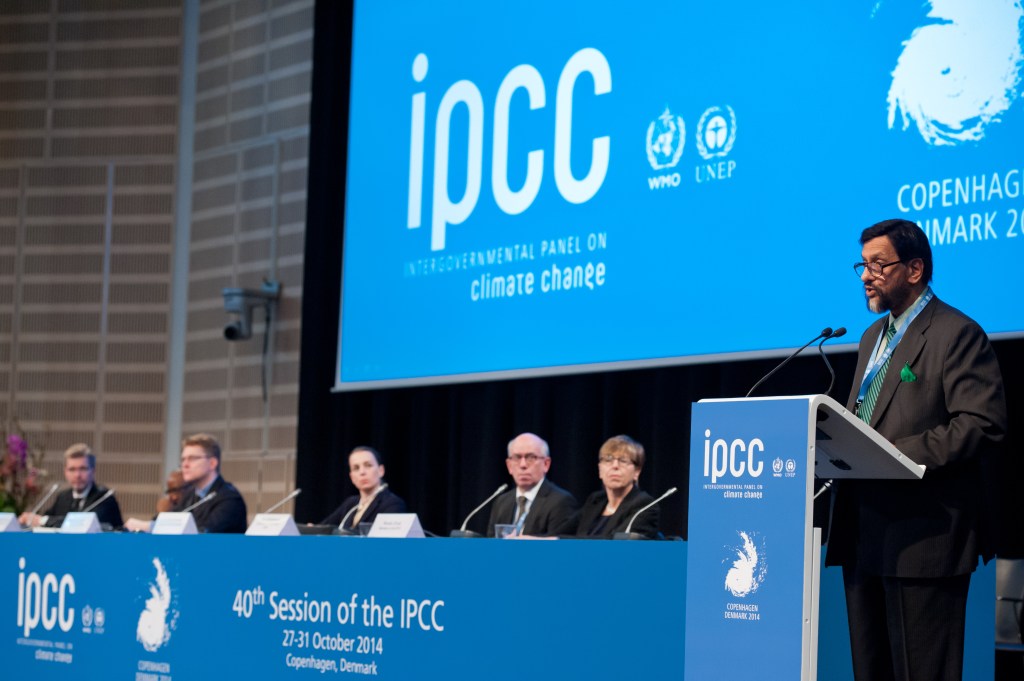
As an offshoot of this concern, the Intergovernmental Panel on Climate Change (IPCC) formed in 1988 with a primary goal of collecting and processing Climate Change information. Consisting of more than 2,500 scientific and technical experts, the IPCC was charged with predicting the future impacts of the Greenhouse Effect according to existing climate models and literature information.

Established under the auspices of the United Nations and set up at the request of member governments, the IPCC is open to all members of the World Meteorological Organization (WMO) and the United Nations Environment Programme (UNEP). IPCC scientists are from widely divergent research fields including climatology, ecology, economics, medicine, and oceanography.

The IPCC routinely produces Assessment Reports that support the 1992 United Nations Framework Convention on Climate Change (UNFCCC) which is the main international treaty on the subject. The UNFCCC’s precisely-stated objective is “stabilizing greenhouse gas concentrations in the atmosphere at a level that would prevent dangerous anthropogenic [i.e., human-induced] interference with the climate system”.

As the internationally accepted authority on Climate Change, the IPCC produces Assessment Reports that have the agreement of leading climate scientists and the consensus of participating governments.  The IPCC bases each of its Assessment Reports on the published literature—including both peer-reviewed and non peer-reviewed sources. It does not conduct any of its own original research and also does not carry out any in-house monitoring of climate events or phenomena.

Thousands of scientists and other experts—working strictly on a voluntary basis, without pay—contribute to writing and reviewing the IPCC Assessment Reports. For expediency, each reports contains a “Summary for Policymakers” which is subjected to line-by-line approval by delegates from all participating governments—typically representing more than 120 countries. The IPCC’s First Assessment Report—issued in 1990—concluded that the Earth’s temperature had risen during the past century and that human emissions of fossil fuels were likely adding to this rise.

At this juncture with the introduction of the IPCC, we should now discuss the Heartland Institute’s Nongovernmental International Panel on Climate Change (NIPCC).  As is obvious from its similar name and acronym, the NIPCC was created in 2003 solely to cast aspersions and doubts on the findings and reports of the legitimate climate scientists whose work is covered by the IPCC.

To be as candid as possible here, the Heartland Institute that founded the NIPCC is a non-scientific, doubt-mongering entity supported by the fossil fuel industry and the Koch Brothers—their cohorts in the not so fine art of lying.  Any documents produced by the Heartland Institute and/or the NIPCC have no credibility—scientific or otherwise—beyond casting doubt.

Stephen Schneider—Climate Change Guru

One of the primary scientists on the IPCC when it first formed in 1988 was a man who made the first steadfast predictions about Global Warming back in 1976.  Dr. Stephen Schneider was a recipient of a MacArthur Genius Grantand shared the 2007 Nobel Peace Prize with his colleagues on the IPCC and former vice president Al Gore for their international research on Global Warming. Dr. Schneider was an expert adviser to every presidential administration from Nixon to Obama. He was the Melvin and Joan Lane professor for interdisciplinary environmental studies, a professor in the Department of Biology, and a senior fellow at the Woods Institute for the Environment at Stanford University. He was also a National Center for Atmospheric Research (NCAR) scientist from 1973-1996, where he co-founded the Climate Project.

Dr. Stephen Schneider was an expert adviser to every presidential administration from Nixon to Obama.

Founder and editor of Climatic Change Magazine, Professor Schneider authored or co-authored over 500 books, scientific papers, proceedings, and legislative testimonies, and edited hundreds of other books chapters, reviews, and editorials.  He especially emphasized climate-driven Global Warming and its wide-ranging effects, such as a recorded rise in ocean temperatures and the increasing potency and frequency of hurricanes. He also conducted research on the near-irreversible damage of GHG on the ozone layer and theorized how a nuclear war might affect the climate.

“No one, and I mean no one, had a broader and deeper understanding of the climate issue than Stephen,” said Michael Oppenheimer, a professor of geosciences and international affairs at Princeton University. “More than anyone else, he helped shape the way the public and experts thought about this problem—from the basic physics of the problem, to the impact of human beings on nature’s ecosystems, to developing policy.”

Unfortunately, this Climate Change visionary died far too early— at the age of 65—from an apparent heart attack while on a flight landing in London in 2010.  The Climate Change community could certainly use his bold and unflinchingly forthright leadership right now.

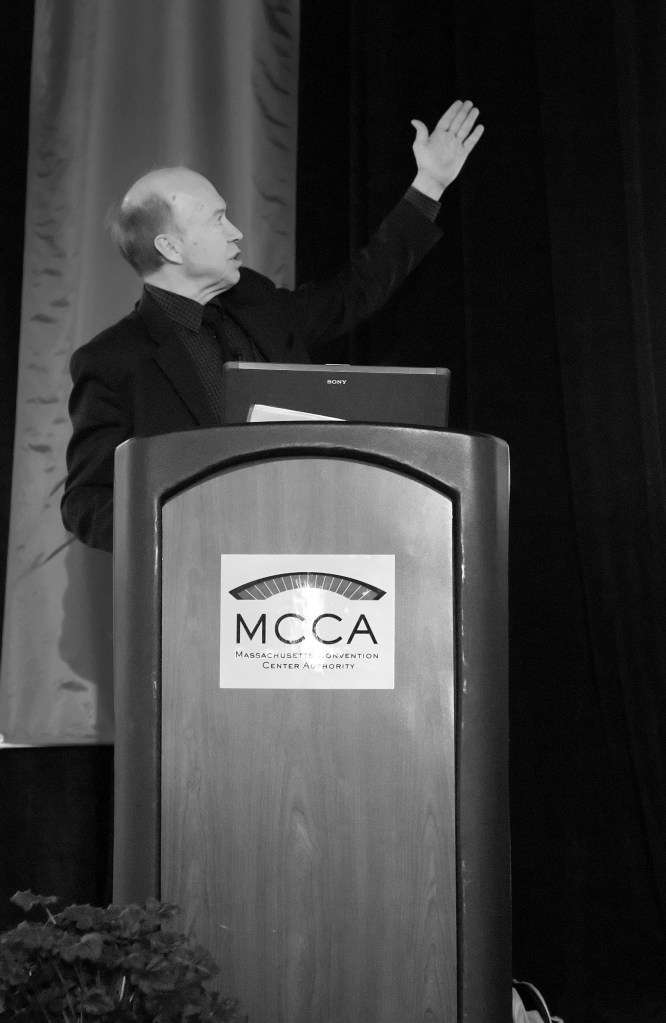
NASA’s James Hansen—Yes, Climate Change Is For Real! And The Deniers Respond

On the more fortunate side of the ledger, another esteemed climatologist stepped up in 1988 and made the world aware of the pending perils of Global Warming associated with Climate Change. Dr. James Hansen, National Atmospheric and Space Administration (NASA) scientist reported to Congress that Global Warming was simultaneously melting the polar ice caps and causing extreme droughts throughout the world.  As a climate scientist who made a lasting impression about the potential dangerous effects that Climate Change posed for the world, Dr. Hansen is featured as one of our Climate Change Heroes.  

In 1988, Dr. James Hansen—National Atmospheric and Space Administration (NASA)—scientist made the world aware of the pending perils of Global Warming associated with Climate Change.

Perfectly dove-tailing with Dr. Hansen’s testimony before Congress, 1988 featured both the highest global temperature in 130 years and the worst US droughts since the Dust Bowl Era of the 1930’s. Taken collectively, these findings did manage to give the ongoing Climate Change crisis some cache with the media and the general public.  Unfortunately, the information also alerted the denier network that immediate action needed to be taken to avert the truth. 

Accordingly in 1989, the fossil fuel companies and other US industries formed the Global Climate Coalition (GCC) with a mission of convincing politicians and the general public that Climate Change science was too uncertain to justify action.  The GCC dissolved in 2002 due to membership loss when an IPCC Assessment Report provided massive technical information showing that Global Warming was indeed occurring.

However today—working primarily through the Heartland Institute and the pseudo-scientific NIPCC—the fossil fuel industry is still lobbying Congress that IPCC and other scientific reports showing that severe Global Warming caused by ongoing Climate Change are inconclusive and that the situation requires further study.


Author’s bio:For the past 50 years, professional ecologist and conservationist Budd Titlow has used his pen and camera to capture the awe and wonders of our natural world. His goal has always been to inspire others to both appreciate and enjoy what he sees. Now he has one main question: Can we save humankind’s place — within nature’s beauty — before it’s too late? Budd’s two latest books are dedicated to answering this perplexing dilemma. PROTECTING THE PLANET: Environmental Champions from Conservation to Climate Change, a non-fiction book, examines whether we still have the environmental heroes among us — harking back to such past heroes as Audubon, Hemenway, Muir, Douglas, Leopold, Brower, Carson, and Meadows — needed to accomplish this goal. Next, using fact-filled and entertaining story-telling, his latest book — COMING FULL CIRCLE: A Sweeping Saga of Conservation Stewardship Across America — provides the answers we all seek and need.Having published five books, more than 500 photo-essays, and 5,000 photographs, Budd Titlow lives with his music educator wife, Debby, in San Diego, California.
Chico Mendes—Martyr of the Brazilian Rainforests

Text excerpted from the book: PROTECTING THE PLANET-Environmental Champions from Conservation to Climate Change (ISBN 978-1-63388-225-6)

by

Budd Titlow & Mariah Tinger

http://www.buddtitlow.com

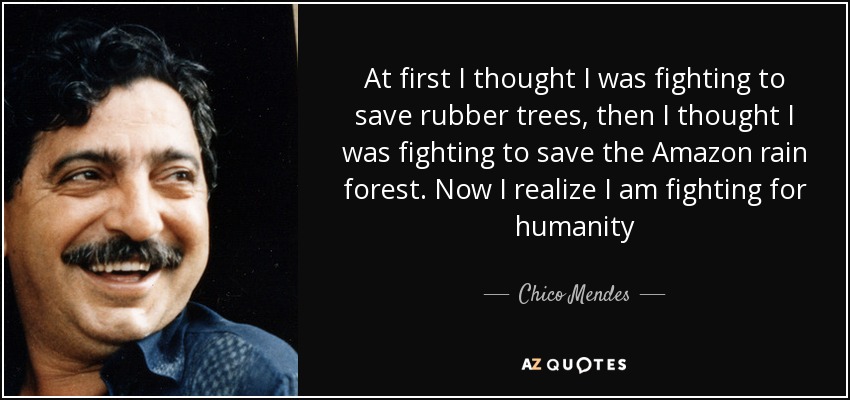
On December 22, 1988, a tragic event occurred deep in the Brazilian countryside that had a stark effect on worldwide natural resource conservation in general and today’s Climate Change situation in particular.  On that day, Chico Mendes—a Brazilian rubber tapper, known as a seringueiro, and land rights leader—became world famous when he was gunned down outside his own home by the son of a local rancher.  During the shooting, two Brazilian policemen—who were assigned to protect Mendes from death threats—sat playing cards at the kitchen table inside his home.  Ironically, just the week before on his 44th birthday, Mendes had ominously predicted that he would not live to see Christmas Day.

The problem was that the local ranchers and others who benefited from wholesale clear-cutting of Brazilian rainforests viewed Mendes as the enemy.  His life inside the Brazilian rainforest had been fairly typical.  He first went to work as a seringueiro when he was only nine years old and did not attend school.  The rubber plantation owners did not want their workers to be able to read and write because this knowledge might expose them as the exploitative employers they were.

Even without the benefit of an education, Mendes had a strong sense of what was right coursing through his blood.  Although Mendes and his colleagues were a tiny, marginalized minority, their efforts brought them to power in parts of Brazil’s Amazon during the 1980’s.  He helped organize the local rubber tappers into a union and developed a technique called an empate—which amounted to blockading rubber tree tracts from ranchers and farmers who wanted to clear the land.

Mendes also pioneered the world’s first tropical forest conservation initiative that was advanced by the forest natives themselves.  In the process, he established the world’s first extractive preserves that protected forested areas that were inhabited and managed by local communities.  In 1987, the Environmental Defense Fund (EDF) and the National Wildlife Federation (NWF) flew Mendes to Washington, DC in an attempt to convince the World Bank and the US Congress to support creation of more extractive reserves

Prophetically, Mendes’ death proved to be a turning point in the war to save the Amazon rainforest.  Now 40 percent—a total 58 million acres—is set aside for protection.  Today, the Chico Mendes Institute for Conservation of Biodiversity (Instituto Chico Mendes de Conservação da Biodiversidade), a body under the jurisdiction of the Brazilian Ministry of the Environment, is named in his honor. Mendes won several other awards for his work including the United Nations Program Global 500 Roll of Honor Award in 1987 and the NWF’s National Conservation Achievement Award in1988.

Also the Chico Mendes Extractive Reserve (CMER) was created in the area where he lived.  The Chico Mendes Reserve has electricity and schools and many students have graduated from university. Some seringueiros now have motorbikes and cars and are employed as forest guides. Trees are sustainably harvested in the CMER, and there is an eco-lodge. Building on this model, 68 other extractive reserves have been established in the Brazilian Amazon, covering more than 33,000,000 acres.

Author’s bio:For the past 50 years, professional ecologist and conservationist Budd Titlow has used his pen and camera to capture the awe and wonders of our natural world. His goal has always been to inspire others to both appreciate and enjoy what he sees. Now he has one main question: Can we save humankind’s place — within nature’s beauty — before it’s too late? Budd’s two latest books are dedicated to answering this perplexing dilemma. PROTECTING THE PLANET: Environmental Champions from Conservation to Climate Change, a non-fiction book, examines whether we still have the environmental heroes among us — harking back to such past heroes as Audubon, Hemenway, Muir, Douglas, Leopold, Brower, Carson, and Meadows — needed to accomplish this goal. Next, using fact-filled and entertaining story-telling, his latest book — COMING FULL CIRCLE: A Sweeping Saga of Conservation Stewardship Across America — provides the answers we all seek and need.Having published five books, more than 500 photo-essays, and 5,000 photographs, Budd Titlow lives with his music educator wife, Debby, in San Diego, California.
THE MYSTIQUE OF THE BOSTON RED SOX

By Budd Titlow

http://www.buddtitlow.com

A lifelong baseball fan, I experienced something on a crisp evening in late October 1986 that changed me forever.

I had just moved to Boston and my television was tuned to Game Six of the World Series—being played between the Boston Red Sox and the New York Mets. I was a dedicated Los Angeles Dodgers’ fan, so when Mookie Wilson’s little grounder trickled between Bill Buckner’s legs—costing the Red Sox the game and their first World Series Title in 67 years—I thought, “Wow—that’s really a shame.” But—as any Red Sox fan will quickly tell you—I really had no idea! 

The impassioned outcry about that one play lasted for another 18 years—until the Sox finally broke their 85-year curse and won it all in 2004. It also forced Buckner—a long-time standout major league hitter, with nearly 3,000 hits—to escape the daily abuse and move his family all the way to Idaho.

So, what could possibly create such a state of deep acrimony over one little baseball play? It’s really quite simple—a thing called the Red Sox Mystique. It starts the first time you walk up a stadium ramp and stare out at the hallowed grounds of 110-year-old Fenway Park. The deep green grass imbued with the Red Sox Logo, the towering Green Monster, the glowing CITGO sign, the Pesky Pole—they’re all right there for your viewing delight.  

After a few minutes of soaking up these vaunted sights, your eyes grow misty and your heart starts palpitating as you think of all the baseball greats that have roamed this hallowed place—The Babe, Teddy Ballgame, Yaz, Oil Can, The Spaceman, Pudge, El Tiante, The Rocket, The Hit Dog, Pedro, Big Papi. Your mind revels in the realization that all of these legendary players—and their vaunted heroics—took place right out there, on the field right in front of you. 

For a lifelong baseball fan, it just can’t possibly get any better than this—except for just one thing. The undying adoration for the Red Sox was always tempered by the team’s inability to win it all. But whenever each new spring training rolled around, every true Red Sox fan had the same thought—this could be “The Year”!    

And—so it became with me. From that glorious spring day in 1987—when I attended my first Fenway Park game—the Red Sox Mystique had me hooked. The Los Angeles Dodgers had faded into my rearview mirror—just like a massive Boston traffic jam. I was now a Red Sox fan for life. 

And yes—I finally understood the epitome of hardball exasperation that was birthed in Beantown on that crisp evening in late October 1986.

Author’s bio:  For the past 50 years, professional ecologist and conservationist Budd Titlow has used his pen and camera to capture the awe and wonders of our natural world. His goal has always been to inspire others to both appreciate and enjoy what he sees. Now he has one main question: Can we save humankind’s place — within nature’s beauty — before it’s too late? Budd’s two latest books are dedicated to answering this perplexing dilemma. PROTECTING THE PLANET: Environmental Champions from Conservation to Climate Change, a non-fiction book, examines whether we still have the environmental heroes among us — harking back to such past heroes as Audubon, Hemenway, Muir, Douglas, Leopold, Brower, Carson, and Meadows — needed to accomplish this goal. Next, using fact-filled and entertaining story-telling, his latest book — COMING FULL CIRCLE: A Sweeping Saga of Conservation Stewardship Across America — provides the answers we all seek and need. Having published five books, more than 500 photo-essays, and 5,000 photographs, Budd Titlow lives with his music educator wife, Debby, in San Diego, California.
GLOBAL WARMING?—THE ANSWER IS IN PLAIN SIGHT!

http://www.buddtitlow.com

by

Budd Titlow 

While I was driving from San Diego to Las Vegas recently, I had a revelation. And it didn’t have anything to do with my destination—the so-called “Entertainment Capital of the World”.

My mental awakening involved a solution to global warming. It was right there—staring me in the face—on both sides of the highway. Thousands upon thousands of acres of open land, alternately festooned with low sand ridges and greasewood flats. It is a virtual Valhalla for renewable energy facilities. Or—at least—it should be.

To my great dismay, I counted only two single wind turbines and one solar array in more than 200 miles of driving through this high desert terrain. I kept asking myself why don’t we have wind turbines bracketing all these ridges and solar arrays blanketing the intervening plateaus. Doing so would certainly give us a jump start on the fossil fuel to renewable energy conversion process that we so desperately need right now.

Now, don’t get me wrong. I’m a career professional wildlife biologist and ardent conservationist. I realize that the majority of this land has ecological value as undeveloped desert habitat. But I’m also a realist. Natural resource protectors must be willing to give up something to save something better. We aren’t going back to the Stone Age—we must create new energy sources to continue powering the world we all live in.

We have to balance the bad with the good. In my mind, construction of large renewable energy facilities is much preferable to continued fossil fuel development. Fossil fuels are a thing of the past—just like the dinosaurs from which they sprang. We need to leave them in the ground—right where they’ve been since these great beasts last roamed the Earth.

Now let’s compare the environmental impacts of fossil fuels versus renewable energy. Construction of new solar arrays and wind farms will certainly have negative impacts. We will undoubtedly lose some valuable wildlife habitats. 

But I ask you to consider where we should now explore for and develop new fossil fuel reserves—the irreplaceable Alaska National Wildlife Refuge, ANWAR for short. The proposed extension of the Prudhoe Bay oil complex will decimate one of the last great ecosystems on Earth—home to hundreds of thousands of migrating caribou and musk oxen. The wildlife and other natural resources in ANWAR are absolutely beyond belief. If you want proof, Google “Florian Schultz Productions”. Florian’s mind-boggling cinematography will knock your socks off while bringing you to tears.    

Assuming we agree that the environmental impacts associated with renewables are preferable to digging up more fossil fuels, let’s look at the finances.  How are we going to pay for hundreds of new wind farms and solar arrays? The easy answer is to let Big Oil foot the bill. They’ve got the money and—don’t kid yourself—they know the day is coming when they will be forced to convert to renewable energy sources. We just have to demand that Congress levy a carbon fee—on both producers and distributors—to kick start their time frames.

Here are some other pluses supporting this idea. The existing wind farms and solar arrays—while way too few and far between—have proven that renewable technology works very well. Next, most of the open land between Victorville and Las Vegas is federally owned, so land acquisition costs would be minimal. Finally, much of the power distribution grid is already in place. I saw hundreds of miles of high voltage transmissions lines, crisscrossing the desert landscape at 10-mile intervals. While some upgrades may be necessary, this transmission grid should require relatively minimal additional investment. No matter how power is generated, the distribution system stays essentially the same.   

In conclusion, here’s my hope for preserving the quality of life for all of our future generations. To quote Spike Lee, let’s “all do the right thing”. In 10 years, I want to drive to Las Vegas again and—this time—I want to see vast solar arrays and wind farms occupying both sides of the highway. We can and must do this!

For the past 50 years, author, professional ecologist, and conservationist Budd Titlow has used his pen and camera to capture the awe and wonders of our natural world. His goal has always been to inspire others to both appreciate and enjoy what he sees. Now he has one main question: Can we save humankind’s place — within nature’s beauty — before it’s too late? His latest book, “COMING FULL CIRCLE—A Sweeping Saga of Conservation Stewardship Across America”, is now for sale on AMAZON.