The Clean Air Act—Regulatory Ambrosia for Climate Change? 

Text excerpted from the book: PROTECTING THE PLANET-Environmental Champions from Conservation to Climate Change (ISBN 978-1-63388-225-6)

by

Budd Titlow & Mariah Tinger

http://www.buddtitlow.com

From a federal regulatory standpoint, one piece of legislation—the Clean Air Act (CAA) —stands paramount to resolving the Climate Change crisis, at least here in the US.  So let’s take a look at this critical legislation in terms of its history of use and effectiveness.  I think you’ll be pleasantly surprised to read that the CAA has really done its job in terms of protecting the health and environmental quality of the American public.

When Congress originally passed the CAA in 1970, it gave the US EPA the responsibility of protecting the American people whenever scientific studies show that new air pollutants threaten our health or environment.  In 1990, the CAA was revised and signed into law by President George H. W. Bush.  The strong bipartisan support this action received clearly demonstrated that clean air and less pollution were goals shared by Republicans and Democrats alike. 

In summary, during its more than forty-five year history, the CAA has:

  • Cut ground ozone—a dangerous component of smog—by more than 25 percent since 1980.
  • Reduced mercury emissions by 45 percent since 1990.
  • Reduced the main pollutants that contribute to acid rain—sulfur dioxide and nitrogen dioxide—by 71 percent and 46 percent, respectively, since 1980.
  • Phased out the production and use of chemicals that contribute to the hole in the ozone layer.
  • Reduced the lead content in gasoline, which has cut lead air pollution by 92 percent since 1980.
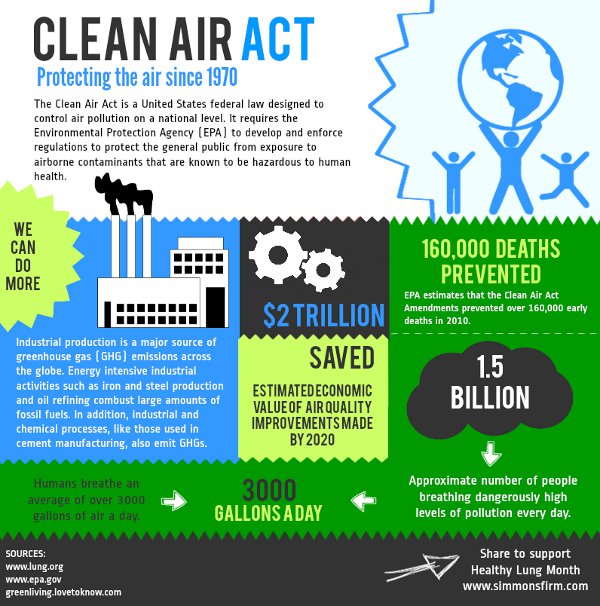
Pretty impressive stuff—right? Now here’s the essential part of the CAA as it applies to our current Climate Change situation: In the final analysis, the US EPA is required to regulate the emission of pollutants that “endanger public health and welfare”. In 2007, the US Supreme Court in a landmark decision (Massachusetts v. EPA) ruled that Global Warming emissions—caused by GHG—are air pollutants and should be subject to EPA regulation under the CAA.

Then in 2009, the EPA released its scientific findings, which concluded that Global Warming emissions present a danger to public health—now known as the endangerment finding.  Citing extensive scientific research, the EPA found that Global Warming pollution is connected with:

  • Hotter, longer heat waves that threaten the health of the sick, poor, and elderly.
  • Increases in ground-level ozone pollution, linked to asthma and other respiratory ailments.
  • Extreme weather events that can lead to deaths, injuries, and stress-related illnesses.

Based on this information, it seems quite clear that the US EPA—operating under the CAA—has all the regulatory authority it needs to immediately and forcefully control the emission of various sources of GHG.  Here’s how the National Wildlife Federation (NWFsummarized this situation“It is time for our nation’s polluters to finally be held accountable for their harmful emissions that contribute to Climate Change. … In passing the CAA, Congress clearly intended it to serve as a living document, in order to ensure that EPA has the tools it needs to respond to new air pollution threats.  The science is now clear: Global Warming pollution poses significant threats to public health and welfare, and EPA is obligated under the law to limit sources of this pollution and address the impacts of Climate Change.”

So—if all the necessary regulatory authority is in place and has been sufficiently vetted why isn’t this happening?  As with anything that is mucked up with strong bureaucratic machinations and purported economic impacts, the answer has been severely complicated by political infighting.
The science is now clear: Global Warming pollution poses significant threats to public health and welfare, and EPA is obligated under the law to limit sources of this pollution and address the impacts of Climate Change.

Polluters and their allies in Congress are using every opportunity to prevent the EPA from protecting our health by reducing Global Warming emissions. Numerous members of Congress in both the Senate and the House of Representatives have announced their intention to introduce legislation that would block or delay the agency from reducing Global Warming emissions under the Clean Air Act. Some members of Congress even tried to attach bills attacking the EPA to other “must pass” legislation, such as federal spending and budget bills.

These attacks on the Clean Air Act pose a grave threat to EPA’s responsibility to protect our health and environment from the impacts of Climate Change. Some proposed legislation would delay the EPA from setting standards to limit Global Warming emissions for several years, while other bills would indefinitely block the EPA from taking any action on this issue whatsoever. Some proposals would even prohibit the EPA from doing any research or analysis on climate science in its efforts to implement the endangerment finding.
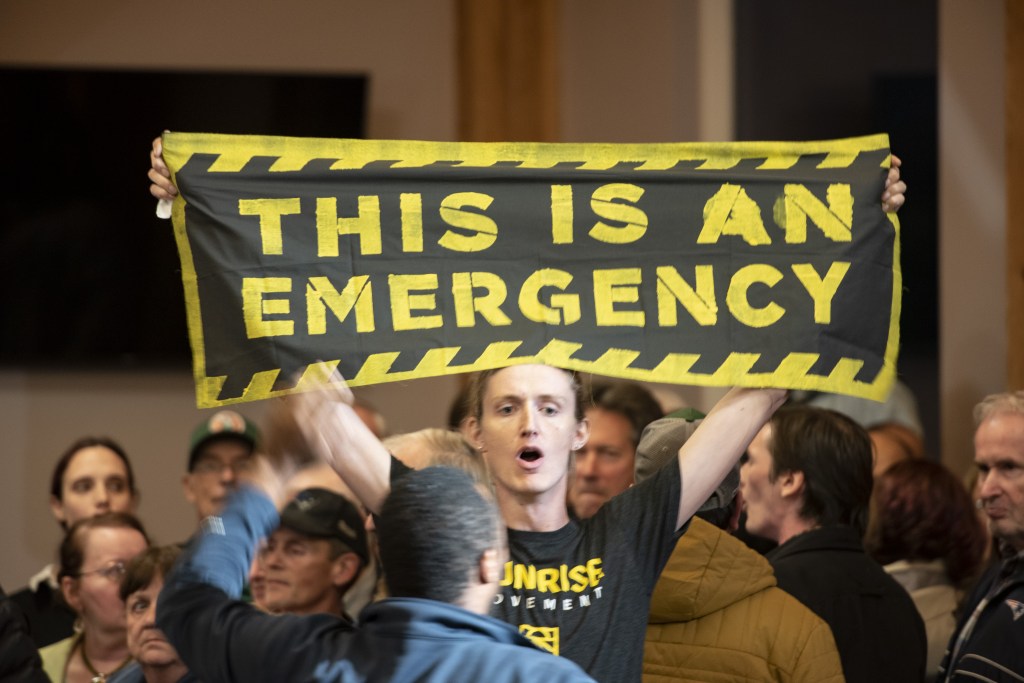
A climate change protester holds a banner reading “This Is An Emergency,” during a town hall event with former Vice President Joe Biden, 2020 Democratic presidential candidate, not pictured, in Manchester, New Hampshire, U.S., on Wednesday, Oct. 9, 2019. Biden said for the first time Wednesday that President Donald Trump should be impeached. Photographer: Kate Flock/Bloomberg

In a nutshell, here’s how the NWF explains the conservative backlash to federal regulation of Climate Change:“Polluter lobbyists continue to cry foul at any mention of EPA fulfilling its obligation under the CAA with respect to Global Warming pollution. This is simply the latest in a string of red herrings that industry has raised time and again to avoid complying with laws that are essential for protecting public health.  From seatbelts to catalytic converters to unleaded gasoline, industry falsely claimed that new standards would have devastating economic impacts.  History has shown that these requirements have not adversely affected our economy—to the contrary, they have had substantial benefits in saving lives, improving public health, and advancing cleaner technology.  It is long past time for the EPA to move forward and require the emission reductions necessary to protect America from the most severe environmental threat we have ever faced: Climate Change! ”


Author’s bio:For the past 50 years, professional ecologist and conservationist Budd Titlow has used his pen and camera to capture the awe and wonders of our natural world. His goal has always been to inspire others to both appreciate and enjoy what he sees. Now he has one main question: Can we save humankind’s place — within nature’s beauty — before it’s too late? Budd’s two latest books are dedicated to answering this perplexing dilemma. PROTECTING THE PLANET: Environmental Champions from Conservation to Climate Change, a non-fiction book, examines whether we still have the environmental heroes among us — harking back to such past heroes as Audubon, Hemenway, Muir, Douglas, Leopold, Brower, Carson, and Meadows — needed to accomplish this goal. Next, using fact-filled and entertaining story-telling, his latest book — COMING FULL CIRCLE: A Sweeping Saga of Conservation Stewardship Across America — provides the answers we all seek and need.Having published five books, more than 500 photo-essays, and 5,000 photographs, Budd Titlow lives with his music educator wife, Debby, in San Diego, California.
The Hazmat Battles Begin—Lois Marie Gibbs and Love Canal

Text excerpted from the book: PROTECTING THE PLANET-Environmental Champions from Conservation to Climate Change (ISBN 978-1-63388-225-6)

by

Budd Titlow & Mariah Tinger

http://www.buddtitlow.com

Despite the slowdown in environmental actions precipitated by the oil crisis, discovery and management of hazardous waste sites made great strides in the last part of the 1970’s under the jurisdiction of the US EPA. First in 1976 came the Resource Conservation and Recovery Act (RCRA) that empowered the EPA to regulate hazardous waste sites“from the cradle to the grave”. Infamously described as “ticking time bombs”, hazardous waste sites were thrust into the general public’s consciousness when multiple locations were discovered throughout the Nation.  

Most notably, in the spring of 1978, a 27-year-old housewife with no scientific training or activist experience stood up and took on the brutishly bullish world of conglomerated chemical companies.   When Lois Marie Gibbs discovered that her child was attending an elementary school built next to a 22,000-ton toxic waste dump that included dioxin—the most dangerous chemical compound on the face of the Earth—she went ballistic.  She immediately set about alerting her neighbors and organizing the Love Canal Homeowners Association (LCHA) in Niagara Falls, New York. 

When Lois Marie Gibbs discovered that her child was attending an elementary school built next to a 22,000-ton toxic waste dump that included dioxin—the most dangerous chemical compound on the face of the Earth—she went ballistic.

For a while, Gibbs listened to the bold-faced bluster of the culprit Hooker Chemical Company (now the international powerhouse Occidental Petroleum Company—OPC) until her face turned blue with repeated rage and anger.  OPC’s team of head muckety-mucks and hired gun consultants—plus their government cohorts—repeatedly lied to cover up the facts that their leaking chemicals were causing abominably abnormal miscarriage, birth defect, and cancer rates throughout the local families.  

Gibbs stood by her guns and in the end result scored a significant victory against the madding oppressive corporate forces.   She succeeded in convincing then President Jimmy Carter to relent and relocate 833 Love Canal families to safer homes outside of the toxic waste dump’s 36-square block cone of influence. 

RCRA was followed in 1980 by the Comprehensive Environmental Response, Compensation and Liability Act (CERCLA).  CERCLA was better known as the Superfund Act because of the $1.6 dollar trust fund it set up.  And because of her unwavering efforts in finally securing victory at Love Canal, Lois Gibbs was appropriately dubbed as the, “The Mother of the Superfund Act”.

CERCLA enabled the EPA to aggressively pursue the cleanup of abandoned hazardous waste sites.  In the process, the federal agency was able to sue the entities that were responsible and collect, then fund, reimbursements for cleaning up their toxic messes.  

CERCLA also opened the door to a new influx of private consulting firms that specialized in analyzing the contents of the toxic waste sites—including everything from leaking gas storage tanks to entire despoiled mountainsides and contaminated rivers.  

Hiring phalanxes of specially trained geologists, petroleum engineers, and hydrologists, these new businesses literally raked in money by developing and then employing a host of new toxic waste remediation techniques.  It was quite a business model.  For at least 25 years, these hazmat consulting firms could barely keep pace with the number of toxic waste sites that started popping up all over the country like kernels of corn in a pot of hot grease. 

Now let’s get back to Ms. Gibbs and her super-heroic activities.  Once all of her neighbor families had been moved and were safety settled into their new homes, Gibbs’ life changed forever.  While she was fighting her two-year battle for honesty and integrity, she was also contacted by other families across the country who were mired in similar toxic waste “no-man’s-lands”. Determined to help these other distressed people also set up grassroots organizations, Gibbs moved to Washington, DC and created the Center for Heath, Environment, and Justice (CHEJ).  Today, the CHEJ has helped establish 11,000 grassroots groups and—as Executive Director—Gibbs regularly speaks to communities about toxic chemicals and children’s unique vulnerability to environmental exposures.

For her diligent efforts on behalf of the environmentally oppressed, Gibbs has been featured in hundreds of newspaper and magazine articles plus featured on many television and radio shows—including 60 Minutes, 20/20, Oprah, Good Morning America, and Today.  CBS also produced a 2-hour prime time movie, entitled Lois Gibbs: The Love Canal Story. She has also received many awards for environmental accomplishments and was nominated for a Nobel Peace prize in 2003.

Driven by a strong sense of what is just and right in securing a safe environment for both her own family and those of her neighbors, Lois Gibbs provides one of the strongest prototypes for what a single individual can accomplish in the arena of environmental regulation.  She stuck to her cause and didn’t back down even in the face of severe intimidation and death threats from corporate and political power players.  The Climate Change movement needs hundreds of people with the moxie and pure guts of Lois Gibbs to bring our goals to fruition.

Author’s bio:For the past 50 years, professional ecologist and conservationist Budd Titlow has used his pen and camera to capture the awe and wonders of our natural world. His goal has always been to inspire others to both appreciate and enjoy what he sees. Now he has one main question: Can we save humankind’s place — within nature’s beauty — before it’s too late? Budd’s two latest books are dedicated to answering this perplexing dilemma. PROTECTING THE PLANET: Environmental Champions from Conservation to Climate Change, a non-fiction book, examines whether we still have the environmental heroes among us — harking back to such past heroes as Audubon, Hemenway, Muir, Douglas, Leopold, Brower, Carson, and Meadows — needed to accomplish this goal. Next, using fact-filled and entertaining story-telling, his latest book — COMING FULL CIRCLE: A Sweeping Saga of Conservation Stewardship Across America — provides the answers we all seek and need.Having published five books, more than 500 photo-essays, and 5,000 photographs, Budd Titlow lives with his music educator wife, Debby, in San Diego, California.



Author’s bio:For the past 50 years, professional ecologist and conservationist Budd Titlow has used his pen and camera to capture the awe and wonders of our natural world. His goal has always been to inspire others to both appreciate and enjoy what he sees. Now he has one main question: Can we save humankind’s place — within nature’s beauty — before it’s too late? Budd’s two latest books are dedicated to answering this perplexing dilemma. PROTECTING THE PLANET: Environmental Champions from Conservation to Climate Change, a non-fiction book, examines whether we still have the environmental heroes among us — harking back to such past heroes as Audubon, Hemenway, Muir, Douglas, Leopold, Brower, Carson, and Meadows — needed to accomplish this goal. Next, using fact-filled and entertaining story-telling, his latest book — COMING FULL CIRCLE: A Sweeping Saga of Conservation Stewardship Across America — provides the answers we all seek and need.Having published five books, more than 500 photo-essays, and 5,000 photographs, Budd Titlow lives with his music educator wife, Debby, in San Diego, California.

COMING FULL CIRCLE—A Sweeping Saga of Conservation Stewardship Across America

EPILOGUE

Text excerpted from the book: COMING FULL CIRCLE: A Sweeping Saga of Conservation Stewardship Across (ISBN: 978-1-80074-568-1)

by

Budd Titlow & Mariah Tinger

http://www.buddtitlow.com

In the overall history of human life here on Earth, we have never faced

more broad-based and existential environmental threats than those posed

by the climate crisis and biodiversity loss. On a geologic timescale, we

are accelerating toward our own oblivion at laser-focused warp speed.

Right now — every day — the world is adding more layers of

atmospheric pollution and species disintegration to the enveloping

shroud that may eventually doom our own species (Homo sapiens) to

extinction.

These twin towers of environmental degradation are not something

that might become a problem in the future — maybe by 2100, or 2050,

or 2030. They are problems right now, and they’re getting worse every

day that we sit by and pretend that nothing is really happening.

But here is the good news. The climate crisis and biodiversity loss

do not have to remain problems. In fact — if we focus and work together

— both of these conundrums can be well on their way to full resolution

in less than ten years.

If we play our cards right, we can use the perpetual, inextinguishable

energy of Earth — the sun’s glorious rays, the wind’s constant breezes,

and the water’s endless waves — to work for us all. And, in the process,

we’ll leave the polluting fossil fuels right where they belong — buried in

the ground, never to see the light of day.

Renewable energy here on Earth is abundant and omnipresent.

Think about it: Renewable energy here on Earth is abundant and

omnipresent. Each time you go outside, you see and feel it everywhere.

It’s like an endless symphony written by a master composer and played

by a world-class orchestra. The golden rays of streaming sunlight are the

strings — always there, maintaining the basic rhythm of the interwoven

movements. The wind provides the percussion — rising from gentle

whispering breezes of the snare drum to the bold resounding gusts of the

tympani. Then moving water blends in with the woodwinds and the brass

— transitioning from gently lapping melodic notes of the flute to lazy

ripples of an oboe’s dulcet tones and concluding with rolling waves of

trumpet blasts.

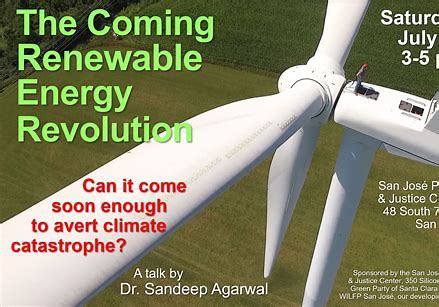
We are now right on the cusp of what will be the Renewables Revolution.

We are now right on the cusp of what will be the Renewables

Revolution — providing a mighty parallel to the Industrial Revolution.

The Industrial Revolution resulted in the transformation of our nation

from a rural agrarian society to an urban, manufacturing society. Now we

are about to transform ourselves again — from a hard-edged, fossil-fuel

driven economy, to a softer-sided renewable energy world.

This transformation from fossil fuels to renewable energy is already

possible. The Solutions Project (www.thesolutionsproject.org) lays out

immediate plans for converting each of our states — plus many countries

— from fossil fuels to renewable resources. And we can accomplish this

at the same time as we create numerous new industries in the wind, solar,

and water power sector.

The Solutions Project (www.thesolutionsproject.org) lays out immediate plans for converting each of our states — plus many countries — from fossil fuels to renewable resources.

In fact — right now — ‘Big Oil’ has the wherewithal to lead the

transformation from fossil fuels to renewable energy. They know it’s

coming — they’ve known this for more than thirty years! They’re

already planning for the transition. They just want to delay things as long

as possible because — in the short term — they will take a financial hit.

But — in the long run — they will actually make more money from

renewables than they are currently making from fossil fuel production

and processing. The sooner we can make the fossil fuel giants make the

switch, the better off we’ll all be. Over the short term, the mighty impetus

created by nationwide conversion to renewable energy will bolster every

sector of our economy. As the old adage goes: “A rising tide lifts all

boats.”

This renewable energy boom will create millions of new jobs —

leading to increased financial security for everyone. Now that’s a win-win

scenario we can all live with. Plus, our children, grandchildren, and

all future generations will look back and be forever grateful to us for

being proactive in tackling and resolving the current climate crisis and

biodiversity dilemmas.

So, now the decision is in our hands. The issue is about preserving

the existing quality and character of the human species here on Earth.

Will we ‘come full circle’ and decide to make the changes that will save

our ice sheets, tundra, oceans, coral reefs, rain forests, and polar bears?

Or will we just watch while our world slides into oblivion — at least for

Homo sapiens?

Author’s bio:For the past 50 years, professional ecologist and conservationist Budd Titlow has used his pen and camera to capture the awe and wonders of our natural world. His goal has always been to inspire others to both appreciate and enjoy what he sees. Now he has one main question: Can we save humankind’s place — within nature’s beauty — before it’s too late? Budd’s two latest books are dedicated to answering this perplexing dilemma. PROTECTING THE PLANET: Environmental Champions from Conservation to Climate Change, a non-fiction book, examines whether we still have the environmental heroes among us — harking back to such past heroes as Audubon, Hemenway, Muir, Douglas, Leopold, Brower, Carson, and Meadows — needed to accomplish this goal. Next, using fact-filled and entertaining story-telling, his latest book — COMING FULL CIRCLE: A Sweeping Saga of Conservation Stewardship Across America — provides the answers we all seek and need.Having published five books, more than 500 photo-essays, and 5,000 photographs, Budd Titlow lives with his music educator wife, Debby, in San Diego, California.

COMING FULL CIRCLE—A Sweeping Saga of Conservation Stewardship Across America

PROLOGUE

Text excerpted from the book: COMING FULL CIRCLE: A Sweeping Saga of Conservation Stewardship Across (ISBN: 978-1-80074-568-1)

by

Budd Titlow & Mariah Tinger

http://www.buddtitlow.com

There is a lot that our U.S. biology and history books don’t tell us.

Tracking the triumphs and travails of a multi-generational American

family, this book sets the record straight.

From a biological perspective, many American colonists didn’t care

about protecting our native wildlife or conserving our natural resources.

Just think about the once abundant species that are no longer with us —

the passenger pigeon, the eastern elk, the Carolina parakeet, the heath

hen, the American bison (almost), and the black-footed ferret (almost).

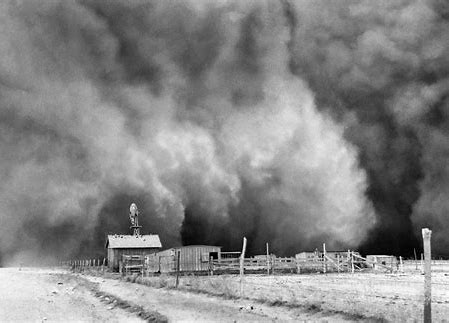
Then consider our native tallgrass and midgrass prairies — most of

which were swallowed up by settlers’ plows and then blown away during

the Dust Bowl of the 1930s. Finally, look at our air and water quality —

both poisoned by industrialization and still trying to recover.

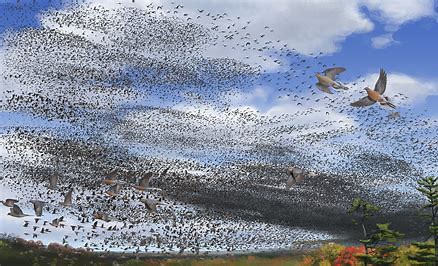
Sky-filling flocks of now extinct Passenger Pigeons used to be commonplace throughout the U.S.

The Dust Bowl of the 1930’s blew away millions of acres of once-bountiful tall grass prairies.

On the history side of the ledger, no group of U.S. citizens has ever

been more disrespected and abused than our Native American tribes.

They respected all species as equals and managed their lands not just in

sustainable ways, but in ways that enhanced the flourishing of the

ecosystem. Yet they lost both their ancestral lands and their cultural

societies to colonial progress.

But — in the end — this book carries a very positive, hopeful

message. We can still extract ourselves from our past faux pas. By

shedding our polarized viewpoints and working cooperatively, we can

still save our planet before it’s too late.

For both of us, this book is a career self-examination. For me (Budd)

the text expresses many things I’ve learned about the natural world

during my fifty years as a wildlife ecologist and resource conservationist.

For me (Mariah), the book’s content captures the joy of the natural world

that my dad (Budd) taught me, how that joy has shaped my career as an

educator and science communicator, and how I hope it influences my

children’s paths. We both see reflections of our past and visions of our

future modeled in the multi-generations of families connected to nature.

Throughout this book, we also emphasize our lifelong beliefs in the

sanctity and equality of all living things — both human and non-human.

Our belief system encompasses all races, religions, cultures, and

lifestyles — but especially those of the Indigenous (or Native) Peoples

of the world.

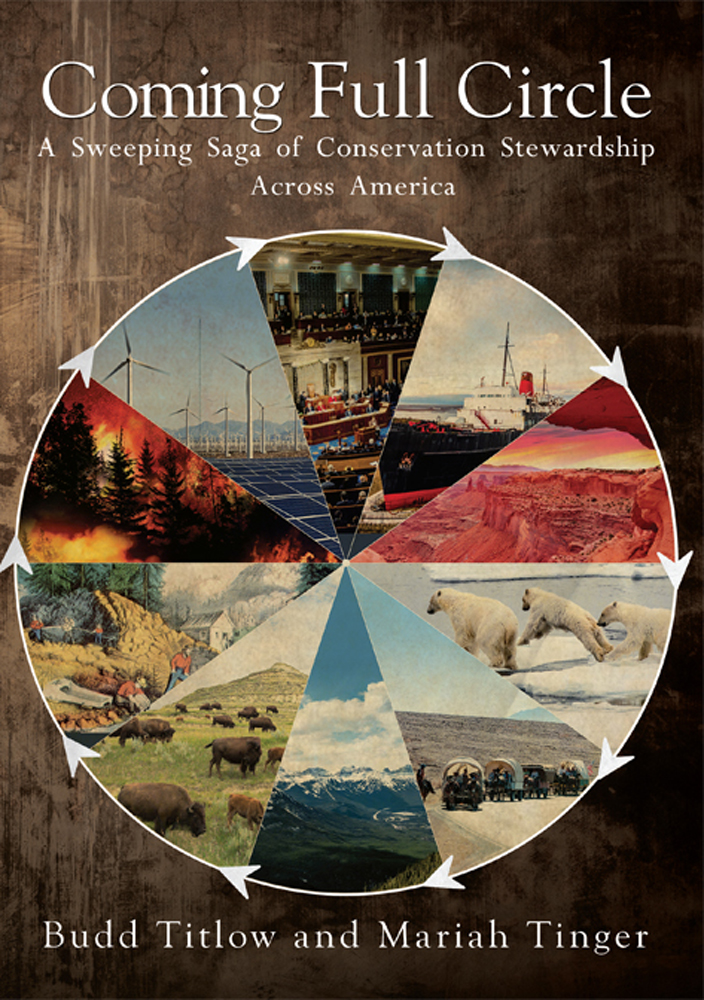
As expressed in our main title, Coming Full Circle, our book’s

central theme revolves around two primary terms — the circle of life and

biodiversity.

Many of us — especially those with kids or grandkids — know the

first term, the circle of life, as the mega-hit song from the Broadway

musical and blockbuster movie, The Lion King. In reality, the circle of

life is a symbolic representation of birth, survival, and death — which

leads back to birth. For example, an antelope may live for years —

grazing peacefully on African grasslands and producing several healthy

calves. But — as she nears the end of her life and thus her speediness —

a hungry lioness captures and kills her. The antelope dies, but the lioness

brings her body back for the nourishment of her hungry cubs. In this way,

the antelope’s death sustains the life of the lioness’s pride — or family of

lions.

Life is thus represented as a circle because it is a constant loop. The

idea of life as a circle exists across multiple religions and philosophies.

This belief was prevalent throughout the early Indigenous Peoples of

Earth. Unfortunately — owing to what some may term ‘progress’ — this

fervent belief in the circle of life is much less common in today’s world.

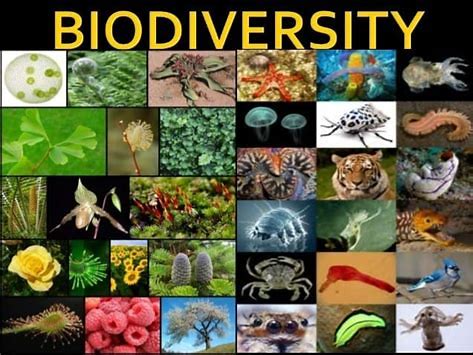
The second term — biological diversity, or biodiversity for short —

is primarily used by biologists and ecologists. Biodiversity means the

variety of life — the total number of species, both plants and animals —

living on Earth. This includes everything from the tiniest microbial

spores to the gargantuan blue whale. Generally speaking, the greater the

biodiversity — the total number of species present — the healthier our

planet.

As career environmental scientists, we believe that these two terms

are very closely related. In fact, they build off of and intensify one

another. Picture the diameter of the circle of life as the number of species

that participate in that circle. In our antelope-lioness example above, the

diameter would include the lioness and her pride, the antelope and her

calves, the grass that the antelope eats, the vultures that feed upon the

remainder of the antelope’s carcass, the decomposers that help break

down what the vultures leave behind — and so on. In this manner, the

circle of life is always intricately populated with species and

interdependencies. The larger the circle — in terms of its diameter — the

greater Earth’s biodiversity and vice versa. Because of this, we use these

terms interchangeably throughout this text.

Unfortunately, the circle of life — or biodiversity — of the United

States has decreased dramatically since the first European immigrants

landed on our shores. By telling this fictional account — partially based

on historical facts — of one multi-generational family of American

immigrants, this book explores how and why this change has occurred

and how we will — eventually — come back around to again achieve closure of

the circle of life and — in so doing — save our beautiful planet for all

future generations.

Author’s bio:For the past 50 years, professional ecologist and conservationist Budd Titlow has used his pen and camera to capture the awe and wonders of our natural world. His goal has always been to inspire others to both appreciate and enjoy what he sees. Now he has one main question: Can we save humankind’s place — within nature’s beauty — before it’s too late? Budd’s two latest books are dedicated to answering this perplexing dilemma. PROTECTING THE PLANET: Environmental Champions from Conservation to Climate Change, a non-fiction book, examines whether we still have the environmental heroes among us — harking back to such past heroes as Audubon, Hemenway, Muir, Douglas, Leopold, Brower, Carson, and Meadows — needed to accomplish this goal. Next, using fact-filled and entertaining story-telling, his latest book — COMING FULL CIRCLE: A Sweeping Saga of Conservation Stewardship Across America — provides the answers we all seek and need.Having published five books, more than 500 photo-essays, and 5,000 photographs, Budd Titlow lives with his music educator wife, Debby, in San Diego, California.
The Scenic Hudson Decision—Setting A Legal Precedent for Environmentalism

by

Budd Titlow

http://www.buddtitlow.com

On the US Environmental Movement’s overall timeline, The Scenic Hudson Decision set a major precedent for private citizens and conservation groups to legally enjoin controversial federal projects.  The case also spawned the emergence of environmental law as a legal specialty—an idea that Congress incorporated in the country’s National Environmental Policy Act (NEPA) when it passed in 1973. 

Storm King Mountain lies along the west bank of the Hudson River just south of Cornwall, New York. The name “Storm King” was coined by 19th century writer Nathaniel Parker Willis when he noted that the mountain served as an accurate predictor of stormy weather when early morning clouds covered its peak. In the final analysis, this name certainly proved to be apropos when Storm King Mountain evolved into the most contentious environmental legal case our Nation had ever seen.

Storm King Mountain lies along the west bank of the Hudson River just south of Cornwall, New York.

This proposed action started in 1962, when the Consolidated Edison Company (Con Ed) —one of the US’s largest public utilities—announced its plan to build the world’s largest pumped storage project into the face of the mountain.  Project plans called for a facility that would have a generating capacity of 2,000,000 kilowatts (kW), with an upper reservoir behind the mountain that would be a mile across, and an 800-foot long powerhouse at the mountain’s base.  The initial application to construct the plant was filed with the Federal Power Commission (FPC, now the Federal Energy Regulatory Commission) in Washington, DC on January 1963. 

On November 8, 1963, a small group of concerned citizens met at the home of local resident and noted author Carl Carmer.  During this meeting, they formed the Scenic Hudson Preservation Conference (Scenic Hudson) to fight the massive project on grounds that it posed a threat to the Cornwall water supply, the Hudson River fisheries, and the scenic beauty and historic significance of Storm King Mountain.

The resulting unprecedented 17-year legal dispute—lasting from 1963 to 1981— eventually culminated with the defeat of Con Ed’s proposal.  The decision’s environmental landmark status is based on the fact that it was the first time a conservation group had been permitted to sue to protect the public interest.

Although Scenic Hudson had no economic interest in Storm King—the usual basis for standing—the court ruled that it nonetheless could be construed to be an “injured party” and was entitled to judicial review of an agency ruling.  This project proved critical in establishing the legitimacy of environmental issues and opening the way for lawyers and the courts to play a highly significant role in the future review of all manner of land-use vs. the environment battles.

Text excerpted from book:      “PROTECTING THE PLANET: Environmental Champions from Conservation to Climate Change” written by Budd Titlow and Mariah Tinger and published by Prometheus Books. 

Author’s bio:  For the past 50 years, professional ecologist and conservationist Budd Titlow has used his pen and camera to capture the awe and wonders of our natural world. His goal has always been to inspire others to both appreciate and enjoy what he sees. Now he has one main question: Can we save humankind’s place — within nature’s beauty — before it’s too late? Budd’s two latest books are dedicated to answering this perplexing dilemma. “PROTECTING THE PLANET: Environmental Champions from Conservation to Climate Change”, a non-fiction book, examines whether we still have the environmental heroes among us — harking back to such past heroes as Audubon, Hemenway, Muir, Douglas, Leopold, Brower, Carson, and Meadows — needed to accomplish this goal. Next, using fact-filled and entertaining story-telling, his latest book — “COMING FULL CIRCLE: A Sweeping Saga of Conservation Stewardship Across America” — provides the answers we all seek and need. Having published five books, more than 500 photo-essays, and 5,000 photographs, Budd Titlow lives with his music educator wife, Debby, in San Diego, California.

Echo Park Dam—A Landmark Victory for Conservation

by 

Budd Titlow

http://www.buddtitlow.com

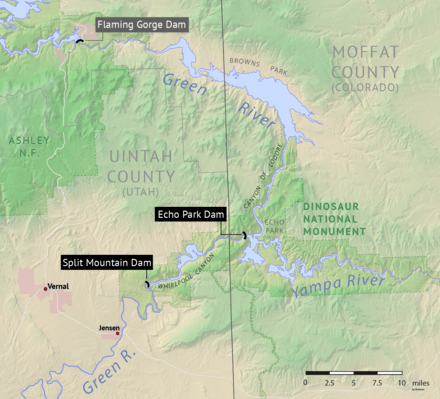
When it was designated as a protected area in 1915, Dinosaur National Monument confined the confluence of two of the Colorado River’s major and most magnificent tributaries—the Yampa and the Green Rivers.  In the 1950’s, the fantastic palette of scenic, archaeological, and paleontological beauty in this remote corner of Colorado was still little known outside of the sparsely settled local communities.  In the minds of the U.S. Bureau of Reclamation’s (BuRec) chief bureaucrats these characteristics offered them exactly what they were looking for to “hit another home run” like Hoover Dam had done decades earlier.

The BuRec’s engineers began work by focusing their attention on Echo Park—a lonely, lovely, canyon that looped its way around an 800-foot high sandstone monolith called Steamboat Rock.  Steamboat Rock stood in the riverbed just below the confluence of the Yampa and Green Rivers and, topographically, provided the ideal location for constructing a massive dam.  The channel’s narrow trough here would require a relatively minimum concrete span while backing up the water in both channels of the two major rivers.  The resulting long expanse of open water would provide plentiful hydroelectric power and boundless recreational opportunities—serving as the perfect complement to other downstream dams and reservoirs that were also already on the engineers’ drafting tables. 

All systems were go for this Echo Park Project, or so the Washington politicians and BuRec bureaucrats thought until they met up with the dissenting minds of the Sierra Club led by the Archdruid himself—Executive Director David Brower—and leaders of several other conservation groups.  Far from becoming another showcase for the western water controllers, the proposed Echo Park Dam became one of the most momentous victories ever recorded in the history of the US Environmental Movement.

The opposition to Echo Park actually first started when a group of downstream river guides in Utah got wind of what was being bandied about upstream.  Both rugged and astute, the guides moved quickly to rally support for their cause and invited Brower and the other conservation leaders to join them for a free trip to see exactly what would be lost to this flooding fiasco.

After spending a few days with the guides, Brower and his fellow conservationists oversaw the formation of an alliance that challenged the BuRec’s claims about the project’s major benefits and limited impacts.  The opposition group’s catch phrases included, “We’re not opposed to development. We’re not opposed to dams. We’re just opposed to dams in national parks.”  Plus, “We’re not going to stand for another Hetch Hetchy!”

Facing such difficult to refute logic plus withering opposition led by a master organizer like Brower, Congress—after a prolonged and controversial battle—eventually removed Dinosaur National Monument and Echo Park from the act that created the Colorado River Storage Project.  But unfortunately—at least in the minds of environmentalists—the story of Echo Park doesn’t end there.  In their crusade to preserve Echo Park and Steamboat Rock, Brower and his band of activists accepted a tradeoff—a loss downstream that would anguish them and others for years to come.  The deal involved an agreement not to oppose a dam on the Colorado River in a little-known place called Glen Canyon.  

In the 1950s, the Sierra Club still was smarting from the damming of the Hetch Hetchy Valley in Yosemite National Park and the group’s focus was squarely on national parks and monuments, and Glen Canyon had no such protected status.  The rationale was that since Glen Canyon wasn’t in a national park, it probably wasn’t all that valuable.  But this time the Sierra Club was wrong—very wrong—and Brower deeply regretted his compromise decision.  The problem was that no one had really taken the time to check Glen Canyon out and—by the time they did—it was too late.   

The Glen Canyon Dam drowned more than 100 miles of spectacular canyon, a rippling desert wilderness that few had ever seen. Salt Lake City River guide, Richard Quist, called Glen Canyon “a sprawling labyrinth of wonder” and said the canyon’s ancient, still-colorful pictographs were “stunningly beautiful.” He also described stumbling onto the canyon’s long-abandoned pit houses as being among his greatest childhood adventures when his dad turned him loose in the side canyons during their float trips. 

Brower later wrote a foreword to a 1963 book honoring Glen Canyon entitled, The Place No One Knew, which featured the stunning nature photographs of master photographer, Eliot Porter.  But by the time Glen Canyon’s beauty and wildness became more widely known, the dam fighters couldn’t backtrack. The dam was completed in the fall of 1963, and Lake Powell was filled to capacity by 1980—drowning Glen Canyon presumably forever.

The odds of defeating Glen Canyon Dam would have been slim even if the coalition had turned its attention to land outside national parks, instead of focusing solely on Echo Park. The dams weren’t equals—Echo Park would have held about a quarter of what Lake Powell holds—and Glen Canyon Dam was always intended to anchor the upper Colorado River’s water storage system. 

Nonetheless, Echo Park became “a symbol of wilderness,” and the battle to save it was chronicled in a 1994 book by this same name. The project’s showdown between Congress, the BuRec, and the Sierra Club—led by David Brower—and other opposing conservation organizations was also widely hailed as a major steppingstone that led to passage of the Wilderness Act of 1964. 

Text excerpted from book:      “PROTECTING THE PLANET: Environmental Champions from Conservation to Climate Change” written by Budd Titlow and Mariah Tinger and published by Prometheus Books. 

Author’s bio:  For the past 50 years, professional ecologist and conservationist Budd Titlow has used his pen and camera to capture the awe and wonders of our natural world. His goal has always been to inspire others to both appreciate and enjoy what he sees. Now he has one main question: Can we save humankind’s place — within nature’s beauty — before it’s too late? Budd’s two latest books are dedicated to answering this perplexing dilemma. “PROTECTING THE PLANET: Environmental Champions from Conservation to Climate Change”, a non-fiction book, examines whether we still have the environmental heroes among us — harking back to such past heroes as Audubon, Hemenway, Muir, Douglas, Leopold, Brower, Carson, and Meadows — needed to accomplish this goal. Next, using fact-filled and entertaining story-telling, his latest book — “COMING FULL CIRCLE: A Sweeping Saga of Conservation Stewardship Across America” — provides the answers we all seek and need. Having published five books, more than 500 photo-essays, and 5,000 photographs, Budd Titlow lives with his music educator wife, Debby, in San Diego, California.
ANOTHER CLIMATE CHANGE CONUNDRUM

CAN VENICE, ITALY—THE CROWN JEWEL OF THE ADRIATIC—BE SAVED?

By Budd Titlow

http://www.buddtitlow.com

I’ve had the good fortune to visit Venice, Italy several times.  Not only is Venice one of the world’s most entrancingly beautiful cities, but it also is unrivaled for its setting and urban design.  Strolling along the narrow, winding city streets is like suddenly being transported to the middle of a Giorgione landscape painting. The unparalleled sights—the gondoliers poling their ornate craft along the shimmering canals, the rippling reflections of multi-hued flags and flower baskets, the armadas of boats of every size and color—are at once both iconic and unforgettable.  

Sadly, even though Venice has been around for a very long time—founded in 421 C.E. —it would never be built in today’s world.  That’s because there is no contiguous landmass under the city.  Yes that’s right, Venice is essentially a collage of grand and sacred structures that are floating on top of an archipelago of 117 islands scattered throughout a shallow lagoon of the Adriatic Sea.

As you can imagine, sea level rise has always been a particular concern for this flood-prone city. Now on top of the rising sea level problem, comes the realization that Venice is still sinking—a problem that was thought to have been resolved in the 1970’s by ceasing groundwater withdrawals for factory use.

Tourists avoiding sea-level rise in San Marco Square, Venice, Italy.

Enter the city’s expensive and oft-delayed system of underwater so-called MOSE barriers —named as a nod to Moses and his parting of the Red Sea.  Blasting the city’s engineering budget at a total cost of more than $6.7 billion, MOSE consists of a series of steel gates installed at the three inlets separating the Adriatic Sea from the lagoon surrounding Venice.  

Many Venetians remain skeptical of the MOSE project due to the high costs and concerns over environmental risks.  When the flood barriers are raised, they trap the considerable pollution and untreated sewage—Venice has no modern sewage treatment system—within the confines of the city’s lagoon and famous canals.  While the gates are up, the contamination is not able to dissipate and dilute itself as it normally does when it drains out into the Adriatic.

NASA climatologist Vivien Gormitz, a contributor to the IPCC’s Fourth Assessment Report, thinks estimates of high water events are conservative scenarios and the reality could be much worse. “Sea levels are already rising faster than forecast in the IPCC’s estimates”, said Gornitz.  If sea levels rise more than 1.7 feet by 2100, MOSE—which can only cope with 2.0 feet of increase—may be insufficient to save the city. Because of this, Venice needs to quickly look into alternatives. For example, pumping seawater into a 2,297-foot deep aquifer below the lagoon could buoy the city by as much as one foot over a decade.

Whether or not any of these rather dramatic engineering concepts work out, I have my concerns that they may not be able to save this Italian jewel of the sea for the long term.  Something tells me that if we don’t simply put a halt to the global rising sea levels as soon as possible, this entire colossus of artistic and cultural glories may slip beneath the waters of the Adriatic never to be seen again.  And that would be a shame, indeed, especially for those who have never had the opportunity to experience her visual delights.

Text excerpted from book: PROTECTING THE PLANET: Environmental Champions from Conservation to Climate Change written by Budd Titlow and Mariah Tinger and published by Prometheus Books. 

Photo caption & credit: Tourists avoiding sea-level rise in San Marco Square, Venice, Italy. Copyright Yulia Grigoryeva/Shutterstock.

Author’s bio:  For the past 50 years, professional ecologist and conservationist Budd Titlow has used his pen and camera to capture the awe and wonders of our natural world. His goal has always been to inspire others to both appreciate and enjoy what he sees. Now he has one main question: Can we save humankind’s place — within nature’s beauty — before it’s too late? Budd’s two latest books are dedicated to answering this perplexing dilemma. PROTECTING THE PLANET: Environmental Champions from Conservation to Climate Change, a non-fiction book, examines whether we still have the environmental heroes among us — harking back to such past heroes as Audubon, Hemenway, Muir, Douglas, Leopold, Brower, Carson, and Meadows — needed to accomplish this goal. Next, using fact-filled and entertaining story-telling, his latest book — COMING FULL CIRCLE: A Sweeping Saga of Conservation Stewardship Across America — provides the answers we all seek and need. Having published five books, more than 500 photo-essays, and 5,000 photographs, Budd Titlow lives with his music educator wife, Debby, in San Diego, California.

CLIMATE CHANGE POSES PERILS FOR OUTDOOR PHOTOGRAPHERS

By Budd Titlow

http://www.buddtitlow.com

Sun setting behind a giant salsify seed head.

As documenters of the world’s outdoor quality of life, all nature photographers need to be especially concerned about the rapidly advancing perils of climate change. In the overall history of human life here on Earth, we have never faced more broad-based and imminent environmental threats than those posed by climate change and global warming. On a geologic time scale, we are accelerating toward our own oblivion at laser-focused warp speed. Right now—every day—the world is adding another spike of atmospheric pollution to the shroud that may eventually doom our own species to extinction.

Climate change is not something that might become a problem in the future—maybe by 2030 or 2050 or 2100. It is a problem right now, getting worse every day that we sit by and pretend that it is not really happening.

But here is the good news. Climate change does not have to remain a problem. In fact, if we focus and work together, climate change can be well on its way toward full resolution within as little as fifteen years—maybe even sooner.

If we play our cards right, we can use the perpetual, inextinguishable energy of Earth—the sun’s glorious rays, the wind’s constant breezes, and the water’s endless waves—to work for us all. And, in the process, we’ll leave the polluting fossil fuels right where they belong—buried in the ground, never to see the light of day.

Think about it: Renewable energy here on Earth is abundant and omnipresent. Each time you go outside, you see and feel it everywhere. It’s like an endless symphony written by a master composer and played by a world-class orchestra. The golden rays of streaming sunlight are the strings—always there, maintaining the basic rhythm of the interwoven movements. The wind provides the percussion—rising from gentle whispering breezes of the snare drum to bold resounding gusts of the tympani. Then moving water blends in with the woodwinds and the brass—transitioning from gently lapping melodic notes of the flute to lazy ripples of an oboe’s dulcet tones and concluding with rolling waves of trumpet blasts.

We are right on the cusp of what we can call the “Renewable Revolution,” providing a mighty parallel to the Industrial Revolution. The Industrial Revolution resulted in the transformation of our nation from a rural agrarian society to an urban, manufacturing society. Now we are about to totally transform ourselves again, from a hard-edged, fossil-fuel driven economy to a softer-sided renewable energy world community.

The transformation from fossil fuels to renewable energy is already possible. The Solutions Project (www.thesolutionsproject.org) lays out plans for converting each of our states—plus many countries—from fossil fuels to renewable resources. And we can accomplish this at the same time as we create numerous new industries in the wind, water, and solar power sector.

Along with this industrial boom will come millions of new jobs, leading to increased financial security for everyone. Now that’s a win-win scenario we can all live with. Our children, grandchildren, and all future generations will look back and be forever grateful to us for being proactive and resolving the climate-change dilemma.

Text is excerpted from a book by Budd Titlow and Mariah Tinger entitled PROTECTING THE PLANET: Environmental Champions from Conservation to Climate Change— ISBN 978-1633882256—published by Prometheus Books.

Photo caption & credit:  Sun setting behind a giant salsify seed head. Copyright Budd Titlow, NATUREGRAPHS. 

Author’s bio: For the past 50 years, professional ecologist and conservationist Budd Titlow has used his pen and camera to capture the awe and wonders of our natural world. His goal has always been to inspire others to both appreciate and enjoy what he sees. Now he has one main question: Can we save humankind’s place — within nature’s beauty — before it’s too late? Budd’s two latest books are dedicated to answering this perplexing dilemma. PROTECTING THE PLANET: Environmental Champions from Conservation to Climate Change, a non-fiction book, examines whether we still have the environmental heroes among us — harking back to such past heroes as Audubon, Hemenway, Muir, Douglas, Leopold, Brower, Carson, and Meadows — needed to accomplish this goal. Next, using fact-filled and entertaining story-telling, his latest book — COMING FULL CIRCLE: A Sweeping Saga of Conservation Stewardship Across America — provides the answers we all seek and need.Having published five books, more than 500 photo-essays, and 5,000 photographs, Budd Titlow lives with his music educator wife, Debby, in San Diego, California.

OUR LOOMING FOOD CRISIS

by Budd Titlow

http://www.buddtitlow.com

The climate crisis is threatening to take food off your family’s dinner table. Unprecedented global warming is causing a catastrophic combination of crop-sapping droughts and farm-swallowing floods.

For the past 10 years, I’ve been working as a food safety consultant in the agricultural industry. In 2015, I teamed with my daughter to publish a 600-page book on the climate crisis. Despite my dual experience in these two arenas, I failed to recognize the strong connectivity between agriculture and the climate crisis. That is—until recently!

The climate crisis is enmeshed in all aspects of our lives on this planet. It’s analogous to heralded California naturalist John Muir’s quote about the web of life: “When we try to pick out anything by itself, we find it hitched to everything else in the Universe.” And so it is with the climate crisis. When we pull on one strand of the climate web, all the other strands resonate in response. The climate crisis is now affecting everything we do, think, and feel. And this is especially true for world-wide agriculture and food production.

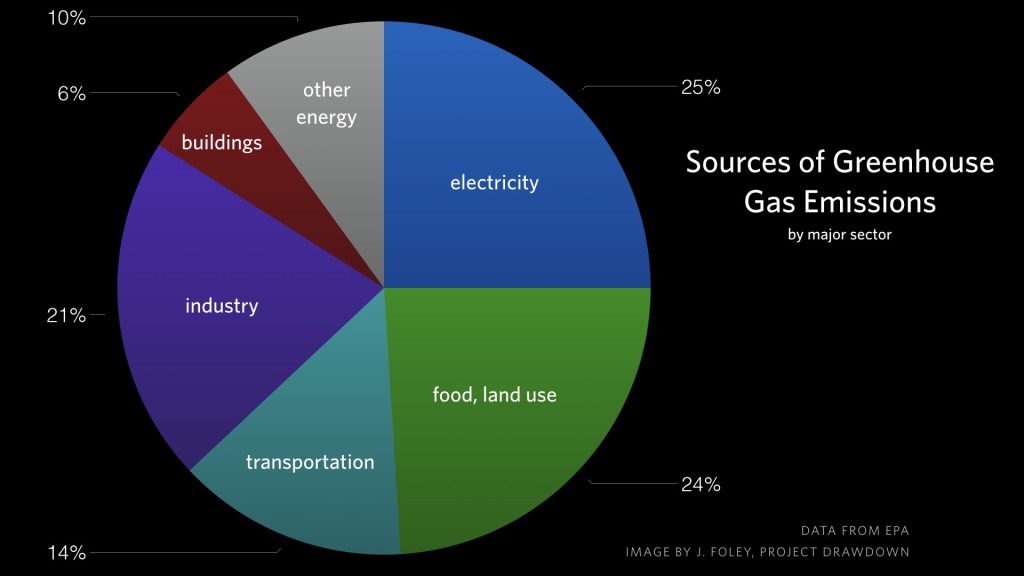
As Lisa Archer and Kari Hamerschlag emphasize in their February 8, 2019 GreenBiz webcast: “The food sector is the single biggest generator of climate-harming greenhouse gases. In fact, agriculture accounts for nearly one-third of our global emissions. This means that—with scientists worldwide confirming we have just 12 years to avoid irreversible climate chaos—transforming food and agriculture is central to addressing our climate crisis.”

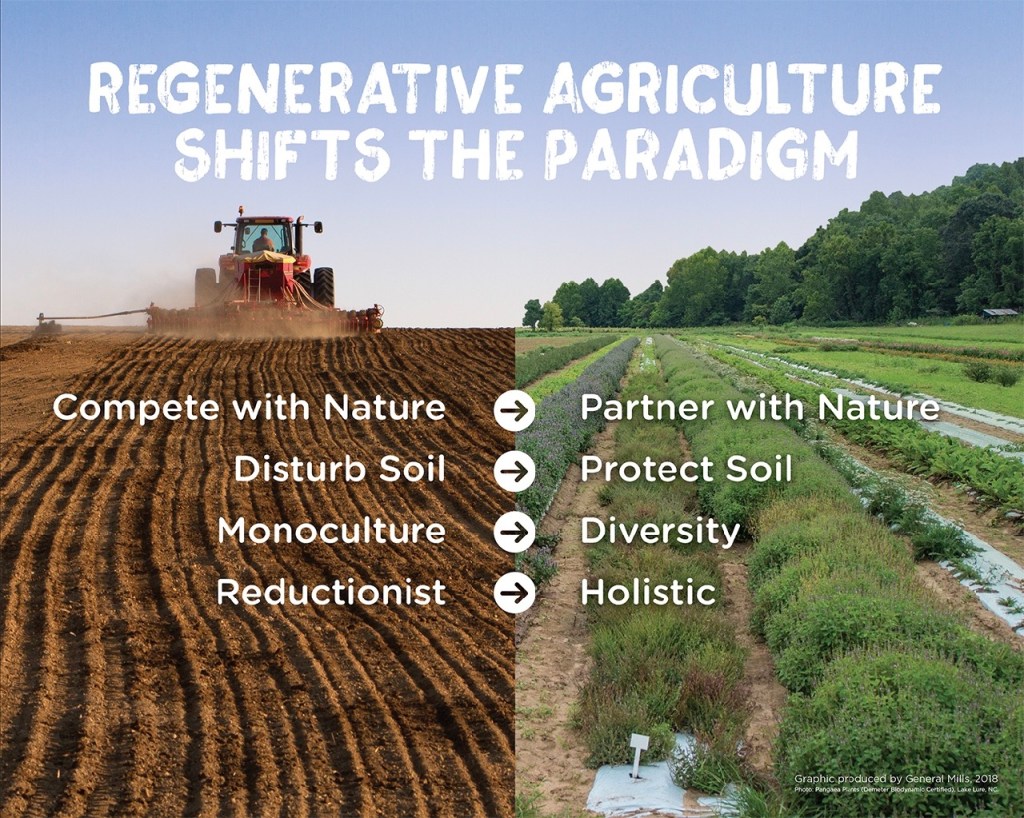
So we know for certain that the climate crisis is currently threatening the essential food supplies of our families. But what can we do about it? An array of farming practices—known collectively as Regenerative Agriculture (RA)—is the answer. Actually, much of RA is not really new. In fact, some of the practices harken back to the way things used to be done down on the good ol’ family farm.

In a nutshell, RA involves farming smaller and smarter. Instead of routinely tilling the soil in all fields before each crop season, eliminate tilling completely. Tilling is a major factor in releasing carbon dioxide (CO2) from agricultural fields to the atmosphere. Instead, emphasize using crop rotation and cover crops. 

Also increase the use of organic fertilizers—such as manure and compost—in lieu of synthetic chemical fertilizers. These “old school” practices simultaneously preserve topsoil fertility, biological diversity, and carbon sequestration while minimizing the potential for soil erosion caused by both wind and water.

Regenerative Agriculture emphasizes a speedy transition from our current mega-scale, chemical-dependent food producing methods to healthier, organic, and ecologically-minded farming practices. Archer and Hamerschlag state that making the RA transition will mandate resilient, fair, local, and regional food systems while ensuring good jobs and healthy food for all.

So how do we make the transition to RA a reality? As Archer and Hamerschlag summarize it: Our government must stop giving billions of dollars in subsidies, loans, and research to support large-

scale industrial agriculture (in other words, “Big Ag”). Instead we need to expand our support for resilient—local and regional—farmers and ranchers.

To be successful, RA must also emphasize growing crops that are both organically and ecologically sound. Accomplishing this requires healthy, low-carbon, plant-based crop production. Future federal subsidies must then be focused on farms that feature conservation practices that lead to carbon sequestration and better soil health/biological structure. 

If wisely and broadly applied, Regenerative Agriculture will help ensure your dinner table remains set with the healthy food your family needs and deserves. Plus, the resultant wide-spread increase in carbon sequestration will help us harness the climate crisis. Now that’s a win-win situation we can all live with!

Author’s bio:For the past 50 years, professional ecologist and conservationist Budd Titlow has used his pen and camera to capture the awe and wonders of our natural world. His goal has always been to inspire others to both appreciate and enjoy what he sees. Now he has one main question: Can we save humankind’s place — within nature’s beauty — before it’s too late? Budd’s two latest books are dedicated to answering this perplexing dilemma. PROTECTING THE PLANET: Environmental Champions from Conservation to Climate Change, a non-fiction book, examines whether we still have the environmental heroes among us — harking back to such past heroes as Audubon, Hemenway, Muir, Douglas, Leopold, Brower, Carson, and Meadows — needed to accomplish this goal. Next, using fact-filled and entertaining story-telling, his latest book — COMING FULL CIRCLE: A Sweeping Saga of Conservation Stewardship Across America — provides the answers we all seek and need.Having published five books, more than 500 photo-essays, and 5,000 photographs, Budd Titlow lives with his music educator wife, Debby, in San Diego, California.
MOBILIZING TO COMBAT THE CLIMATE CRISIS

It’s Old Hat for the US!

By

Budd Titlow

http://www.buddtitlow.com

Paraphrasing President John F. Kennedy: We choose to conquer the climate crisis not because it’s easy—but because it’s hard. Because the challenge is one we are unable to postpone and one we intend to win for the preservation of all future generations of human life on this planet.

The United States is perfectly primed to lead the world’s mobilization toward resolution of our climate crisis. Throughout our history, we’ve successfully mobilized to overcome many existential threats—not just once, but many times. In fact, there are already several US precedents in place for using legislative action to stand up to huge corporations, getting them to completely change how they do business.

After Pearl Harbor—in a matter of weeks—we mobilized our assembly lines and factories to produce bombers and tanks instead of cars and trucks. In the process, we helped save the world from the scourge of Nazi domination. 

Next—holding true to President Kennedy’s words—we figured out how to send men to the moon in less than a decade.

Then—starting in the late sixties—we had the battles with the US automobile industry over toxic exhaust pollution (“brown clouds”). In the end, we forced the US auto industry to retool their assembly lines to produce vehicles that ran on unleaded gasoline and used catalytic converters.

On April 22, 1970, the first Earth Day was held, a sign of the serious interest in environmental protection was beginning to take hold. The brainchild of Wisconsin senator Gaylord Nelson, Earth Day spotlighted such problems as thermal pollution of the atmosphere, dying lakes, the profusion of solid waste, ruinous strip mining, catastrophic oil spills, and dwindling natural resources. As a pivotal event in the environmental movement, the first Earth Day emphasized that the obsession with industrial growth and consumerism was straining the environment to the breaking point and introduced the idea of living lightly on the Earth.[i]

After the first Earth Day was over, Nelson mulled over what had just occurred—the greatest demonstration of public support for a cause in US history: “No one could organize 20 million people, 10,000 grade schools and high schools, 2,500 colleges and 1,000 communities in three and a half months even if he had $20 million. [Nelson had just $190,000.] The key to the whole thing was the grass roots response.”[ii]

All concerned climate change activists would do well to study the unequivocal success of the first Earth Day. The unexpected magnitude of the response to this landmark event clearly shows what can be done when the political and social moods of the country collide, coming together with a message that says, “Let’s get something done.” Furthermore, the resulting outpouring of federal environmental legislation proves that Congress was listening to what the people were asking for. Such a groundswell of public opinion—all speaking with the same voice—will certainly go a long way toward passing similar laws and regulations to initiate real climate change solutions both in the United States and around the world.

In 1976 came the fight with the chemical powerhouse DuPont over the hole in the ozone layer. The final verdict here was that Freon—the product primarily responsible for producing ozone-destroying CFCs—was banned for good. Finally, we had the conflict with power plants and manufacturing facilities over the generation of acid rain, which started in the late 1980s. The US EPA took care of this problem with the Acid Rain Program (ARP) that eventually set caps on emissions of both of the responsible pollutants—NOx and SO2.

So, what is the best answer to our climate crisis conundrum? In addition to pressuring fossil-fuel industries to stop burning fossil fuels, there are many other reasons why a carbon fee is the most important component of any plan for solving climate change. First and foremost: it will generate money —mean lots of money, especially in the short-term. According to the Center for Climate and Energy Solutions, a carbon fee has the potential to raise significant revenues for the government. Depending on the carbon fee imposed, the money raised could be tens or even hundreds of billions of dollars each year. The Center for Climate and Energy Solutions states that, for example, “A carbon fee starting at about $16 per ton of CO2 in 2014 and rising four percent over inflation would raise more than $1.1 trillion in the first ten years, and more than $2.7 trillion over a 20-year period.”

So let’s all get started in earnest. Let’s prove that we can successfully once again mobilize to protect the long-term quality of life of our children, grandchildren, and all future generations of humans on Planet Earth!

Our hands are needed to ensure the future of Earth’s inhabitants.

Text excerpted from the book, PROTECTING THE PLANET: Environmental Champions from Conservation to Climate Change, written by Budd Titlow and Mariah Tinger and published by Prometheus Books. Photo caption & credit: Our hands are needed to ensure the future of Earth’s inhabitants. Copyright CHOATphotographer/Shutterstock. 

Author’s bio:For the past 50 years, professional ecologist and conservationist Budd Titlow has used his pen and camera to capture the awe and wonders of our natural world. His goal has always been to inspire others to both appreciate and enjoy what he sees. Now he has one main question: Can we save humankind’s place — within nature’s beauty — before it’s too late? Budd’s two latest books are dedicated to answering this perplexing dilemma. “PROTECTING THE PLANET: Environmental Champions from Conservation to Climate Change”, a non-fiction book, examines whether we still have the environmental heroes among us — harking back to such past heroes as Audubon, Hemenway, Muir, Douglas, Leopold, Brower, Carson, and Meadows — needed to accomplish this goal. Next, using fact-filled and entertaining story-telling, his latest book — “COMING FULL CIRCLE: A Sweeping Saga of Conservation Stewardship Across America”— provides the answers we all seek and need.Having published five books, more than 500 photo-essays, and 5,000 photographs, Budd Titlow lives with his music educator wife, Debby, in San Diego, California.