The Environmental Justice Movement

Text excerpted from the book: PROTECTING THE PLANET-Environmental Champions from Conservation to Climate Change (ISBN 978-1-63388-225-6)

by

Budd Titlow & Mariah Tinger

http://www.buddtitlow.com

One other notable environmental/social achievement of President Clinton is directly related—by global extension—to the developed nations versus developing nations controversy that is a significant component of today’s Climate Change debate.  By Executive Order in 1994, Clinton decreed that “each Federal agency shall make achieving environmental justice part of its mission.”

The roots of the Environmental Justice Movement—that Clinton referenced in his decree —can be traced back to Warren County, North Carolina in 1982.  With a predominant African-American population, this mostly poor rural county was selected as a site for a polychlorinated biphenyl (PCB) landfill that handled some of the deadliest carcinogens ever produced by man. More than 500 people were arrested when the community marched in protest.

While their efforts to stop the landfill failed, these demonstrators succeeded in bringing the issue of environmental racism to the forefront of the American public.  Their claims emphasized that environmental organizations were run by rich, white people advocating for protection of pristine natural resources while ignoring the conditions of the poor minority populations of the nation.
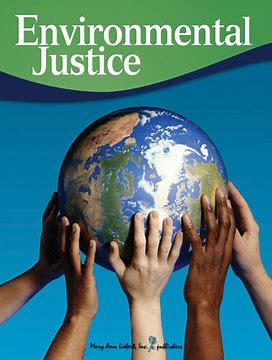
The prevailing attitude was that natural resources were more important than the ethnic minority populations of the US.

The prevailing attitude was that natural resources were more important than the ethnic minority populations of the US.  As a result, many of our nation’s most vile waste products—including radioactive materials—were being deposited in areas predominantly occupied by poor minority homeowners.  The driving theory in this disgraceful practice was that there would be less chance of organized opposition since the residents were less likely to be aware of what was happening to their communities.

Robert Bullard—Originator / Author

Robert Bullard, often called the “Father of Environmental Justice”, uses his expertise and media savvy to garner attention for communities burdened with environmental hazards. He has dedicated his career to protecting minority and low-income communities from becoming toxic pollution dump sites.  Bullard sees environmental justice issues at the heart of everything, in his words, “The right to vote is a basic right, but if you can’t breathe and your health is impaired and you can’t get to the polls, then what does it matter?”
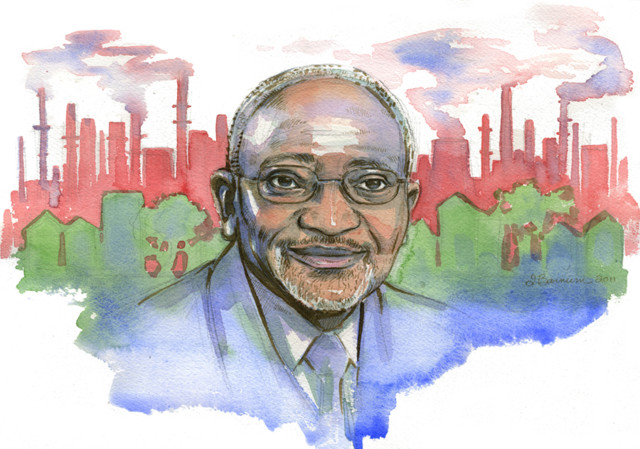
Dr. Robert Bullard is often called the “Father of Environmental Justice Movement”.

Professor Bullard voiced a loud and clear opinion about the disproportionate number of landfills that were cited near predominantly black communities throughout the South, saying “Just because you are poor, just because you live physically on the wrong ‘side of the tracks’ doesn’t mean that you should be dumped on.” His voice was heard and the implementation of the environmental justice movement occurred. 

In 1994, President Bill Clinton summoned Dr. Bullard to the White House to witness the signing of an executive order that would require the federal government to consider the environmental impact on low-income communities before implementing policies.  Bullard co-wrote a report titled Toxic Wastes and Race at Twenty, 1987-2007: Grassroots Struggles to Dismantle Environmental Racism which prompted the Environmental Protection Agency (EPA) to state, “The EPA is committed to delivering a healthy environment for all Americans and is making significant strides in addressing environmental justice concerns.”
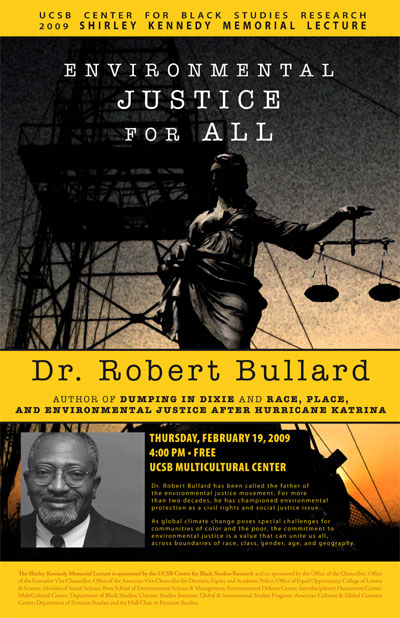
Robert Bullard grew up in Elba, Alabama, a small town that kept him closely acquainted with the civil rights movement, as did his parents, activists for the movement.  He earned an undergraduate degree in government from Alabama A&M, a historically black university, and subsequently a Master’s degree in Sociology from Atlanta University.  Two years after completing a sociology Ph.D. from Iowa State University, he began a study to document environmental discrimination under the Civil Rights Act.  Bullard found that, despite a demographic of only 25% African American in Houston, 100% of the city’s solid waste sites, 75% of the privately owned landfills and 75% of the city-owned incinerators were located in black neighborhoods. Since the city of Houston did not have zoning at this time, he knew that individuals in government orchestrated these sitings.  This hooked him into the cause.  

Dr. Bullard worked his way through academia, holding research positions and professorships at a number of universities in Texas, Tennessee, California among others.  He currently holds a position as Dean of the Barbara Jordan-Mickey Leland School of Public Affairs at Texas Southern University in Houston, Texas.  As with many of our Climate Change Heroes, Bullard works in academia, but turns his attention and voice to political matters and advocates vociferously for his cause.
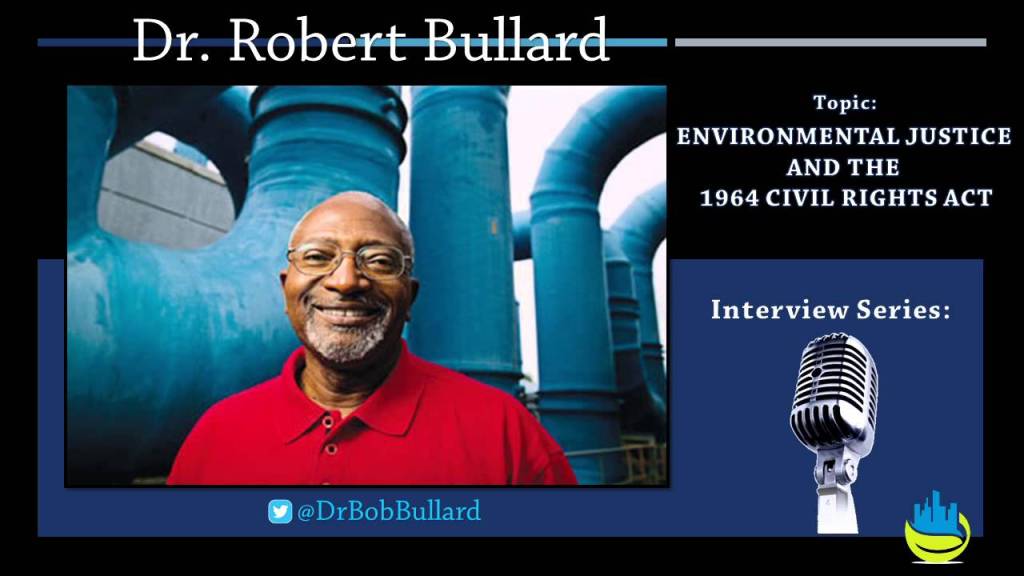
Bullard’s book, Dumping in Dixie: Race, Class and Environmental Quality was the first tome on environmental justice issues. Bullard believes that sustainability cannot exist without justice.  As he puts it, “This whole question of environment, economics, and equity is a three-legged stool.  If the third leg of that stool is dealt with as an afterthought, that stool won’t stand.  The equity components have to be given equal weight.”  To him, part of the solution is to pair mainstream environmental groups with environmental-justice groups that have the ability to mobilize large numbers of constituents.  This type of grassroots movement will get people marching and filling up courtrooms and city council meetings to kick off conversations about environmental movement. He believes that reality will force collaboration and that the awareness that our actions in the developed world have impacts that are not isolated to just us. While this is a step in the right direction, we need to move it to another level of action and policy and apply the framework that environmental justice has laid out to be used across developing countries.  
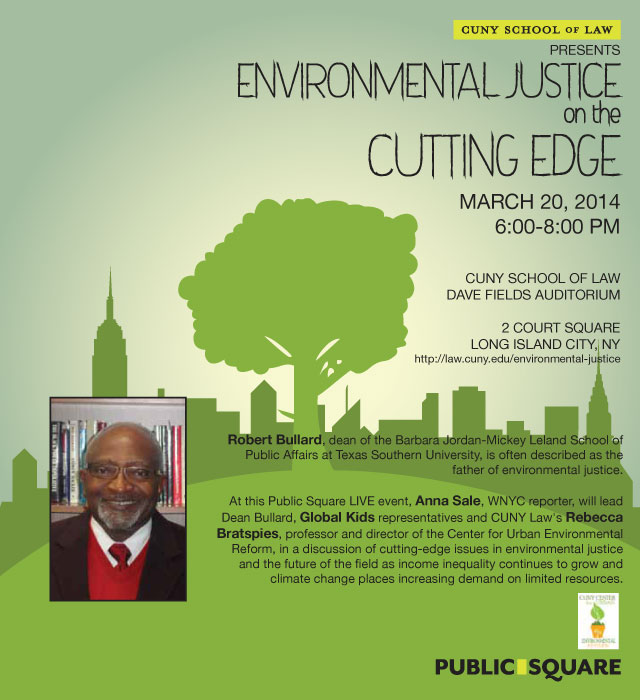
Robert Bullard has received countless awards, including: The Grio’s 100 black history makers in the making, Planet Harmony’s African American Green Hero, and Newsweek’s  top Environmental Leaders of the Century. In 2013, he was the first African American to win the Sierra Club John Muir Award, and in 2014 the Club named its new Environmental Justice Award after Dr. Bullard.


Author’s bio:For the past 50 years, professional ecologist and conservationist Budd Titlow has used his pen and camera to capture the awe and wonders of our natural world. His goal has always been to inspire others to both appreciate and enjoy what he sees. Now he has one main question: Can we save humankind’s place — within nature’s beauty — before it’s too late? Budd’s two latest books are dedicated to answering this perplexing dilemma. PROTECTING THE PLANET: Environmental Champions from Conservation to Climate Change, a non-fiction book, examines whether we still have the environmental heroes among us — harking back to such past heroes as Audubon, Hemenway, Muir, Douglas, Leopold, Brower, Carson, and Meadows — needed to accomplish this goal. Next, using fact-filled and entertaining story-telling, his latest book — COMING FULL CIRCLE: A Sweeping Saga of Conservation Stewardship Across America — provides the answers we all seek and need.Having published five books, more than 500 photo-essays, and 5,000 photographs, Budd Titlow lives with his music educator wife, Debby, in San Diego, California.

The Clinton Presidency—High Hopes Dashed

Text excerpted from the book: PROTECTING THE PLANET-Environmental Champions from Conservation to Climate Change (ISBN 978-1-63388-225-6)

by

Budd Titlow & Mariah Tinger

http://www.buddtitlow.com

In November 1992, America elected President William Jefferson “Bill” Clinton – the first democratic leader of the free world in 12 years and most environmentalists breathed a long, deep sigh of relief.  Personally, since I (Budd) was still making a living as an environmental consultant, I indeed felt like a sweet spring wind had just swooshed across the American landscape.  Things surely had to get better now that a left-leaning Democrat was back in the White House.

As president, Clinton had many similarities with his Democratic predecessor—Jimmy Carter from the late 1970’s.  He had a strong southern heritage, a gubernatorial background, status as a Washington outsider, and a brilliant mind.  In fact, Clinton was imbued with a skill that Carter didn’t possess.  He was a great communicator—the Democratic equivalent of Ronald Reagan—with the charisma and savvy to be one of America’s greatest presidents.  But alas Clinton fell victim to the same extreme weakness that has plagued so many other great—as well as not so great—male world leaders.

Alas President Bill Clinton fell victim to the same extreme weakness that has plagued so many other great—as well as not so great—male world leaders.

Unfortunately, one thing Clinton didn’t share was Carter’s high moral ground.  He did much more than “lust in his heart after the fairer sex”—President Carter’s famous quote about how he experienced sexual fantasies.  In fact, it would have been interesting to see exactly how much Clinton could have accomplished in the environmental—as well as other arenas—if he had not fallen prey to the feminine charms of a White House intern named Monica Lewinsky.

From a Climate Change perspective when he first took office, Clinton had an outspoken commitment to reduce CO2 and other GHG emissions.  He proclaimed that Climate Change was a global strategic threat that required bold leadership.  In his first Earth Day address, Clinton announced that he would sign the Biodiversity Treaty and also promised to reduce GHG emissions to 1990 levels by the year 2000, both actions that were embarrassingly rejected by President H. W. Bush at the 1992 Rio Earth. Unfortunately, when Clinton left office, GHG emissions were nowhere near the 1990 levels that he promised.

In general, during the Clinton administration, many environmental activists began to be known as “Lite Greens”—they wanted to protect the environment, but not when it would cause any downgrading of their own personal quality of life. While definitely possessing the knowledge base and passion for increasing environmental protection, Clinton immersed himself in the belief that the economy had to come first, above all else.  This was based on his perception that an affluent, acquisitive society was what the American people wanted.

Despite his economic proclivities, Clinton did manage to accomplish some significant natural resource gains—especially during his last years in office.  He use the Antiquities Act of 1906 to make more than 3 million acres of federal land off-limits to development by declaring them national monuments.  These areas included Utah’s Grand Staircase-Escalante, Arizona’s Grand-Canyon-Parashant, and California’s Pinnacles. He also used his executive power to declare one third of our national forestland—58 million acres in 39 states—off-limits to road building, logging, and oil and gas exploration.

Clinton also took on a variety of commercially complex issues, including restoring the hydrology of the Everglades, restricting flights over the Grand Canyon, banning snowmobiling in national parks, and fighting off congressional attempts to open the Arctic National Wildlife Refuge to oil and gas drilling. In addition, he made headway in so-called brown issues—including approving new clean air standards for soot and smog, cleaning up 515 Superfund sites (more than three times as many as the previous two administrations), doubling the number of chemicals that industry must report to communities through right to know laws, and setting tough new standards for reducing sulfur levels in gasoline. His administration also took measurable action to protect the nation’s waterways and water quality by launching the Clean Water Action Plan, strengthening the Safe Drinking Water Act, and permanently barring new oil leasing in national marine sanctuaries.

But some of Clinton’s most significant environmental accomplishments came not in the form of what he achieved, but what he staved off.  He faced an aggressive and hostile Congress that worked consistently to dismantle fundamental environmental laws such as the Endangered Species Act and to frustrate the ability of agencies such as the EPA to carry out their regulatory work. Clinton consistently resisted these attacks by vetoing numerous anti-environmental bills, including the package of legislation that was part of the 1995 Congressional leadership’s “Contract with America.”

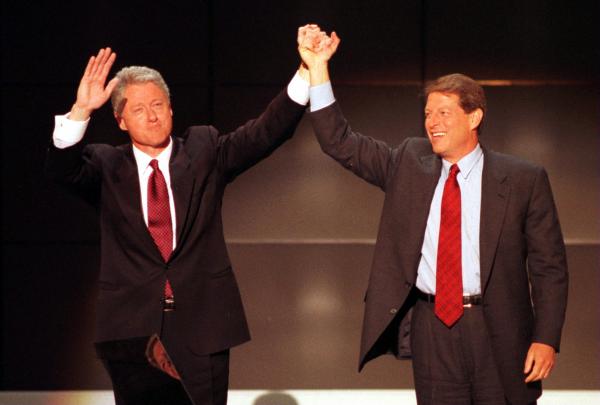
Soon after taking office, Clinton shifted the bulk of his administration’s environmental watchdog duties onto his Vice President, Al Gore.

Soon after taking office, Clinton shifted the bulk of his administration’s environmental watchdog duties onto his Vice President, Al Gore.  A staunch conservationist, Senator Gore authored the 1992 best-seller, Earth in the Balance, that called for mandating much tougher environmental laws and regulations.  After leaving office, Gore also became one of our Climate Change Heroes—most notably because of his 2006 documentary film and later book entitled, An Inconvenient Truth.  We will talk much more about Mr. Gore—and his substantial influence on the Climate Change arena—later in this chapter plus a detailed biography in Part Four.

Author’s bio:For the past 50 years, professional ecologist and conservationist Budd Titlow has used his pen and camera to capture the awe and wonders of our natural world. His goal has always been to inspire others to both appreciate and enjoy what he sees. Now he has one main question: Can we save humankind’s place — within nature’s beauty — before it’s too late? Budd’s two latest books are dedicated to answering this perplexing dilemma. PROTECTING THE PLANET: Environmental Champions from Conservation to Climate Change, a non-fiction book, examines whether we still have the environmental heroes among us — harking back to such past heroes as Audubon, Hemenway, Muir, Douglas, Leopold, Brower, Carson, and Meadows — needed to accomplish this goal. Next, using fact-filled and entertaining story-telling, his latest book — COMING FULL CIRCLE: A Sweeping Saga of Conservation Stewardship Across America — provides the answers we all seek and need.Having published five books, more than 500 photo-essays, and 5,000 photographs, Budd Titlow lives with his music educator wife, Debby, in San Diego, California.

NEPA, CEQ, and the Birth of the EIS

Text excerpted from the book: PROTECTING THE PLANET-Environmental Champions from Conservation to Climate Change (ISBN 978-1-63388-225-6)

by

Budd Titlow & Mariah Tinger

http://www.buddtitlow.com

Fittingly, the very first federal action to arrive on the scene during the Seventies was the National Environmental Policy Act (NEPA)—and along with it the President’s Council on Environmental Quality (CEQ).  While officially intended to be representative of the “US national policy promoting enhancement of the environment”, NEPA—in actuality—turned out to be something quite different.  In fact, it quickly became a controversial vehicle for debating the pros and cons of “proposed federal actions that may or may not have significant negative or positive impacts on the quality of the natural or human environments.”   Got it? 

Well don’t feel bad, neither did most of the people who were hired by the federal government to conduct NEPA analyses and then write corresponding Environmental Impact Statements (EIS’s) summarizing the findings of these analyses.  I (Budd) should know—I was one of those people!  

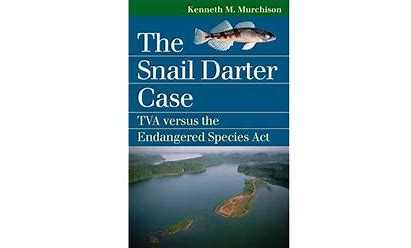
I spent my first three years as a “Professional Environmental Scientist” trying to convince Congress to clarify exactly how an EIS was supposed to be written and how the findings should be determined and presented.  By the way, NEPA is the law that brought us all the titanic—and often multi-year—EIS battles over such relatively obscure creatures as the snail darter, the furbish lousewortzebra mussels, and oh so many more tantalizing federal foibles and fiascos.

Anyway, we digress … at least NEPA represented a legitimate effort on the part of Congress to embed some sort of environmental ethic and consciousness into the land development business in the United States.  And this was—in fact—a big improvement over what previously had been required from an environmental analysis and evaluation standpoint—which was, pretty much—nothing at all!

Russell Train – The First Guru of CEQ

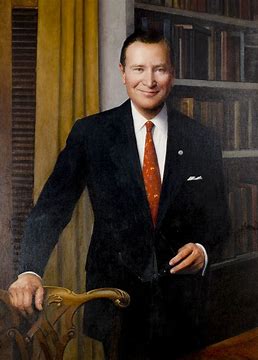
All of this Washington, DC level hoopla about environmental awareness and protection also brought another leading man to the forefront of the conservation movement.  From the day that he first set foot on a Washington sidewalk, Russell Train was destined to be a bright star in the mixed metaphor affairs of politics, high finance, and natural resource conservation.  Meticulous, dapper, and exquisitely mannered—even as a young boy—Train had the combined legal and business acumen to know how to get things done in DC and—wow—did he ever put those skills to work in for national environmental regulation and worldwide wildlife protection.

Born in Jamestown, Rhode Island in 1920, Train was raised in Washington where his father, a Rear Admiral in the US Navy, served as President Herbert Hoover’s Naval Aide.  Educated at both Princeton and Columbia Universities, he started his career as a DC lawyer working in the US Tax Court but quickly realized he could create a niche for himself as an advocate for African wildlife—his first real love.  So—in 1965—he resigned in mid-term and became president and chief attorney of the Conservation Foundation.

Train’s success as a conservation attorney was so great that he caught the eye of President-elect Richard Nixon who decided that his deft combination of innovative ideas and personal passions were exactly what was needed to capture the public’s burgeoning concerns—and votes—about environmental protection.  Nixon plugged Train into all the right places and it was actually through Train’s advice that Nixon created both the CEQ—to review regulatory activities under NEPA—and the US Environmental Protection Agency (EPA).  Once he became the first Chairman of CEQ, Train was off and running as a force to be reckoned with on the red carpets of Washington.

His work as head of the CEQ was so effective that Train soon had the moniker, The Father of NEPA, attached to his name.  His policy of “look-before-you-leap” became the catch phrase for analyzing the potential impacts of major federal actions before building them. As CEQ Chairman, Train also earned the reputation for being the “founding father” of the United Nations Educational, Scientific, and Cultural Organization’s (UNESCO) World Heritage Program.

After being appointed Administrator of the EPA in 1973, Train soon also became well known for creating ground-breaking laws and implementing effective enforcement of a host of ersatz rules and regulations.  With the delegated power of the presidency firmly clinched in his fists, Train shaped the world’s first comprehensive programs for scrubbing the skies and waters of pollution while safeguarding US citizens from exposure to toxic chemicals.

After leaving government service in 1978, Train moved on to the next position where he soon earned another starring role as the first Chairman of the World Wildlife Fund (WWF).  During Trains’ time in leading the organization, the WWF grew from a small, relatively-unknown conservation group to a global force for conservation, consisting of $100-million-a-year global network of researchers and technical specialists, famed for its panda trademark.

Panda-adorned logo of the World Wildlife Fund (WWF).

For the remainder of his life, Train continued to receive numerous plaudits—from Chairman Emeritus of the WWF to the Presidential Medal of Freedom awarded by President H.W. Bush in 1991.  In 2003, Train published his memoir, Politics, Pollution, and Pandas, which is an excellent compendium on the birth and growth of US’s national interest in environmental issues.

“I felt strongly that environmental issues needed a sharp, cutting edge in government, one that had high visibility to the public … and this view finally prevailed.”

– Russell Train, Politics, Pollution, and Pandas

Russell Train’s primary organization building skills—in both the public and the private sectors—should be studied in depth by Climate Change leaders and activists. Successfully fostering a conservation cause first depends on having a cohesive, well-staffed, and financially solvent organization in place. 


Author’s bio:For the past 50 years, professional ecologist and conservationist Budd Titlow has used his pen and camera to capture the awe and wonders of our natural world. His goal has always been to inspire others to both appreciate and enjoy what he sees. Now he has one main question: Can we save humankind’s place — within nature’s beauty — before it’s too late? Budd’s two latest books are dedicated to answering this perplexing dilemma. PROTECTING THE PLANET: Environmental Champions from Conservation to Climate Change, a non-fiction book, examines whether we still have the environmental heroes among us — harking back to such past heroes as Audubon, Hemenway, Muir, Douglas, Leopold, Brower, Carson, and Meadows — needed to accomplish this goal. Next, using fact-filled and entertaining story-telling, his latest book — COMING FULL CIRCLE: A Sweeping Saga of Conservation Stewardship Across America — provides the answers we all seek and need.Having published five books, more than 500 photo-essays, and 5,000 photographs, Budd Titlow lives with his music educator wife, Debby, in San Diego, California.
The First Earth Day Leaves A Mighty Mark

Text excerpted from the book: PROTECTING THE PLANET-Environmental Champions from Conservation to Climate Change (ISBN 978-1-63388-225-6)

by

Budd Titlow & Mariah Tinger

http://www.buddtitlow.com

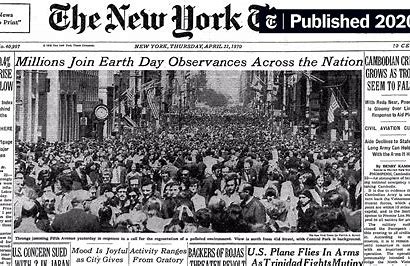
Among the many events heralding the newfound and hardcore lust for environmental protection was the first Earth Day which took place on April 22, 1970.  The brainchild of Wisconsin Senator Gaylord Nelson, Earth Day spotlighted such problems as thermal pollution of the atmosphere, dying lakes, the profusion of solid waste, ruinous strip mining, catastrophic oil spills, and dwindling natural resources.  As a pivotal event in the environmental movement, the First Earth Day emphasized that the obsession with industrial growth and consumerism was straining the environment to the breaking point and introduced the idea of living lightly on the Earth.

After the first Earth Day was over, Nelson mulled over what had just occurred as the greatest groundswell demonstration of public support for a cause in US history, “No one could organize 20 million people, 10,000 grade schools and high schools, 2,500 colleges and 1,000 communities in three and a half months even if he had $20 million. [Nelson had just $190,000.]  The key to the whole thing was the grass roots response.”

All concerned Climate Change activists would do well to study the unequivocal success of the first Earth Day.  The unexpected magnitude of the response to this landmark event clearly shows what can be done when the political and social moods of the country collide together with a message that says, “Let’s get something done”.  Furthermore, the resultant outpouring of federal environmental legislation proves that Congress was listening to what the people were asking for.  Such a groundswell of public opinion—all speaking with the same voice—will certainly go a long way toward passing similar laws and regulations to initiate real Climate Change solutions both in the US and around the world.

Tricky Dick Comes to the Rescue 

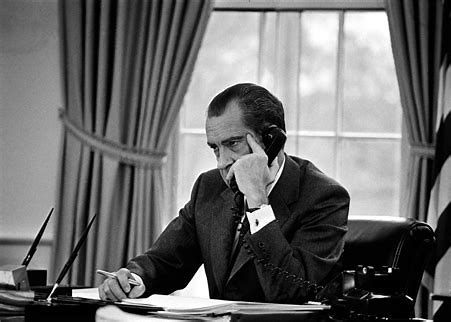
The public outcry for fixing the environment became so pervasive across the land, that when President Richard Millhouse Nixon—arguably the most reviled leader in US history—took office he was forced to acknowledge that something had to be done about the environment.  Nixon made his feelings quite evident during his first State of the Union Address by saying: “The 1970’s absolutely must be the decade when America pays its debt to the past by reclaiming the purity of its air and its waters. … It is literally now or never.” The furious flurry of federal environmental legislation that emanated from Capitol Hill during the first few years of the Seventies offered solid proof that Nixon and the Congress were fully committed to putting federal funds where their mouths were.

President Richard Nixon at work in the Oval Office.

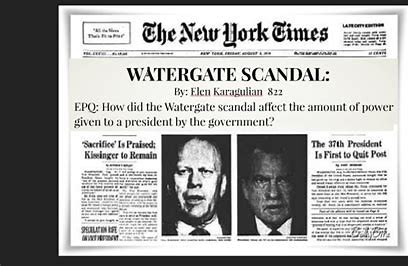
What made this all seem so incongruous was that the demand for more national environmental protection was so great that no administration, including one staffed primarily by conservative and—as proven by the sordid and shameful Watergate Affair in 1972—criminally unscrupulous politicians, could ignore the nationwide clarion calls.  

As an aside, I (Budd) vividly remember —as a graduate student at Virginia Tech—having dinner at my dad’s house in Blacksburg, Virginia when the Watergate Break-In was first reported on the CBS Evening News.  Walter Cronkite just sort of mentioned it in passing late in the broadcast, essentially as a non-story—“some minor criminal activity at the Washington, DC hotel where the Democratic National Convention was being held”.  His dad immediately looked up from cutting his broiled chicken and—displaying his right-on instincts as a lifelong newspaperman—said, “Boy that sure sounds like that just might be a real story!”

Author’s bio:For the past 50 years, professional ecologist and conservationist Budd Titlow has used his pen and camera to capture the awe and wonders of our natural world. His goal has always been to inspire others to both appreciate and enjoy what he sees. Now he has one main question: Can we save humankind’s place — within nature’s beauty — before it’s too late? Budd’s two latest books are dedicated to answering this perplexing dilemma. PROTECTING THE PLANET: Environmental Champions from Conservation to Climate Change, a non-fiction book, examines whether we still have the environmental heroes among us — harking back to such past heroes as Audubon, Hemenway, Muir, Douglas, Leopold, Brower, Carson, and Meadows — needed to accomplish this goal. Next, using fact-filled and entertaining story-telling, his latest book — COMING FULL CIRCLE: A Sweeping Saga of Conservation Stewardship Across America — provides the answers we all seek and need.Having published five books, more than 500 photo-essays, and 5,000 photographs, Budd Titlow lives with his music educator wife, Debby, in San Diego, California.