John Muir and His Battle for Hetch Hetchy

by

Budd Titlow

http://www.buddtitlow.com

The semantic battle between conservationists and preservationists continued after President Teddy Roosevelt and U.S. Forest Service Supervisor Gifford Pinchot left office.  The preservationists believed the conservationists were exposing the nation’s natural resources to widespread overuse and eventual destruction while the conservationists categorized the preservationists as idealistic amateurs—precursors to today’s tree-huggers—who had their heads in the sand when it came to economic reality.  The whole situation was really brought to a fever pitch during a rancorous battle over the proposal to dam the Tuolomne River and flood Hetch Hetchy Valley in Yosemite National Park.

Let’s start by looking at the need for putting a water supply reservoir in Yosemite National Park in the first place.  You likely know about the historic earthquake that struck the City of San Francisco in 1906.  Blamed for more than 3,000 deaths and 80% urban devastation, the “Great Quake” still ranks as one of the worst natural disasters to ever hit the US. But you might not realize that the massive conflagration of fires sparked by the quake showed the woefully poor quality of the city’s water infrastructure.  There simply wasn’t enough water anywhere to successfully douse the fires, so they basically roared unabated throughout the entire city.

Ironically, the city fathers had just been dealing with this classically difficult human needs versus natural resource protection issue for two years before the earthquake struck.  From the human perspective, Hetch Hetchy Canyon—located 167 miles west of San Francisco—offered the perfect topographic configuration for constructing a dam and reservoir that would provide a long-term solution to San Francisco’s water needs.  On the natural side of the ledger, the Hetch Hetchy Valley was rivaled only by the Yosemite Valley in terms of spectacular scenery, abundant wildlife, and marvelously varied recreational opportunities.

As so often happens following a calamity, the severity of the earthquake and fires flipped the ongoing debate in favor of damming the Tuolomne River as it flowed through Hetch Hetchy.  So in 1908, the US Department of the Interior—which had previously denied a permit—granted the City of San Francisco’s application for development rights of the Tuolumne River in Hetch Hetchy Canyon. With this decision firmly in hand, the process of planning for construction of the Hetch Hetchy Dam would soon follow … or so the city fathers thought.  What they hadn’t planned on was a feisty fellow named John Muir and his legion of devoted followers in a newly formed conservation organization known as The Sierra Club.

Muir used articles in national magazines to rail against the environmental tyranny of the Hetch Hetchy Dam and build widespread opposition to the project.  But before we go any further with this part of Muir’s story, let’s take a look at exactly who this man was and why he was so willing to take on such formidable foes as the City of San Francisco and the US Department of the Interior.

John Muir was born in 1838 to a very strict and religious family in Dunbar, East Lothian, Scotland. By his own account, Muir spent his boyhood alternating between two seemingly incongruous pursuits—playground fighting and searching for bird’s nests.  His love of nature led to regular ramblings around his Scottish coastal plain home and frequent lashings from his father who believed any activities that didn’t involve Bible study were a waste of time.  An itinerant Presbyterian minister, Muir’s father often treated him harshly and insisted that he memorize the Bible so that—by age 11—he knew almost the entire text by heart.

In 1849 seeking a stricter religious foundation than he had in Scotland, Muir’s father moved the family to Fountain Lake Farm near Portage, Wisconsin.  From the time he hit Wisconsin soil, Muir’s life as an adventurer took off in earnest. While he didn’t connect with his characteristic long, thick beard, tousled hair, piercing grey eyes, and crooked walking stick until adulthood, his tireless ramblings took him all over the Wisconsin countryside through his college days at the State University in Madison.

Afterward graduation, he joined his older brother collecting plants and stomping through swamps in southern Ontario, hiking the Niagara Escarpment, taking a 1,000 mile stroll from Indiana to Cedar Key on Florida’s Gulf Coast, sailing to Havana, Cuba, and then cruising up the Atlantic seaboard to New York City.  From New York, Muir booked passage to California and—finally in 1868, at age 30—made his way to the Yosemite Valley, the place that was to become the land of his lasting legacy and unrelenting devotion.

After working as a sheepherder in the California Sierra Nevada—“The Range of Light” as he referred to it—high country for a season, Muir took a job in 1869 building a sawmill in the Yosemite Valley. In his free time, he roamed Yosemite, where he developed a scientific theory that the valley had been carved by glaciers and then unconditionally surrendered to nature. Muir felt a spiritual connection to nature. He believed that mankind is just one part of an interconnected natural world, not its master, and that God is only revealed through nature.

Muir’s love of the western high country gave his writings a special spiritual quality. His readers—including presidents, congressmen, and “just plain folks”—were inspired and often moved to take action by the enthusiasm of his unbounded love of nature.

John Muir relaxing in his beloved Yosemite National Park.

After four years of rejoicing in the Sierra High Country, Muir moved back to the City of Oakland in 1873 where he could more easily earn a living with his writing. He was still espousing the ecstasy he felt traipsing about in the natural world but he was now doing it through articles in leading literary publications like Atlantic MonthlyOverland Monthly,Scribner’s, and Harper’s Magazine. These published articles soon made Muir nationally famous and helped him build strong coalitions throughout the government, corporate, and political worlds.  He combined these strong contacts with his widespread national fame and critical acclaim as a speaker, activist, and proposal writer to become our Nation’s most accomplished and important land preservationist.

Muir soon became the public voice for setting aside the high country around the Yosemite Valley as a national park in 1890, thereby setting the stage for the nation’s national park system.  Muir was also personally involved in the creation of Sequoia, Mount Rainier, Petrified Forest, and Grand Canyon National Parks.  In 1892, as a further testament to his spreading reputation as the nation’s leading conservationist, Muir and a cadre of his devoted followers founded the Sierra Club to “do something for wildness and make the mountains glad.”  Of course, the Sierra Club is now one of the leading environmental organizations on the face of the Earth and Muir served as its first president until his death in 1914.

Muir’s greatest cause celebre came during a 1903 three-night excursion to the Yosemite Valley with President Teddy Roosevelt that has been called and written about many times as “the camping trip that changed America” and for very good reasons.  First, Muir successfully persuaded Roosevelt to transfer the spectacular Yosemite Valley and the equally magnificent Mariposa Grove of giant sequoias from state park status to a national park. Then their intense and prolonged—both men were characterized by extreme verbosity—campfire chats no doubt sowed the seeds for federal protection of such other iconic western landscapes as: Chaco Canyon, New Mexico; Devils Tower, Wyoming; El Morro, New Mexico; Gila Cliff Dwellings, New Mexico; Grand Canyon, Arizona; Jewel Cave, South Dakota; Montezuma Castle, Arizona; Muir Woods, California; Natural Bridges, Utah; Navajo, Arizona; Pinnacles, California; Tonto, Arizona; Petrified Forest, Arizona; Tumacacori, Arizona, and Lassen Peak and Cinder Cone, California (now Lassen Volcanic National Park).[i]

This trip away from the tightly wound vagaries of Washington, DC and The White House had a profound and lasting impact on national conservation policies throughout the rest of Roosevelt’s presidency. Of his Yosemite escape with Muir, Roosevelt fondly remembered,  “It was like lying in a great solemn cathedral, far vaster and more beautiful than any built by the hand of man.  There can be nothing in the world more beautiful than the Yosemite, the groves of the giant sequoias and redwoods … our people should see to it that they are preserved for their children and their children’s children forever, with their majestic beauty all unmarred.”

Now let’s return to the epic battle over Hetch Hetchy which was, by far, the most titanic and traumatic struggle of Muir’s life. In Muir’s tragically touching words: “These temple destroyers, devotees of ravaging commercialism, seem to have a perfect contempt for Nature, and instead of lifting their eyes to the God of the Mountains, lift them to the Almighty Dollar.  Dam the Hetch Hetchy!  As well dam for water tanks the people’s cathedrals and churches, for no holier temple has been consecrated by the heart of man.”

Muir’s battling preservationists also drew withering fire from the citizens of San Francisco who believed they advocated for destruction of their city’s long-term growth.  The issue was finally decided in 1913 when Congress passed the Hetch Hetchy Dam Bill by a large margin.  John Muir was truly devastated and heartbroken.  A pristine jewel of the land that he had spent the best years of his life exploring and writing about was about to be ripped out of its setting and desecrated forever.  Many of Muir’s devout followers believed that approval of the Hetch Hetchy Dam cost him his life.  After the overwhelming yes vote, Muir became severely stressed and increasingly depressed and died a year later of pneumonia.  

On a positive note, Muir’s bountiful life and legacy as America’s first true preservationist has much to offer today’s Climate Change heroes.  Often called the “Father of Our National Park System”, Muir lived life to the fullest and—through his writing and speaking—made others aware of the joy he found in his vaunted western cathedrals:  “Climb the mountains and get their good tidings. Nature’s peace will flow into you as sunshine flows into the trees.”  

But Muir also realized the importance of fighting for protection of these iconic landscapes as homage to the entire natural world: “When we try to pick out anything by itself, we find it hitched to everything else in the universe.” In the final analysis, he gave his life—battling corporations, city officials, and federal bureaucrats—trying to save a sacred piece of his hallowed cathedral in the High Sierras.

Despite the loss of the battle over Hetch Hetchy, Muir’s legion of preservationists gained quite a bit of traction during the second half of the 20th Century.  For one thing they learned that using the print media—magazines and books—could be a very effective tool for rallying public support to their side. Operating in a similar fashion, the Climate Change community should take advantage of every type of media available—particularly now emphasizing Social Media—to espouse the critical importance of maintaining our seashores, coastal wetlands, coral reefs, and oceanic icefields for all future generations of Americans to behold and betroth.

Text excerpted from book:      “PROTECTING THE PLANET: Environmental Champions from Conservation to Climate Change” written by Budd Titlow and Mariah Tinger and published by Prometheus Books.

Photo caption and credit: John Muir relaxing in his beloved Yosemite National Park. Copyright Shutterstock.

Author’s bio:  For the past 50 years, professional ecologist and conservationist Budd Titlow has used his pen and camera to capture the awe and wonders of our natural world. His goal has always been to inspire others to both appreciate and enjoy what he sees. Now he has one main question: Can we save humankind’s place — within nature’s beauty — before it’s too late? Budd’s two latest books are dedicated to answering this perplexing dilemma. “PROTECTING THE PLANET: Environmental Champions from Conservation to Climate Change”, a non-fiction book, examines whether we still have the environmental heroes among us — harking back to such past heroes as Audubon, Hemenway, Muir, Douglas, Leopold, Brower, Carson, and Meadows — needed to accomplish this goal. Next, using fact-filled and entertaining story-telling, his latest book — “COMING FULL CIRCLE: A Sweeping Saga of Conservation Stewardship Across America” — provides the answers we all seek and need. Having published five books, more than 500 photo-essays, and 5,000 photographs, Budd Titlow lives with his music educator wife, Debby, in San Diego, California.

.

Harriet Lawrence Hemenway—High Society Goes to Bat for Birds

by

Budd Titlow

http://www.buddtitlow.com

In 1886 Frank Chapman—founder of Audubon Magazine—decided to take a stroll from his uptown Manhattan office to the heart of the fashion district on 14th Street. Along the way, Chapman—a talented birder—counted a total 174 birds comprising 40 species, including woodpeckers, orioles, bluebirds, blue jays, terns, and owls.  A pretty impressive array of birds for the middle of New York City—right?  Hardly—you see the problem was that all the birds Chapman counted that day adorned the hats that sat on the top of women’s heads.  

In the late 19th Century, America’s hat craze was in full swing.  Millions of North American birds were killed for their feathers which were in great demand by the millinery trade. This greedy practice was so lucrative that plume hunters would often wipe out all the birds in a rookery—taking just the feathers and leaving eggs to rot and newly hatched chicks to starve to death. The going feather rate was $20 per ounce—more valuable than gold at the time.  

In 1896 nearly five million birds representing 50 different species were killed for fashion.  Entire populations of shorebirds and wading birds—including herons, egrets, spoonbills, gulls, and terns—along the Atlantic Coast were wiped out.  But this despicable situation was about to change—in a very dramatic way.  Enter Harriett Lawrence Hemenway!  

Most successful environmental organizations owe their starts to individuals with a deep and abiding respect for and dedication to the natural world.  This is certainly the case with the Massachusetts Audubon Society, although its founder didn’t exactly come from the background you might expect.  For much of her life through early adulthood, Harriet Lawrence Hemenway lived a life of luxury and privilege at the pinnacle of Boston society in a family dominated by accomplished men. 

While escaping to watch birds along the Charles River whenever she could, Hemenway spent most of her time as a prominent socialite moving gracefully through all the right places while always decked out to the nines in the latest trendy fashions.  That was until she sat down on a cold winter day in 1896 and read a newspaper story that made her blood boil and caused all hell to break loose within the heretofore comfy and cozy confines of polite Boston society.

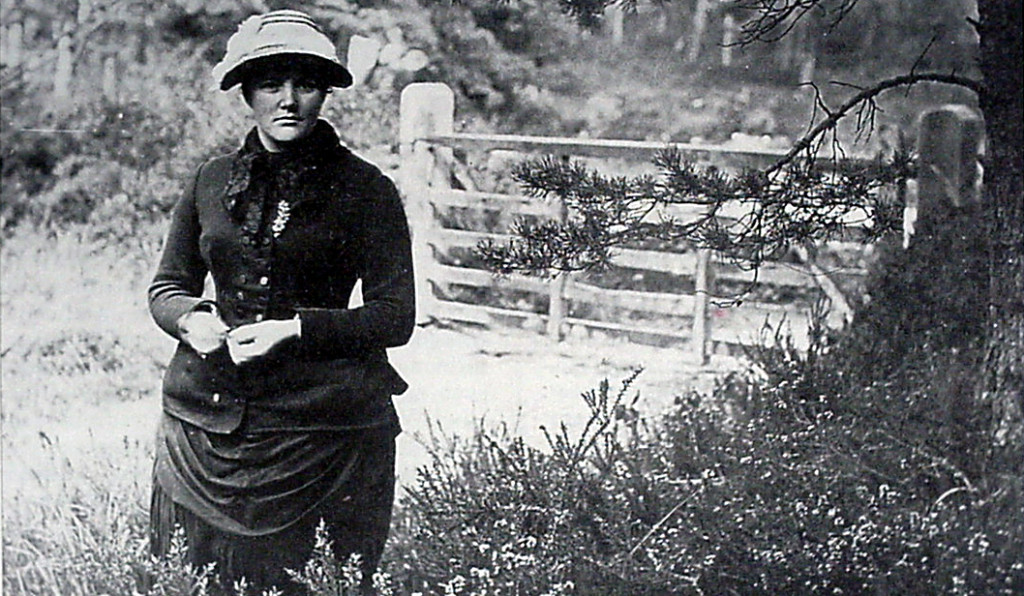
Harriett Hemenway escapes high society to watch birds along Boston’s Charles River.

When Hemenway read about thousands upon thousands of magnificent wading birds being slaughtered for feathers just to decorate women’s hats, she knew she had found her life’s calling.  From that day forward, she declared herself to be a true “Champion of Conservation” and girded for the battle royal with the male-dominated world that she knew would soon follow.

Hemenway’s portrait by the famous artist John Singer Sargent shows an arrestingly handsome woman with a deep-set gaze that practically shouts out “don’t trifle with me … no matter who you are!” Soon after she read the bloodcurdling account of entire rookeries being wiped out in Florida, many of the cocky men who thought they ruled the roost in Boston were being called on the carpet to atone for the sins of the millinery trade. 

The first thing Hemenway did was to contact her cousin—Minna B. Hall.  Together, they organized a series of ladies’ teas with the intent of discussing much more than the latest social goings-on.  Hemenway and Hall first told their society sisters about the avian horrors being inflicted on wild birds just to assuage their haute couture needs.  Then they beseeched their esteemed guests to start refusing to buy hats with bird feathers and start rallying everyone else they knew to do the same.  

Their strategy worked like a charm.  Using their social networks as a springboard, Hemenway and Hall reached out to hundreds of scientists and businessmen and soon had gathered enough support to establish the Massachusetts Audubon Society (MAS)—the oldest Audubon Society in the country. In fact, the MAS still prides itself on being totally independent of all other Audubon societies, including the National Audubon Society (NAS). 

In less than a year, the MAS had applied sufficient pressure to convince the Massachusetts legislature to outlaw the wild bird feather trade in the Commonwealth of Massachusetts.  Within two more years, bird lovers in New York, Connecticut, Pennsylvania, Tennessee, Maine, Iowa, Texas, Colorado, and the District of Columbia followed the example set by Hemenway and Hall. In almost every one of these states, the bird-loving societies were started by women who then convinced male civic leaders and local scientists to join the cause.  On average, women accounted for about eighty percent of the membership of each Audubon Society—including fifty percent of the leadership roles.

In 1900—just four years after Hemenway and Hall brewed their bird-saving strategies over neighborhood teas—Congress passed the Lacey Act which provided the necessary legal teeth for prohibiting the interstate shipment of wild species killed in violation of state laws.  Then by 1905—operating off this federal legal benchmark—33 states had moved to pass their own versions of the Lacey Act and the millinery trade of wild bird feathers—while still breathing slightly—was on life support.

The death knells finally started ringing in 1911.  First, New York State passed the Audubon Plumage Bill—a legal triumph that banned the sale of plumes of all native birds and shut down the domestic feather trade in the state.  Then the 1913 Tariff Bill banned the import of wild bird plumes from other countries and the Migratory Bird Act of 1913 placed all migratory birds under federal jurisdiction—finally ending the wild bird plume trade in the US for good. 

In the final analysis, America’s Audubon Societies played the critical role in changing people’s attitudes towards killing birds for their feathers.  And it all started because Harriet Lawrence Hemenway read an article that upset her, took to a venue that she knew well—high society tea parties—and started the ball rolling.  

There’s an old adage that the best advice anyone can give to an aspiring writer is “just write about what you know”.Whether the goal is protecting wild birds or deciding how to most effectively deal with Climate Change, this credo can be modified just slightly to “just work with who you know”. If you happen to have some friends in high places—like Harriett Lawrence Hemenway—you may be amazed at what you can accomplish!

Text excerpted from book:         “PROTECTING THE PLANET: Environmental Champions from Conservation to Climate Change” written by Budd Titlow and Mariah Tinger and published by Prometheus Books.

Photo caption and credit: Harriett Hemenway escapes high society to watch birds along Boston’s Charles River. Copyright Shutterstock

Author’s bio:  For the past 50 years, professional ecologist and conservationist Budd Titlow has used his pen and camera to capture the awe and wonders of our natural world. His goal has always been to inspire others to both appreciate and enjoy what he sees. Now he has one main question: Can we save humankind’s place — within nature’s beauty — before it’s too late? Budd’s two latest books are dedicated to answering this perplexing dilemma. “PROTECTING THE PLANET: Environmental Champions from Conservation to Climate Change”, a non-fiction book, examines whether we still have the environmental heroes among us — harking back to such past heroes as Audubon, Hemenway, Muir, Douglas, Leopold, Brower, Carson, and Meadows — needed to accomplish this goal. Next, using fact-filled and entertaining story-telling, his latest book — “COMING FULL CIRCLE: A Sweeping Saga of Conservation Stewardship Across America” — provides the answers we all seek and need. Having published five books, more than 500 photo-essays, and 5,000 photographs, Budd Titlow lives with his music educator wife, Debby, in San Diego, California.
Gifford Pinchot and the US Forest Service

by

Budd Titlow

http://www.buddtitlow.com

Fortunately for President Teddy Roosevelt, Gifford Pinchot came along at just the right time to help him with the daunting task of sustainably managing our nation’s millions of acres of national forests.  Nobody—including Roosevelt—epitomized the ideals of the Progressive Conservation Movement more than Pinchot.

A tall, dapper man—always sporting a world-class handlebar moustache and a gentlemanly forbearance—Gifford Pinchot was born in 1865 into a very wealthy family in Simsbury, Connecticut.  His family’s money gave him top-flight education where he matriculated from the famed Philip Exeter Academy in New Hampshire and then moved on to Yale University in New Haven, Connecticut.  

When he entered Yale University in 1885, his father asked him this simple question, “How would you like to be a forester?” At the time, not a single American had ever made forestry a profession. Pinchot replied that he … “had no more conception of what it meant to be a forester than the man in the moon … But at least a forester worked in the woods and with the woods—and I loved the woods and everything about them … My Father’s suggestion settled the question in favor of forestry.”

Enthused by this paternal conversation, Pinchot enrolled in the L’Ecole Nationale Forestiere in Nancy, France since education in forestry did not exist in the US at the time.  He returned a year later “fired with enthusiasm for managing forests as a crop”.  But he quickly realized that land development in the US was out of control and wrote: “When I got home at the end of 1890 . . . the nation was obsessed by a fury of development. The American Colossus was fiercely intent on appropriating and exploiting the riches of the richest of all continents.”

Pinchot’s observations were actually right on the mark.  During the so-called “Gay Nineties”, the American public still believed that the abundance of US forestland was inexhaustible.  The forestry practices in vogue at the time were cut, slash, level, and leave. No consideration was given to replanting to restore the resource for future use.  In fact, wasting timber was considered a “virtue, not a crime” while second growth management was just a “delusion of fools”.  In Pinchot’s words: “What talk there was of forest protection was no more to the average American than the buzzing of a mosquito and just about as irritating.”

Spurred on by these strong feelings about abysmal land management practices, Pinchot jumped into his now chosen profession—as America’s first professional forester—with unabashed enthusiasm.  In 1892, he accepted a position as Resident Forester on the Biltmore Estate in North Carolina.  Due to Pinchot’s leadership in sustainable forestrymanagement, the Biltmore Estate is now known as the “Cradle of American Forestry”.  Over the next 15 years, he worked a variety of other positions that raised forestry and conservation of all our natural resources from an unknown experiment to a nationwide movement.

Gifford Pinchot—as a U.S. Forest Service Supervisor— surveying parts of the western U.S. 

Then in 1905, capitalizing on his significant skills as a public relations master, Pinchot made himself the perfect choice as President Roosevelt’s first Chief Forester of the newly created U.S. Forest Service (USFS) within the Department of Agriculture. Once in office, he used his energy, maverick philosophy, and dynamic personality to permanently transform management of forestland across the US.  He diligently campaigned for wisely using the nation’s forests for the benefit of man, not just preserving them for nature’s sake.  Pinchot believed that “The object of our forest policy is not to preserve the forests (just) because they are beautiful … or because they are refuges for the wild creatures of the wilderness.  The forests are to be used by man.  Every other consideration comes secondary.” 

Despite this belief that forest use had to be the first priority, Pinchot’s primary goal was to prove that forestry could produce timber for harvest while also maintaining the quality of forests for future generations.  With this philosophy, he was the first person to coin the term conservation ethic and one of the first practitioners of what is now known as managing for resource sustainability.  

Emphasizing Pinchot’s two primary driving philosophies—“the greatest good for the greatest number over the long run”and “conservation coupled with wise use of natural resources” [i], the redefined USFS soared to great new heights. Under his administration, the number of forest reserves—later called “National Forests”—grew from 60 units covering 56 million acres in 1905 to 150 separate management areas covering 172 million acres in 1910. 

Believing that multi-use management was the best way to go, Pinchot extended Federal regulation to all resources—including forestry, grazing, water power dam sites, mineral rights, and recreational activities—within national forests boundaries. This management approach still abides throughout today’s USFS. 

Maintaining his close friendship with Roosevelt, Pinchot also served on a number of the President’s commissions including the Commission on the Organization of Government Scientific Work, the Commission on Public Lands, the Commission on Departmental Methods, the Inland Waterways Commission, and the Country Life Commission. He was also the primary founder of the Society of American Foresters, which first met at his home in Washington, DC.  Pinchot died of leukemia in New York City on October 4, 1946, at the age of eighty-one. 

“Without natural resources life itself is impossible. From birth to death, natural resources, transformed for human use, feed, clothe, shelter, and transport us. Upon them we depend for every material necessity, comfort, convenience, and protection in our lives. Without abundant resources prosperity is out of reach.”

                                                                                                –– Gifford Pinchot

Gifford Pinchot was as dedicated to his beliefs as any man who ever lived—perhaps even to a fault.  In a love story for the ages, Pinchot maintained a secret affair with Laura Houghteling—a socialite and the jewel of his life—whom he met in 1893. At first blush, this affair may not sound that unusual, but deeper investigation reveals the intrigue.  Ms. Houghteling actually died less than one year after she first met Pinchot.  But Pinchot wrote letters to her and kept dairies describing their imagined—or perhaps very realistic, at least in his own mind—relationship for 20 more years after her death.  He remained faithful and celibate during this whole time, not marrying until he was 49. 

We bring this up to emphasize the level of commitment that will be required to make a difference on the Climate Changefront.  Pinchot also exhibited the same level of dedication to transforming the nation’s forest management system from wanton slash and burn to wise, sustainable, long-term use.  All along the way, he battled both corporate and political resistance to “changing the way things have always been done”.  His legacy of making wise short-term use of natural resources to foster their long-term protection endures to this day and provides a prototype for achieving sustainable management of the Earth’s energy sources.     

Text excerpted from book:     “PROTECTING THE PLANET: Environmental Champions from Conservation to Climate Change” written by Budd Titlow and Mariah Tinger and published by Prometheus Books.

Photo caption and credit: Gifford Pinchot—as a U.S. Forest Service Supervisor— surveying parts of the western U.S. Copyright Shutterstock

Author’s bio:  For the past 50 years, professional ecologist and conservationist Budd Titlow has used his pen and camera to capture the awe and wonders of our natural world. His goal has always been to inspire others to both appreciate and enjoy what he sees. Now he has one main question: Can we save humankind’s place — within nature’s beauty — before it’s too late? Budd’s two latest books are dedicated to answering this perplexing dilemma. “PROTECTING THE PLANET: Environmental Champions from Conservation to Climate Change”, a non-fiction book, examines whether we still have the environmental heroes among us — harking back to such past heroes as Audubon, Hemenway, Muir, Douglas, Leopold, Brower, Carson, and Meadows — needed to accomplish this goal. Next, using fact-filled and entertaining story-telling, his latest book — “COMING FULL CIRCLE: A Sweeping Saga of Conservation Stewardship Across America” — provides the answers we all seek and need. Having published five books, more than 500 photo-essays, and 5,000 photographs, Budd Titlow lives with his music educator wife, Debby, in San Diego, California.


GEORGE PERKINS MARSH — Telling It Like It Was!

by

Budd Titlow

http://www.buddtitlow.com

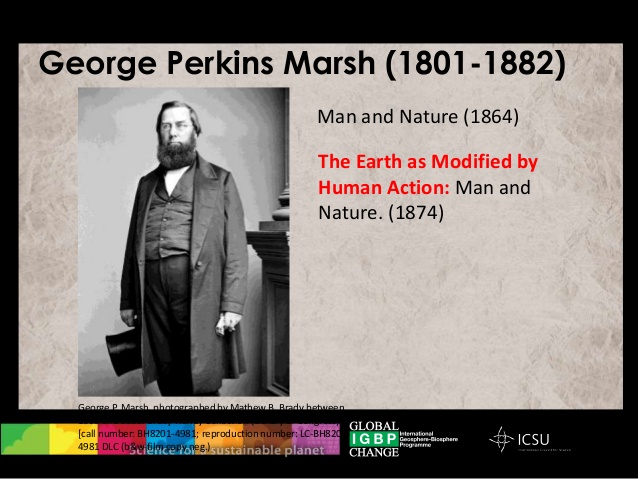
Cherub-faced with granny glasses and a slight paunch, George Perkins Marsh would today be called the ultimate environmental nerd—a real tree-hugger.  But don’t let his overly sophisticated look fool you, Marsh was the first true environmentalist with the guts to stand up and say, “Hey folks, we’re really making a mess of things here on Earth!” In 1864, he published Man and Nature which was followed by a revised edition in 1874 entitled The Earth as Modified by Human Action: Man and Nature. Taken collectively, these two books are widely regarded as the first modern discussion of our planet’s environmental problems. 

Born in 1801 in Woodstock, Vermont, Marsh grew up in an egalitarian household replete with all the trappings of wealth and prosperity and attended the finest schools—Philips Exeter Academy, Dartmouth College, and Vermont Law School. Possessing boundless energy, endless enthusiasm, and immense intelligence, Marsh was a true Renaissance Man. 

Throughout his 80 years, Marsh had many careers as a lawyer, newspaper editor, sheep farmer, mill owner, lecturer, politician and diplomat. A Master of Linguistics, he also knew 20 languages, wrote a definitive book on the origin of the English language, and was known as the foremost Scandinavian scholar in North America. He also invented tools and designed buildings including the Washington Monument. In his “spare time”, Marsh served his country in several important capacities, including as a member of the US House of Representatives from Vermont (1843–1849), Minister to the Ottoman Empire (1850–1853), and Ambassador to Italy (1861–1882). 

As we discussed earlier, the US was dominated by intense westward expansion in the second half of the 19th Century. This growth was fueled by a combination of the California Gold Rush and massive economic upheaval spawned by the start of the Industrial Revolution.  No sense of environmental accountability could be found anywhere on the American landscape or in the overriding political spectrum of the day until 1864 when Marsh published his book, Man and Nature.

A true environmental landmark, Man and Nature espoused a new way for evaluating human progress.  Marsh realized that natural resource use—for energy production, forest products, hydropower, fisheries stocks, and the like—was essential to sustain economic progress.  But he also warned that unrelenting and unmitigated overuse of our natural treasures would lead to big problems down the road.

Given his unique—at the time—understanding of Earth and its processes, Marsh was the first person to document systematically how human activity could have a cumulative and destructive effect on ecosystems as well as on the ability of those ecosystems to support human culture. Prior to Marsh, humans assumed that nature stood outside of human culture, was unchanged by human acts and works, and was infinitely capable of providing the resources that human economy extracted from it. As revealed in his writings, Marsh smashed this very wrong-headed logic to smithereens  and—in so doing—actually became the first person to suggest that man’s actions on Earth could be causing negative effects on the world’s climate.

To exemplify his points, Marsh conducted extensive surveys of the beneficial effects of natural forests, including their capacities to moderate local and regional climates.  In this frighteningly portentous passage based on this research, Marsh writes: “Even now…we are breaking up the floor and wainscoting and doors and window frames of our dwelling, for fuel to warm our bodies and seethe our pottage.  (As a result our planet is) fast becoming an unfit home for its noblest inhabitant. … Another era of equal human crime and human improvidence … would reduce it to such a condition of impoverished productiveness, of shattered surface, of climatic excess, as to threaten the depravation, barbarism, and perhaps even extinction of the [human] species.”

We can only be left to believe that Marsh—writing more than 150 years ago—could see the handwriting on the wall for what we are now facing from the threat of Climate Change.  Watching the “Doomsday Clock” (see Part Three for more on this) now ticking ever closer and closer to midnight, we can bear witness to the deep and sad truth of Marsh’s words.

As serious Climate Change analysts, we all need to pay special attention to George Perkins Marsh’s beseeching writing about working toward a harmonious blend of human activities and ecosystem health.  Even while the US still harbored an enormous bounty of natural wealth, Marsh empathized that we should be paying close attention to the effects our actions were having on the planet and working diligently to improve the sustainability of our lifestyles.  Marsh’s prose can be used to eloquently drive home the point that concerns about Climate Change are not just some “new kids on the block”.  They have—in fact—been around for a very long time.

Text excerpted from book: “PROTECTING THE PLANET: Environmental Champions from Conservation to Climate Change” written by Budd Titlow and Mariah Tinger, published by Prometheus Books.

Author’s bio:  For the past 50 years, professional ecologist and conservationist Budd Titlow has used his pen and camera to capture the awe and wonders of our natural world. His goal has always been to inspire others to both appreciate and enjoy what he sees. Now he has one main question: Can we save humankind’s place — within nature’s beauty — before it’s too late? Budd’s two latest books are dedicated to answering this perplexing dilemma. “PROTECTING THE PLANET: Environmental Champions from Conservation to Climate Change”, a non-fiction book, examines whether we still have the environmental heroes among us — harking back to such past heroes as Audubon, Hemenway, Muir, Douglas, Leopold, Brower, Carson, and Meadows — needed to accomplish this goal. Next, using fact-filled and entertaining story-telling, his latest book — “COMING FULL CIRCLE: A Sweeping Saga of Conservation Stewardship Across America”— provides the answers we all seek and need. Having published five books, more than 500 photo-essays, and 5,000 photographs, Budd Titlow lives with his music educator wife, Debby, in San Diego, California.
Dr. Ernst Haeckel Introduces Ecology to the World

by

Budd Titlow

http://www.buddtitlow.com

Ironically four years after we successfully obliterated nearly two percent of the US population during our Civil War, a word now famous for emphasizing the importance of maintaining both interspecific and intraspecific biodiversity made its first appearance in the lexicon of biologists.  In 1866, Ernst Haeckel—a German zoologist and master of many other scientific and artistic endeavors—introduced the concept of ecology onto the world scene. 

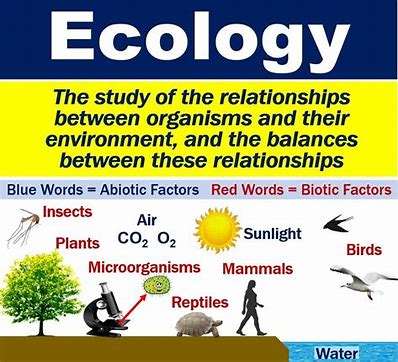
While Haeckel is officially credited with coining the term, we owe the origin of the word to the ancient Greeks.  In fact, understanding the word is most easily accomplished by looking at its Greek roots—oikos meaning house and logiameaning study.  So—to best understand the word ecology—envision observing everything that is going on in your own house, including everything from the interactions of your family with each other to how each family member is using everything in the house.  This visualization of your own household will give you a good handle on the meaning of ecology.

Now apply the same types of interactions that are taking place in your own home to what is happening in each ecosystem in the natural world.  Ecology is about the ongoing relationships that are continuously taking place among all the living things and their associated non-living elements found in each of the earth’s ecosystems.

For example, if a bird captures and eats a worm, that’s an ecological interaction.  If the bird—in turn—gets captured and eaten by a fox, that’s another ecological interaction.    Then when the fox stops by a pond to wash his meal down with a cool drink of water that’s still another ecological interaction.   Taken collectively, all the ecological interactions occurring in all the ecosystems on Earth form the science of ecology—the term Dr. Haeckel officially introduced to the world so long ago.

Why is this so important to know?  The study of ecology has become the basis for analyzing and evaluating everything that is going on in the natural world—including the influence of humans, now popularly known as anthropogenic effects.   By looking at how our activities are affecting individual ecosystems—with an emphasis on increases or decreases in biodiversity (the number of different species of organisms living in an ecosystem or ecosystems)—we gain an understanding of how and why our behaviors need to be modified.  

This is of critical importance today because if we take a hard, honest look at the Earth’s ecology, we’ll quickly see that what we’re doing does not paint a pretty picture.  Ice sheets melting, oceans warming, coral reefs dying, species going extinct—Dr. Haeckel gave us the tool for diagnosing the diseases, now we just have to take our medicines and get them all cured!

Text excerpted from book:     “PROTECTING THE PLANET: Environmental Champions from Conservation to Climate Change” written by Budd Titlow and Mariah Tinger, published by Prometheus Books.

Author’s bio:  For the past 50 years, professional ecologist and conservationist Budd Titlow has used his pen and camera to capture the awe and wonders of our natural world. His goal has always been to inspire others to both appreciate and enjoy what he sees. Now he has one main question: Can we save humankind’s place — within nature’s beauty — before it’s too late? Budd’s two latest books are dedicated to answering this perplexing dilemma. “PROTECTING THE PLANET: Environmental Champions from Conservation to Climate Change”, a non-fiction book, examines whether we still have the environmental heroes among us — harking back to such past heroes as Audubon, Hemenway, Muir, Douglas, Leopold, Brower, Carson, and Meadows — needed to accomplish this goal. Next, using fact-filled and entertaining story-telling, his latest book — “COMING FULL CIRCLE: A Sweeping Saga of Conservation Stewardship Across America” — provides the answers we all seek and need. Having published five books, more than 500 photo-essays, and 5,000 photographs, Budd Titlow lives with his music educator wife, Debby, in San Diego, California.

William Temple Hornaday—Rescuing the American Bison

by Budd Titlow

http://www.buddtitlow.com


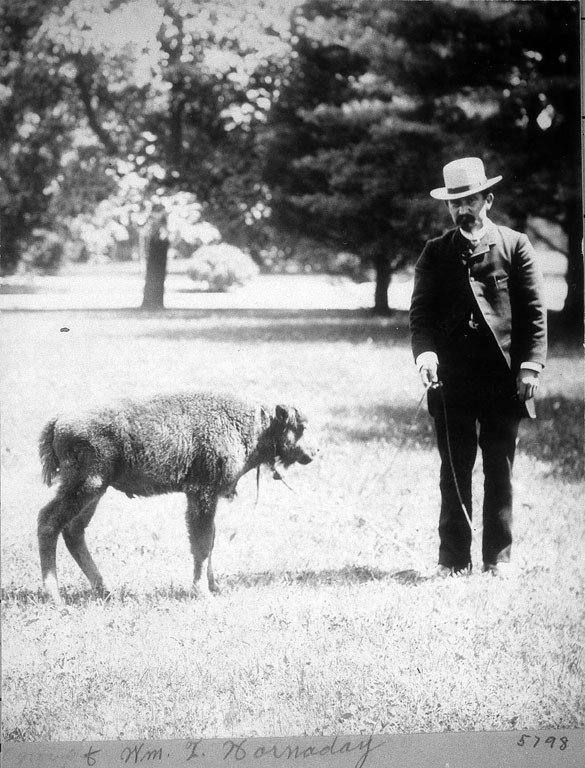
In an iconic image of the preeminent success of his life’s work, William Temple Hornaday is holding a leash and looking down lovingly at a newborn American bison (more commonly called the buffalo). We owe Hornaday a deep debt of gratitude for personally saving this symbol of the western American landscape from almost certain extinction.

Hornaday was born in 1851 in Avon, Indiana, and educated at Oskaloosa College (now Iowa State University). While working as a taxidermist in the 1870s, he had the opportunity to join a series of scientific expeditions. Traveling extensively throughout the United States and the world—to Florida, Cuba, the Bahamas, South America, India, Sri Lanka, the Malay Peninsula, and Borneo—Hornaday gained quite a reputation as a marksman in hunting big game animals. He also applied his taxidermy skills to create what he called life groups—featuring animals in their natural settings—for museums across the country. In 1882, Hornaday’s high-quality animal displays vaulted him into the position of chief taxidermist of the United States National Museum, at the distinguished Smithsonian Institution in Washington, DC.

In this post at the Smithsonian, Hornaday took it upon himself to investigate what he had heard about the dwindling herd of American bison on the western prairies. He sent hundreds of letters to ranchers, settlers, explorers, and homesteaders all over the American west.

What he heard back painted an appalling and depressing picture. As Hornaday wrote to George Brown Goode, his superior at the Smithsonian, “In the United States the extermination of all the large herds of buffalo is already an accomplished fact.” His diligence in collecting and reporting this discouraging information led to a trip that forever changed his life and set a milestone in the history of North American wildlife management.

In 1886, Hornaday traveled to Montana’s Musselshell River to observe a few remnant bison herds for himself and collect museum specimens before the species went extinct. The fact that he knew what to expect did not diminish the deep distress he felt at seeing that the vast herds of buffalo had vanished and only a few animals still survived in widely scattered groups. To counter his anguish over what he had seen in Montana, Hornaday returned home and, at the still-young age of thirty-six, immediately transformed his work orientation to focus on saving the bison from extinction. To initiate this effort, he acquired live bison that he brought to Washington, DC, and placed on display behind the Smithsonian’s administration building (nicknamed “The Castle” for its unusual architectural design).

Hornaday’s strategic decision to display live bison proved to be sheer genius on two levels. First, the live exhibit was much more popular than the museum’s encased bison group display and soon familiarized thousands of Americans—who had never traveled to the West—with the magnificence of these wildlife icons and the imminent threat of their disappearance forever. Secondly, this created the groundswell of public support Hornaday was seeking and opened the door for funding to ensure the bison’s long-term preservation. It also led to the creation of the Smithsonian’s National Zoological Park, with Hornaday serving as the first director.

Hornaday followed up his successful work at the Smithsonian in 1889 with the publication of The Extermination of the American Bison, a book that proved very popular and generated increased public support to save the species. Then, in 1896, he received the ultimate honor when he was appointed director of New York City’s Bronx Zoo, where he remained for the next thirty years. Now—thanks in large part to Hornaday’s efforts—the Bronx Zoo is the foremost zoo in the United States, with a long history of emphasizing the importance of saving American native wildlife.

Throughout his tenure at the Bronx Zoo, Hornaday used his impressive skills as an articulate orator and influential writer to produce hundreds of newspaper and magazine articles and more than twenty books. His works led to the passage of important conservation and wildlife protection legislation. In particular, his unceasing efforts battling against old-fashioned bureaucrats and obstinate politicians led to the passage of the 1911 Fur Seal Treaty and, most notably, the 1918 Federal Migratory Bird Treaty Act, which still protects all migratory birds in the United States.

By 1918, the buffalo was no longer in danger of extinction, thanks in large part to Hornaday’s diligent efforts. Today, the National Wildlife Federation carries on his legacy by helping to ensure that free-roaming buffalo herds will forever be found across the American landscape. In the process of dedicating his life to preserving the American bison, Hornaday also earned the title “Founder of the American Conservation Movement.”

Climate-change activists can learn a great deal from studying William Temple Hornaday’s biography. First, he dedicated his life to a cause and then figured out how to create the groundswell of public support needed to accomplish his goal. The positive techniques he used to accomplish his objective are also admirable. Instead of emphasizing a doomsday outcry for the American bison, Hornaday first turned the public on to the beauty of these burly beasts and then kept emphasizing that it was not too late to save them from extinction. This is exactly the same approach we need to emphasize with climate change: while the livability of our magnificent planet is in serious jeopardy, it’s not too late to save it—if we all act together right now.

Photo copyright: Shutterstock.com

Author’s bio:  For the past 50 years, professional ecologist and conservationist Budd Titlow has used his pen and camera to capture the awe and wonders of our natural world. His goal has always been to inspire others to both appreciate and enjoy what he sees. Now he has one main question: Can we save humankind’s place — within nature’s beauty — before it’s too late? Budd’s two latest books are dedicated to answering this perplexing dilemma. “PROTECTING THE PLANET: Environmental Champions from Conservation to Climate Change”, a non-fiction book, examines whether we still have the environmental heroes among us — harking back to such past heroes as Audubon, Hemenway, Muir, Douglas, Leopold, Brower, Carson, and Meadows — needed to accomplish this goal. Next, using fact-filled and entertaining story-telling, his latest book — “COMING FULL CIRCLE: A Sweeping Saga of Conservation Stewardship Across America”— provides the answers we all seek and need. Having published five books, more than 500 photo-essays, and 5,000 photographs, Budd Titlow lives with his music educator wife, Debby, in San Diego, California.
Charles Darwin—His “On the Origin of Species”

by Budd Titlow

http://www.buddtitlow.com

Almost everyone who has studied science, and many of those in other fields of study, know that Charles Darwin’s theory of evolution became the foundation of modern evolutionary studies. What is not so well known is that maybe no scientist in the history of the world suffered more scorn and ridicule than Darwin did after he completed his quintessential research and finally published his monumental 1859 book On the Origin of Species. Waiting more than twenty years before finally going public with his earth-shaking findings, Darwin likened writing Origin to confessing to committing a murder.

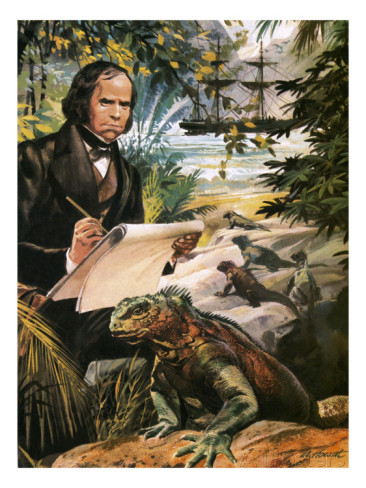
Born in Shrewsbury, Shropshire, England, in 1809, Charles Darwin loved to be outdoors enjoying nature almost before he could walk. He enrolled in Edinburgh University with the goal of following his father’s and grandfather’s famous footsteps into medicine. There, Darwin learned that the brutality of surgery and the sight of blood turned his stomach—not especially good qualities for someone in the medical profession in those days. But university did enhance young Charles’s knowledge of science, a discipline that perfectly suited his love of the outdoors and his adventurous personality.

During a brief period, Darwin also thought about becoming an Anglican pastor and studied religion—but mostly botany—under the tutelage of Reverend John Stevens Henslow. Intrigued by his protégé’s keen interest in the outside world, Henslow suggested that Darwin take a position as naturalist on an expedition commanded by Captain Robert Fitzroy aboard a rebuilt brig quaintly named the HMS Beagle.

Darwin had always dreamed of traveling the world, and, though Captain Fitzroy had offered to cover his accommodations in return for his services as a naturalist, Darwin insisted on paying a fair share of the meal expenses. Little could anyone have imagined at the time that the pairing of Charles Darwin and the Beagle would live on in history as the boy and the ship that would shock the world and forever alter the science of human history.

Casting off under damp and dreary skies but not particularly rough seas, the Beagle—with a crew of seventy-three men, including young untested Charles Darwin—sailed out of Plymouth Harbor on the morning of December 27, 1831. Becoming seasick almost immediately—a malady that would curse nearly all his days at sea—Darwin started to have second thoughts about being on the voyage.

In 1835—after almost four years of exploring the world’s oceans—the Beagle reached the Galapagos Islands, one of Earth’s most remote and least explored archipelagos. This, of course, was right in Darwin’s wheelhouse, and he bounded ashore at each stop with an unbridled exuberance for making new discoveries—a little like telling a child he could keep whatever he found in a gigantic toy store. One of Darwin’s fondest memories in the Galapagos was hopping on top of a giant tortoise and trying to keep his balance as the gentle reptile lumbered through hillsides covered with volcanic rubble.

Returning home in 1836 after nearly five years at sea, Darwin turned his meticulously crafted notes into a book entitled The Voyage of the Beagle. Still in print today, this colorfully written book, infused with occasional flashes of wit and humor, perfectly captures the essence of the Beagle’s voyage and Darwin’s onboard adventures.

Darwin crystallized his theories about evolution while observing the genetically isolated populations of animals living on the Galapagos Islands. He was especially intrigued by the finches (actually part of the tanager family) that he found colonizing each separate island. Prior to his time on the Beagle, several mentors shaped Darwin’s budding theories on evolution. Jean Baptiste Lamarck planted, in Charles’ head, the notion that humans evolved from a lower species via adaptations. The two men differed in their view of how these adaptations came to be: Lamarck hypothesized that they happened during an individual’s life while Darwin postulated that nascent adaptations led to successful reproduction and species survival. Thomas Malthus’ studies on population economics led to Darwin’s idea of “survival of the fittest”, in which the species most well adapted outcompeted other species for limited resources. And, notably, Charles’ grandfather, Erasmus Darwin, shared many views about evolution with Charles, and eventually the public, first in poetry form and later in a book about speciation.

After arriving back home and studying his collected bird specimens with the help of a few professional ornithologists, Darwin noticed that each island’s finch population had a beak that was a different size and shape than that of the finches on the other islands. Moreover, the beaks of each isolated finch population appeared specially adapted to the different food species found on its island.

How could this happen, Darwin wondered? In his mind, the only explanation was that the finches on each island had evolved beaks that were best suited to eating the food that was most available on that island and were thus being naturally selected to reproduce. Darwin’s paramount publication, where he combined many of the aforementioned theories with his studies on the Beagle, was to come later—much later, in fact. Fearing for his reputation and in some cases his life, Darwin kept the radical evolutionary notions that were continually floating through his brain a secret. While his finches formed a substantial part of the backbone for his theory of natural selection, Darwin was not anywhere near ready to go to publication with his ideas in 1839.

Many explanations have been proposed to identify Darwin’s reasons for waiting so long to come forward with his evolutionary theory. Some believed he was working on several other publications, and he never liked to start a new book before completing the ones on which he was already working. Others suggested that he was waiting for other scientists to produce findings that would help verify his beliefs. In general, a large portion of the population thought Darwin was worried that he would be ostracized by the Anglican Church and ridiculed by his friends and family.

We suspect that the twenty-year delay in the publication of Origin was a combination of all these factors. In fact, after receiving supporting research from fellow scientists Alfred Russel Wallace and Charles Lyell in 1858, Darwin finally decided to finish his research and publish On the Origin of the Species in 1859 and the resulting worldwide debate began in earnest.

At first, Darwin’s beliefs that animals and humans shared a common ancestor shocked the Anglican Church and Victorian society to the core. By the time of his death in 1882, however, Darwin’s evolutionary imagery had spread through all of literature, science, and politics. Although professedly an agnostic, Darwin and his evolutionary theory were finally vindicated when he was buried in London’s Westminster Abbey—the ultimate British accolade.

It is not the most intellectual or the strongest species that survives, but the species that survives is the one that is able to adapt to or adjust best to the changing environment in which it finds itself.
—Charles Darwin

So what can an earnest climate scientist learn from studying the life of past environmental hero Charles Darwin? First, Darwin had the gumption and stamina to stand by what he believed in his heart and mind to be true. Then he steadfastly maintained these beliefs and worked diligently to prove their veracity, even when he knew it would subject him to a storm of professional ridicule and the loss of relationships with friends and even family. Finally—working through all his doubts and reservations—he published his controversial theories and then lived to see them widely accepted. Steadfastly standing firm in the face of withering criticism and proving what is not only true but is also right is one of the most strenuous tests of heroism on the planet.

Text excerpted from book: PROTECTING THE PLANET: Environmental Champions from Conservation to Climate Change” written by Budd Titlow and Mariah Tinger and published by Prometheus Books. Photo credit:  Copyright Shutterstock (2). 

Author’s bio:  For the past 50 years, professional ecologist and conservationist Budd Titlow has used his pen and camera to capture the awe and wonders of our natural world. His goal has always been to inspire others to both appreciate and enjoy what he sees. Now he has one main question: Can we save humankind’s place — within nature’s beauty — before it’s too late? Budd’s two latest books are dedicated to answering this perplexing dilemma. “PROTECTING THE PLANET: Environmental Champions from Conservation to Climate Change”, a non-fiction book, examines whether we still have the environmental heroes among us — harking back to such past heroes as Audubon, Hemenway, Muir, Douglas, Leopold, Brower, Carson, and Meadows — needed to accomplish this goal. Next, using fact-filled and entertaining story-telling, his latest book — “COMING FULL CIRCLE: A Sweeping Saga of Conservation Stewardship Across America”— provides the answers we all seek and need. Having published five books, more than 500 photo-essays, and 5,000 photographs, Budd Titlow lives with his music educator wife, Debby, in San Diego, California.
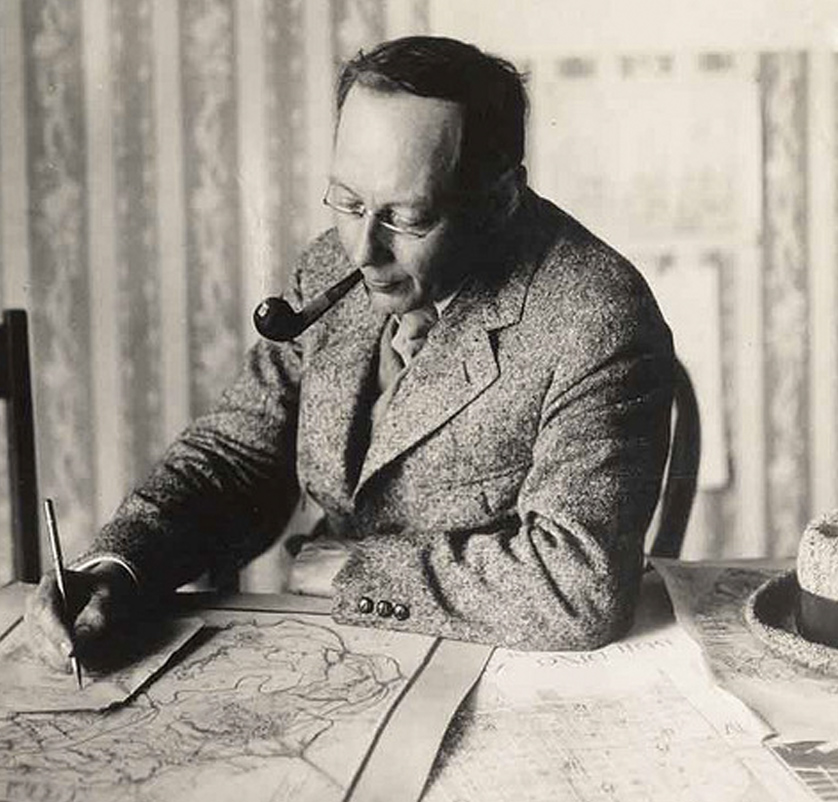
Frederick Law Olmstead—The World’s First Landscape Architect

by Budd Titlow

http://www.buddtitlow.com

During the last few years before the American Civil War turned brothers against brothers—the darkest four years in our young nation’s history—two other prominent citizens, Frederick Law Olmsted and Charles Darwin, left their distinctive marks on the US environmental movement. Even though they were both raised in wealthy, aristocratic families and looked remarkably alike, with their flowing white beards and bald pates, these two men made contributions that could not have been more different.

In 1857, in New York City, Frederick Law Olmsted was using his skills to help people live in harmony with the environment, by transforming New York’s Central Park from a desolate brown dumping ground into the world’s first showcase of urban green open space. As a child, Olmsted gained a deep and abiding respect for the natural world from both his father and his stepmother. This upbringing implanted within him the belief that access to the peace and solitude provided by open spaces and natural areas was one of the secrets to a happy life.

Born in Hartford, Connecticut, in 1822, Olmsted, as a young man, wasn’t quite sure what he wanted to do with his life. He tried his hand at many professions—most notably as a journalist and book author—but none of those fulfilled him. Through all of these unsatisfactory career choices, Olmsted’s thoughts kept returning to an idea he had been mulling over in the back of his mind ever since he was a child roaming the rolling open spaces of the Connecticut River Valley.

He believed that America’s burgeoning cities should be more hospitable—making them enjoyable places to live instead of just urban commerce centers crammed with tall buildings and dense with gray pavement. As Olmsted saw it, the best way to improve the livability of a city was to create more open green space—places where residents could take a break from their workaday worlds and just sit, relax, dream sweet dreams, and enjoy themselves for an hour or so.

What a novel idea for a profession, Olmsted thought—instead of designing buildings to shelter people’s bodies from the outside world, design outdoor spaces that could expand people’s minds to enjoy the intrinsic values of nature. Even better, he realized, would be creating a network of green spaces that tied urban cityscapes together and made it possible to walk for long, uninterrupted distances in a quiet environment. These thoughts later became the seed for Boston’s famous “Emerald Necklace”—the first urban greenway system found anywhere in the world.

The more Olmsted thought about it, the more he realized he was on to something. In 1857, his big break happened when he was hired by the city of New York as superintendent for the reconstruction of Central Park. His work on Central Park’s design set a standard of excellence that continues to influence landscape architecture in the United States. In fact, Olmsted was one of the first people to practice this field and is now widely considered to be the “Father of American Landscape Architecture.”

At the end of his twenty-five-year career, Olmsted and his firm had designed more than five hundred projects throughout the United States—mostly of the urban-improvement variety. In addition to New York City’s Central Park, Olmsted was the designer of the US Capitol Grounds, the Biltmore Estate property in Asheville, North Carolina, and the Stanford University Campus in Palo Alto, California. He also served as site planner for Chicago’s 1893 World’s Columbian Exposition. Since he emphasized emulating the scenic value of the natural world in his work, Olmsted also spent great deal of time helping humans experience nonurban parks. He was head of the first Yosemite National Park commission and leader of the campaign to protect Niagara Falls.

Olmsted was one of the first people to practice this field and is now widely considered to be the “Father of American Landscape Architecture”. His main goal—no matter what he was working on—was to improve the human experience. He wanted his parks to be available to all people, no matter their cultural status or lifestyle. Also, in one of the first official instances of social justice, Olmsted’s antislavery letters were published individually, and then, in 1861, were collected into one book, entitled The Cotton Kingdom.

Even though Olmstead died just after the turn of the twentieth century, the landscape architecture firm he founded successfully lived on until 1979—in the capable hands of his sons and their successors. Today, his home and office are owned and managed by the National Park Service as the Olmsted National Historic Site, located in Brookline, Massachusetts. Many of his conceptual drawings and detailed plans also can be found in the Library of Congress in Washington, DC.

What architect so noble . . . as he who, with far-reaching conception of beauty, in designing power, sketches the outlines, writes the colors, becomes the builder and directs the shadows of a picture so great that Nature shall be employed upon it for generations, before the work he arranged for her shall realize his intentions.

Olmsted dovetailed his passion for the natural world with his profound belief that everyone should have access to quiet green spaces for solitude and reflection, away from the din and clamor of our nation’s expanding urban areas. He turned his quest and extraordinary vision for improving the human condition into a unique profession that endures today throughout the world. His dedication to realizing his childhood dream by inventing something the world had never before seen should certainly be something imitated by today’s climate activists. Perhaps new, yet undreamed of, technology holds the key to designing a world future compatible with climate change.

Photo credit: Copyright Shutterstock

Author’s bio:  For the past 50 years, professional ecologist and conservationist Budd Titlow has used his pen and camera to capture the awe and wonders of our natural world. His goal has always been to inspire others to both appreciate and enjoy what he sees. Now he has one main question: Can we save humankind’s place — within nature’s beauty — before it’s too late? Budd’s two latest books are dedicated to answering this perplexing dilemma. “PROTECTING THE PLANET: Environmental Champions from Conservation to Climate Change”, a non-fiction book, examines whether we still have the environmental heroes among us — harking back to such past heroes as Audubon, Hemenway, Muir, Douglas, Leopold, Brower, Carson, and Meadows — needed to accomplish this goal. Next, using fact-filled and entertaining story-telling, his latest book — “COMING FULL CIRCLE: A Sweeping Saga of Conservation Stewardship Across America”— provides the answers we all seek and need. Having published five books, more than 500 photo-essays, and 5,000 photographs, Budd Titlow lives with his music educator wife, Debby, in San Diego, California.
 

John Burroughs—Father of the Modern Nature Essay

by Budd Titlow

http://www.buddtitlow.com

Around the same time as Thoreau was writing his influential works, another prominent American essayist was making a strong case for natural resource protection. A gentle man who eschewed the limelight, John Burroughs—considered the “Father of the Modern Nature Essay” —was constantly writing and diligently working behind the scenes to protect the natural world he so ardently loved. In fact, Burroughs advocated for the protection of our natural resources in the 1850s—decades before there were any national parks or official conservation movements.

Burroughs was born in 1837 on his family’s farm near Roxbury, New York. As a young boy, he developed a deep passion for the Catskills woods and fields around him. He became a teacher when he was only seventeen—easily securing the good will of the pupils with a knack for imparting knowledge. He saved his teaching wages, supplementing them with money earned working on a farm, to put himself through the Hedding Literary Institute at Ashland, NY in the fall of his seventeenth year.

Watching with chagrin as rapid westward expansion and industrialization systematically ate away the wilderness of his country, Burroughs decided to help save America’s natural resources from disappearing forever. He used what he could do best— writing natural history essays—to help people visualize and understand the irreplaceable value of what they had. Then he taught them to feel passionately about protecting these resources. Very few people living today are aware of the tremendous influence Burroughs’s nature essays had on the consciousness of the American public during the nineteenth century.

Burroughs was one of the most famous authors of his day. He had a knack for describing the natural world vividly and simply. His prose communicated the value of slowing down and taking the time to really observe and appreciate the great outdoors. His message resonated with all ages, but especially with children. No image of Burroughs fits his grandfatherly persona better than one of him sitting on a hillside, his long white beard flowing down while he tells a tale about his exploits in the natural world to a group of visibly enthralled youngsters. By encouraging his readers to understand and share a sense of their purpose and place in the landscape, Burroughs championed the importance of keenly observing and understanding what was happening in the natural world.

As is the case with most of our past environmental heroes who did not have the good fortune of being born into wealthy families, Burroughs had to take other jobs to support his writing lifestyle. While he worked as a clerk for the US Treasury Department in Washington, DC during the Civil War, he continued to pursue his interests in botany and ornithology. In Washington, he developed a fast friendship with the poet Walt Whitman, eighteen years his senior. Burroughs’s first book, published in 1867, was entitled Notes on Walt Whitman as Poet and Person and was partially written by Whitman.

Summarizing his love affair with the birds in DC, Burroughs wrote Wake-Robin in 1871. Although he enjoyed the city, he missed his boyhood Catskills and he returned to them in 1873 to build a house he named “Riverby” along the western shore of the Hudson River, about eighty miles north of New York City. Then—about twenty years later—yearning for a more pristine writing environment, he built what he called “Slabsides,” a rustic cabin located more than a mile into the deep woods from “Riverby.”

Slabsides was where Burroughs’s profound and personal connections with the literary world took off. A parade of dignitaries—including Thomas Edison, Henry Ford, Harvey Firestone, and John Muir—regularly stopped by to visit and chat with him there. Nature enthusiasts of all ages and occupations also visited Slabsides, for walks, discussions, fishing, and camping with Burroughs.

Through the lasting friendships he built with his more prominent visitors, Burroughs began to have an important influence on the emerging preservationist movement. By capitalizing on his newfound conservation clout, he also inspired political leaders to work at protecting wild lands and wildlife. He continually encouraged his readers to get out and explore the natural world, telling them, “Each of you has the whole wealth of the universe at your very door.”

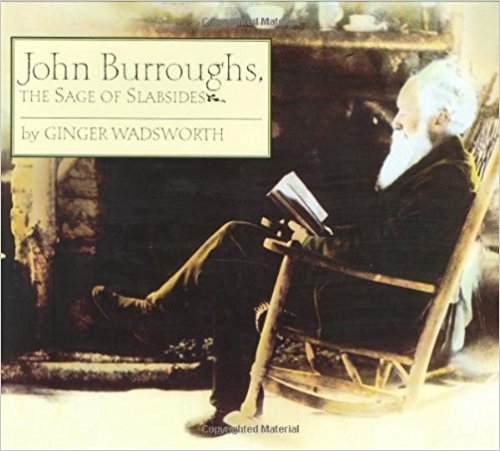
Over a period of sixty years, Burroughs wrote more than three hundred nature essays and articles, published in leading magazines, along with twenty-seven books. When Burroughs died in 1921, Clyde Fisher, then curator of visual instruction at the American Museum of Natural History, wrote in Natural History Magazine, “John Burroughs did perhaps more than anyone else to open our eyes to the beauty of nature.” Ginger Wadsworth, author of the children’s book, John Burroughs: The Sage of Slabsides, wrote this description of Burroughs—which would have given him the ultimate pleasure in knowing that his life’s goal had been accomplished: “His essays teach us to slow down and look around. They encouraged people of all ages to go out their backdoors and experience nature.”

More than anything else, John Burroughs had a remarkable predilection for moving people to action through his writing. For the writers among us climate change activists, this is a critical skill for getting people involved with the solution process. Before you can convince people to act, you have to convince them to care, and that is exactly what world-class writings—such as those of John Burroughs—are carefully tailored to accomplish.

Text excerpted from book: PROTECTING THE PLANET: Environmental Champions from Conservation to Climate Change” written by Budd Titlow and Mariah Tinger and published by Prometheus Books. Photo  credit: Copyright Shutterstock.

Author’s bio:  For the past 50 years, professional ecologist and conservationist Budd Titlow has used his pen and camera to capture the awe and wonders of our natural world. His goal has always been to inspire others to both appreciate and enjoy what he sees. Now he has one main question: Can we save humankind’s place — within nature’s beauty — before it’s too late? Budd’s two latest books are dedicated to answering this perplexing dilemma. “PROTECTING THE PLANET: Environmental Champions from Conservation to Climate Change”, a non-fiction book, examines whether we still have the environmental heroes among us — harking back to such past heroes as Audubon, Hemenway, Muir, Douglas, Leopold, Brower, Carson, and Meadows — needed to accomplish this goal. Next, using fact-filled and entertaining story-telling, his latest book — “COMING FULL CIRCLE: A Sweeping Saga of Conservation Stewardship Across America”— provides the answers we all seek and need. Having published five books, more than 500 photo-essays, and 5,000 photographs, Budd Titlow lives with his music educator wife, Debby, in San Diego, California.


Ralph Waldo Emerson and Henry David Thoreau—The Original Transcendentalists

by Budd Titlow

http://www.buddtitlow.com


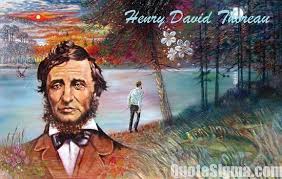
With his face-framing beard and dark wavy hair, Thoreau could have easily passed for Abraham Lincoln’s brother.

While the exploration or exploitation—take your pick—of the American West was just beginning to flourish, Ralph Waldo Emerson and Henry David Thoreau were sitting, thinking, and writing in the newly-minted Commonwealth of Massachusetts. As the original transcendentalists, Emerson and Thoreau believed that there was much more to life than working feverishly and accruing wealth. Their thoughts and words were the first cries in the wilderness about living simply and compatibly with the natural world, and their words are still inspiring millions of people around the planet who want to make peace with—instead of continually exploiting—their environment.

Emerson, generally considered the “Father of Transcendentalism,” and Thoreau’s mentor, was born in 1803. His most famous work, Nature —published in 1836—explained his belief that God was suffused throughout the natural world and was not a separate, divine countenance living off in some heavenly sphere. Meanwhile, Thoreau took the teachings he gleaned from Emerson and turned them into two books that ran completely counter to the religious and social forces that were then driving our nation’s expansion. Today, Thoreau’s works form a significant portion of the backbone of the US environmental movement.

In 1849, Thoreau published his essay Civil Disobedience, which—while much less famous than his monumental work, Walden —opened many people’s eyes to the abject horrors perpetrated right in front of them. First and foremost among Thoreau’s described atrocities was slavery—foreshadowing the tragic war that was only slightly more than a decade away from sending the United States spiraling into the depths of human chaos and pathos.

With his face-framing beard and dark wavy hair, Thoreau could have easily passed for Abraham Lincoln’s brother—appropriate considering they were both brandishing the same moral sword against the institution of slavery. They each, however, advocated different methods of dealing with this scourge on the American landscape. While Lincoln believed in achieving his desired results by operating within the law of the land, Thoreau insisted that the country should stand against slavery, even if that led to civil war and the destruction of the Union.

Ever since its publication, Thoreau’s Civil Disobedience has inspired many leaders of protest movements around the world. Nicknamed the “Prophet of Passive Resistance” http://archive.vcu.edu/english/engweb/transcendentalism/authors/thoreau/ by some, Thoreau and his writings have provided supreme spiritual guidance for inspirational figures such as Mahatma Gandhi, John Fitzgerald Kennedy, and Martin Luther King Jr.

Thoreau spent much of his life looking for the ultimate truth in the natural world. At night, he enjoyed hours of “looking through the stars to see if [he] could see God behind them.” His two older siblings—Helen and John Jr.—who were schoolteachers, paid Thoreau’s tuition to attend Harvard, where he immersed himself in classic literature, philosophy, and languages.

After graduating in 1837, Thoreau returned to Concord, Massachusetts, and opened a school with his brother, John. While Thoreau enjoyed teaching, he always fancied himself as a writer and soon after he left Harvard began keeping a detailed personal journal. Henry’s brother contracted tuberculosis in 1841, forcing the brothers to close their school; John died from lockjaw in Henry’s arms one year later. When the school closed, Henry realized he needed to find another way to make a living because writing was not paying the bills, so he turned to his family business—pencils.

Inconsistent with most popular beliefs about his life, Thoreau was—at times—a successful businessperson. The Thoreau family’s pencils were the first produced in the United States, and they equaled the worldwide standard—the German-made Faber pencils. After his father’s death in 1859, Thoreau took over as head of the family business and, characteristically, started recycling the company’s scrap paper for lists, notes, and drafts of his natural history essays. He also maintained his own active and highly respected local practice as a self-taught land surveyor.

But let’s get back to the Thoreau story with which everyone is most familiar. In 1845, Thoreau built a small home for himself on Walden Pond in Concord, on property owned by Emerson. Thoreau desired a simpler type of life, so for two years and two months he experimented with working as little as possible, rather than engaging in the standard pattern of six days on with one day off. He felt that this fresh approach helped him avoid the misery he saw around him, once famously writing, “The mass of men lead lives of quiet desperation.” To his critics, who were perhaps trying to counter this desperation in their lives, , Thoreau wrote: “If a man does not keep pace with his companions, perhaps it is because he hears a different drummer. Let him step to the music which he hears, however measured or far away.” (Note: After two years and two months, Thoreau left Walden Pond and moved back into his parents’ home and then into a house owned by Emerson, who was conducting a lecture tour in Europe. As Thoreau writes in Walden: “I left the woods for as good a reason as I went there. Perhaps it seemed to me that I had several more lives to live, and could not spare any more time for that one.”

Repeated questioning by the Concord townspeople about how he was living at Walden Pond inspired Thoreau to write his best-known collection of essays. Finally published in 1854—after initial public rejection and seven complete drafts—Thoreau’s Walden emphasized living life in close harmony with the natural world. Since its publication, Walden has served as a source of supreme inspiration for countless naturalists, writers, and—in more recent decades—environmentalists.

Most important for the issue of climate change are Thoreau’s dual beliefs that we can achieve significant changes in cultural and societal mores by passionate, passive resistance and sustainable living in harmony with the natural world. Sometimes it’s not the earliest or the most aggressive bird that gets the most worms but the one that stays most focused on the long-term task of raising healthy chicks.

Text excerpted from book: PROTECTING THE PLANET: Environmental Champions from Conservation to Climate Change” written by Budd Titlow and Mariah Tinger and published by Prometheus Books. Photo credit: Copyright Shutterstock.

Author’s bio:  For the past 50 years, professional ecologist and conservationist Budd Titlow has used his pen and camera to capture the awe and wonders of our natural world. His goal has always been to inspire others to both appreciate and enjoy what he sees. Now he has one main question: Can we save humankind’s place — within nature’s beauty — before it’s too late? Budd’s two latest books are dedicated to answering this perplexing dilemma. “PROTECTING THE PLANET: Environmental Champions from Conservation to Climate Change”, a non-fiction book, examines whether we still have the environmental heroes among us — harking back to such past heroes as Audubon, Hemenway, Muir, Douglas, Leopold, Brower, Carson, and Meadows — needed to accomplish this goal. Next, using fact-filled and entertaining story-telling, his latest book — “COMING FULL CIRCLE: A Sweeping Saga of Conservation Stewardship Across America”— provides the answers we all seek and need. Having published five books, more than 500 photo-essays, and 5,000 photographs, Budd Titlow lives with his music educator wife, Debby, in San Diego, California.